A small living room has to hold a lot. It is the place where you watch, read, eat, work and welcome friends — and all of those lives bring their own stuff. Remotes, chargers, books, blankets, toys, magazines and the bag you meant to take upstairs. In a big room the clutter spreads out and disappears. In a small room it lands on every surface and the whole space feels crowded by noon.
The 15 living room storage ideas below are made for real small rooms, where every piece of furniture has to earn its floor space. Every idea follows one rule: the storage hides in plain sight. It lives inside the ottoman, under the bench, behind a door, on a shelf that was empty wall — never as an extra piece of furniture squeezed into the room. Nothing here needs a renovation or a big budget. Most of it uses things you already own — a basket, a box, a hook, a shelf. Pick one idea this weekend, live with it for a week, and add the next one only when the first feels like home.
Why a Small Living Room Needs Storage That Hides
A small living room does not need more furniture. It needs the furniture it already has to work harder. The moment you add a second cabinet or a third side table just to hold the clutter, the room gets smaller — and the clutter finds new places to land. That is why the best living room storage is not more storage. It is storage in the right place.
The trick is simple: hide the everyday mess inside things that were already in the room, and use the walls for everything else. An ottoman that opens, a bench with baskets underneath, a low unit with doors, shelves above the sofa — all of it holds the clutter without taking a single extra inch of floor. Get that balance right and the room looks calm on purpose — and still works like a living room.
15 Living Room Storage Ideas for Small Spaces
Start With Space
1. Edit First: Keep Only What Earns Its Place
Before you buy a single basket or shelf, take everything out of the living room that does not belong there. An empty-ish room shows you how much space you really have, and it stops the slow creep of clutter: the board games nobody plays, the magazines from last year, the chargers for devices you no longer own.
Sort what came out into three piles: things you use in this room every week, things that belong in another room, and things that do not belong in the house at all. The first pile earns a place back in the room. Everything else goes to its real home. A room that has been edited first needs far less storage than a room that has not.
Practical note: Do the edit in daylight and be honest about the “maybe one day” pile. If you have not used something in this room in a month, it does not need a storage solution — it needs a new home.
2. Give the Room Zones: Watch, Read, Unwind
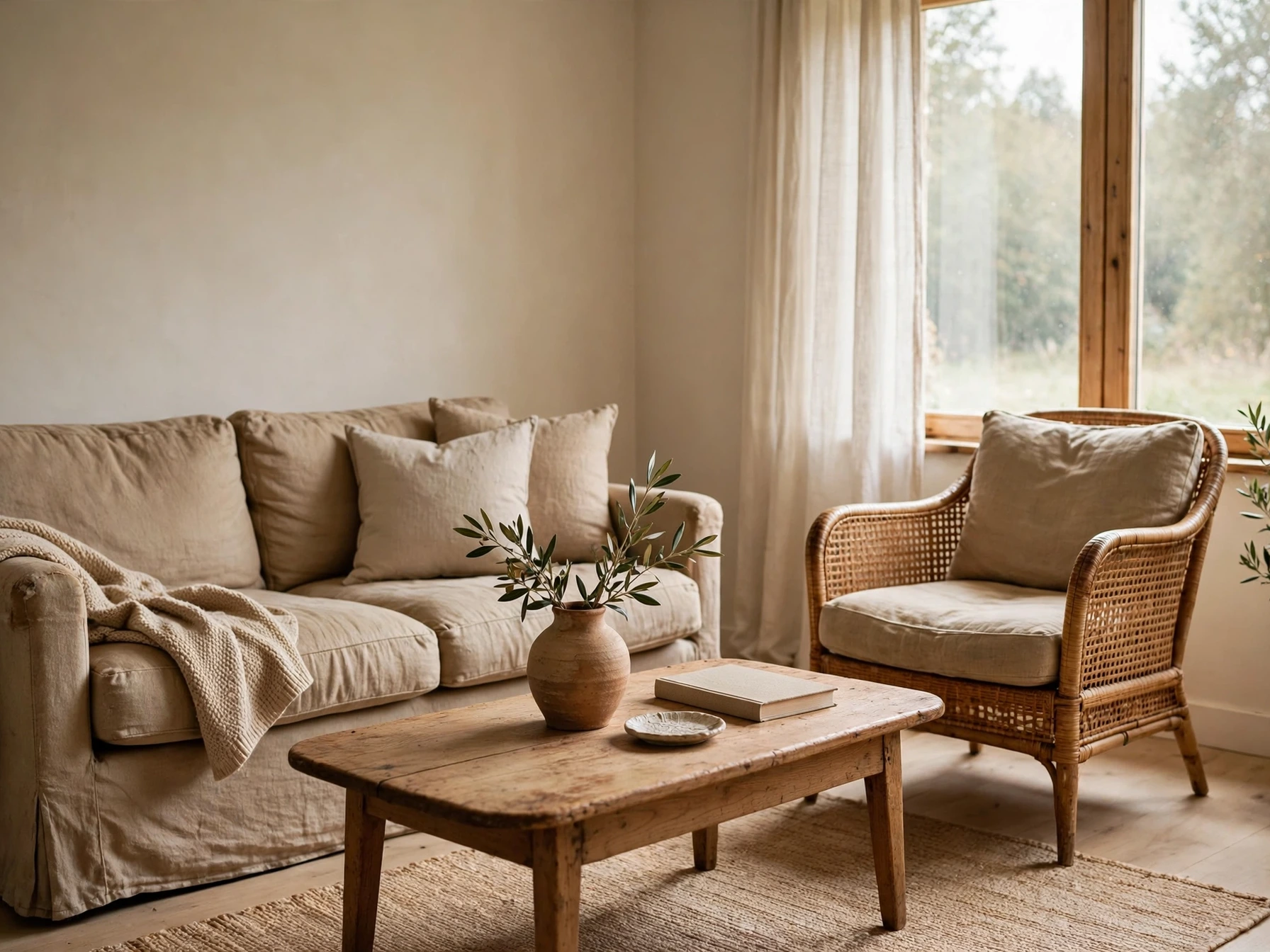
A living room that tries to do everything in one spot ends up with clutter everywhere. Give yours three zones and let everything else follow. The watch zone, around the television, holds the remotes and the media. The read zone, by the window or the lamp, holds the books and the glasses. The unwind zone, on the sofa, holds the blankets and the tea.
Zones make storage decisions easy. When you know the blankets live in the unwind zone, you know they do not belong on the dining chair. When the read zone has one basket for books, the books stop piling up on the coffee table. For the same zoning idea in the rest of the room, see our living room decor ideas for small apartments.
Practical note: Mark the zones with the storage itself: a basket marks the read zone, an ottoman marks the unwind zone, and a low unit marks the watch zone. When every zone has a home for its things, the room stays tidy on its own.
3. Use the Walls Before the Floor
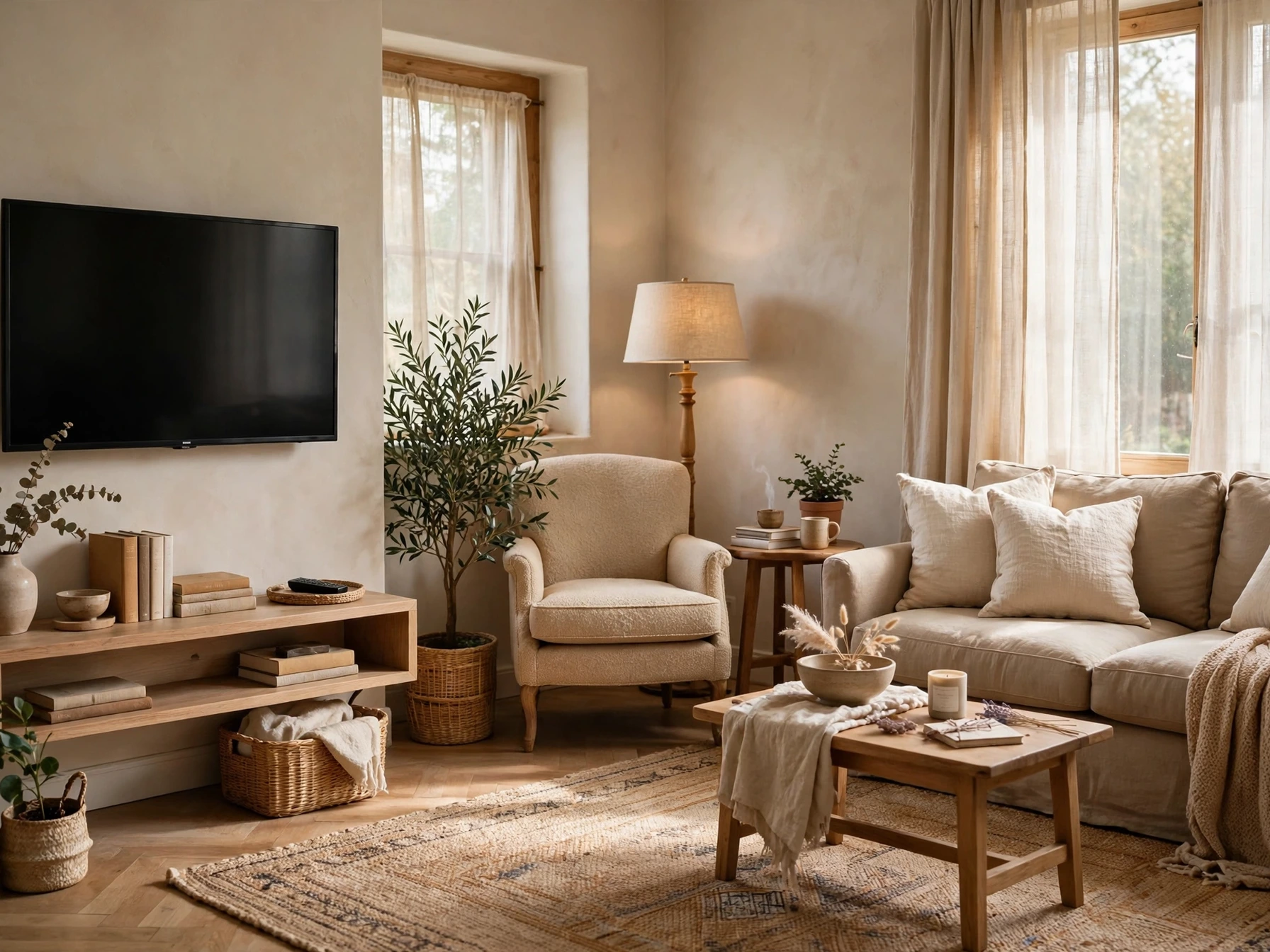
Floor space is the scarcest thing in a small living room, and the walls are almost always half empty. Before you add anything to the floor, look up. A wall that holds a shelf, a rail or a row of hooks gives you a whole new storage surface without taking a single inch of floor away from the sofa.
Start with the wall above the sofa, which is usually dead space. One long floating shelf there holds books, a plant and a basket — and it frames the sofa instead of crowding it. The wall by the door takes the coats and the bags, so they never land on the arm of the sofa. For renter-friendly ways to use a wall without drilling, see our living room wall decor ideas for renters.
Practical note: Keep wall storage shallow — about the depth of a book. A shelf that sticks out too far makes a small room feel narrower, while a slim shelf reads as part of the wall and leaves the room feeling open.
Hidden Storage That Looks Like Furniture
4. Pick a Storage Ottoman That Does Double Duty
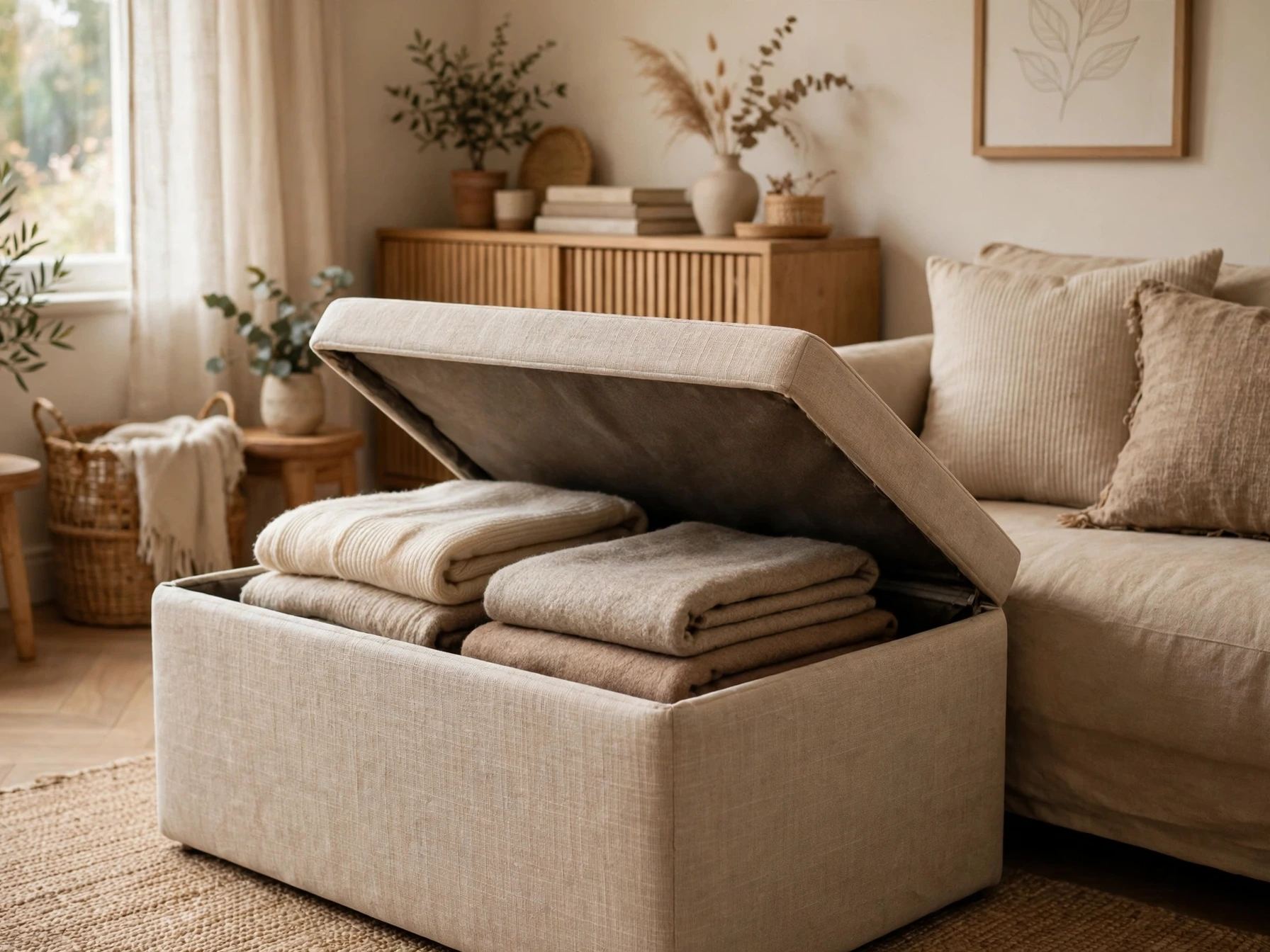
A storage ottoman is the hardest-working piece in a small living room. It is a footrest, an extra seat when friends drop by, a coffee table with a tray on top — and inside, it holds the blankets, the remotes and the chargers that would otherwise live on the sofa. One piece of furniture, four jobs, no extra floor space.
Choose one with a lift-up lid that stays open while you reach inside, and a shape that fits the room: a round ottoman softens a square room, and a rectangular one slides neatly against the sofa. Pick a fabric that forgives crumbs and can be wiped clean, because an ottoman in a small room gets used every single day. For budget-friendly ways to make one piece do more, see our modern living room ideas on a budget.
Practical note: Keep only soft things inside the ottoman — blankets, cushions, the spare throw. Hard things like board games and cables belong in a box on a shelf, where they will not clunk against the lid every time you open it.
5. Choose a Coffee Table With Storage Inside
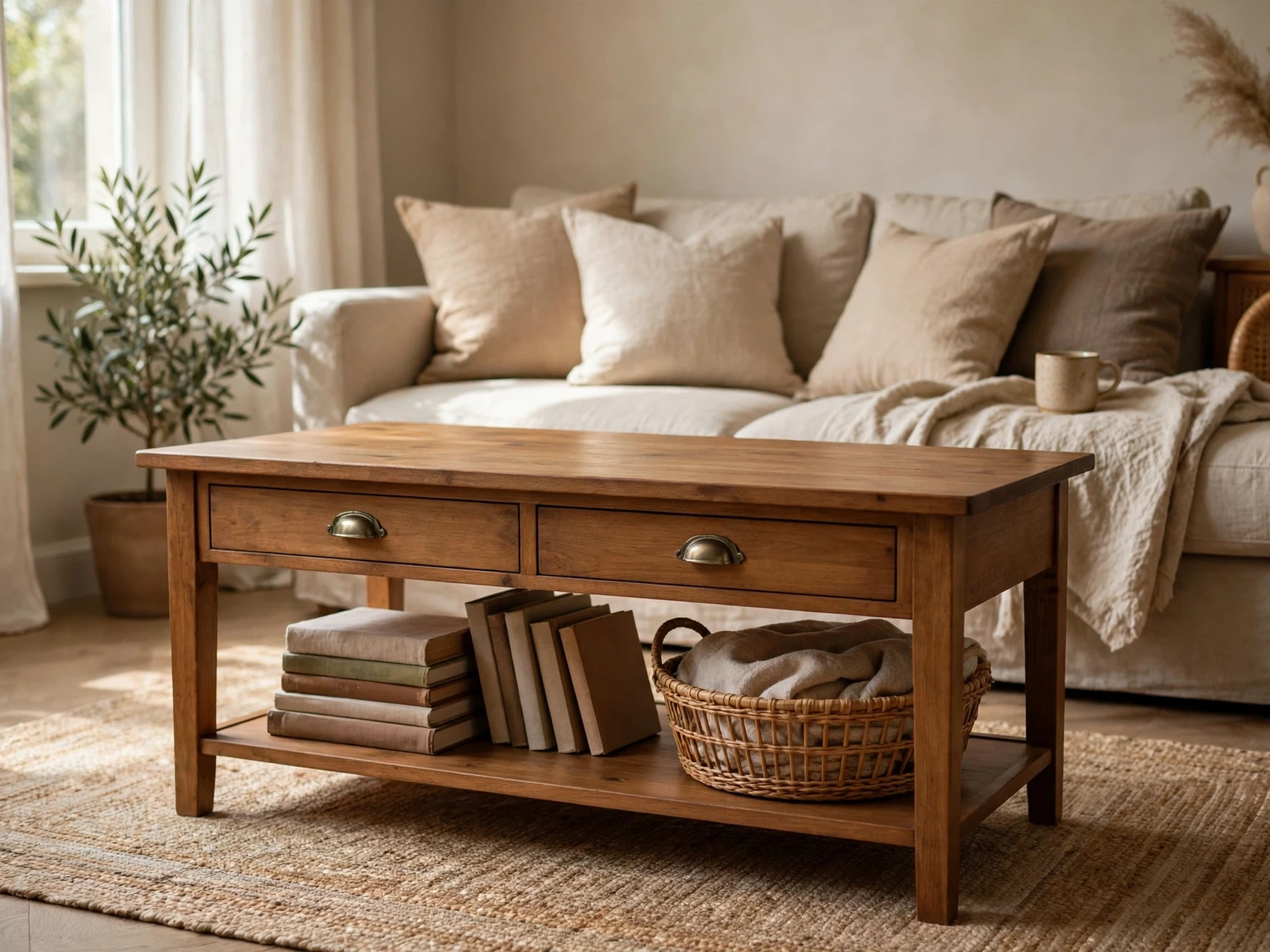
A coffee table is the centre of the room, and in a small living room it should hold more than a mug. Choose one with a drawer, a lift-up top or a lower shelf, and the table becomes the room’s quiet storage hub: remotes in the drawer, magazines on the lower shelf, the laptop hidden under the lift-up top when the evening is over.
Keep the top itself almost bare. One book and one small tray are enough — the table looks calm, and the surface is free the moment you want to put your feet up or set down a board game. A coffee table with storage inside lets the room look tidy even when the drawer is full.
Practical note: A lift-up coffee table is worth looking for in a small room. It rises to lap height for eating or working, then drops back down to table height — two pieces of furniture in one, with storage built in.
6. Add a Slim Bench With Baskets Below
A slim bench is a small room’s secret weapon. Against the wall under the window or by the door, it is a seat for putting on shoes, a perch for a guest, and a shelf for the things that need a home. Slide two woven baskets underneath and the bench holds the shoes, the dog lead, the spare blankets — all of it hidden behind the baskets’ weave.
Keep the bench narrow — about the depth of a cushion — so it hugs the wall and never blocks the walkway. A bench that sticks out too far becomes another obstacle; a slim one reads as part of the room. Put a folded throw on top and the bench looks styled, not just useful.
Practical note: Measure the baskets before you buy the bench, not after. Two baskets that fit exactly under the seat look built in; two that are a little too tall or too wide will live on the floor beside it instead.
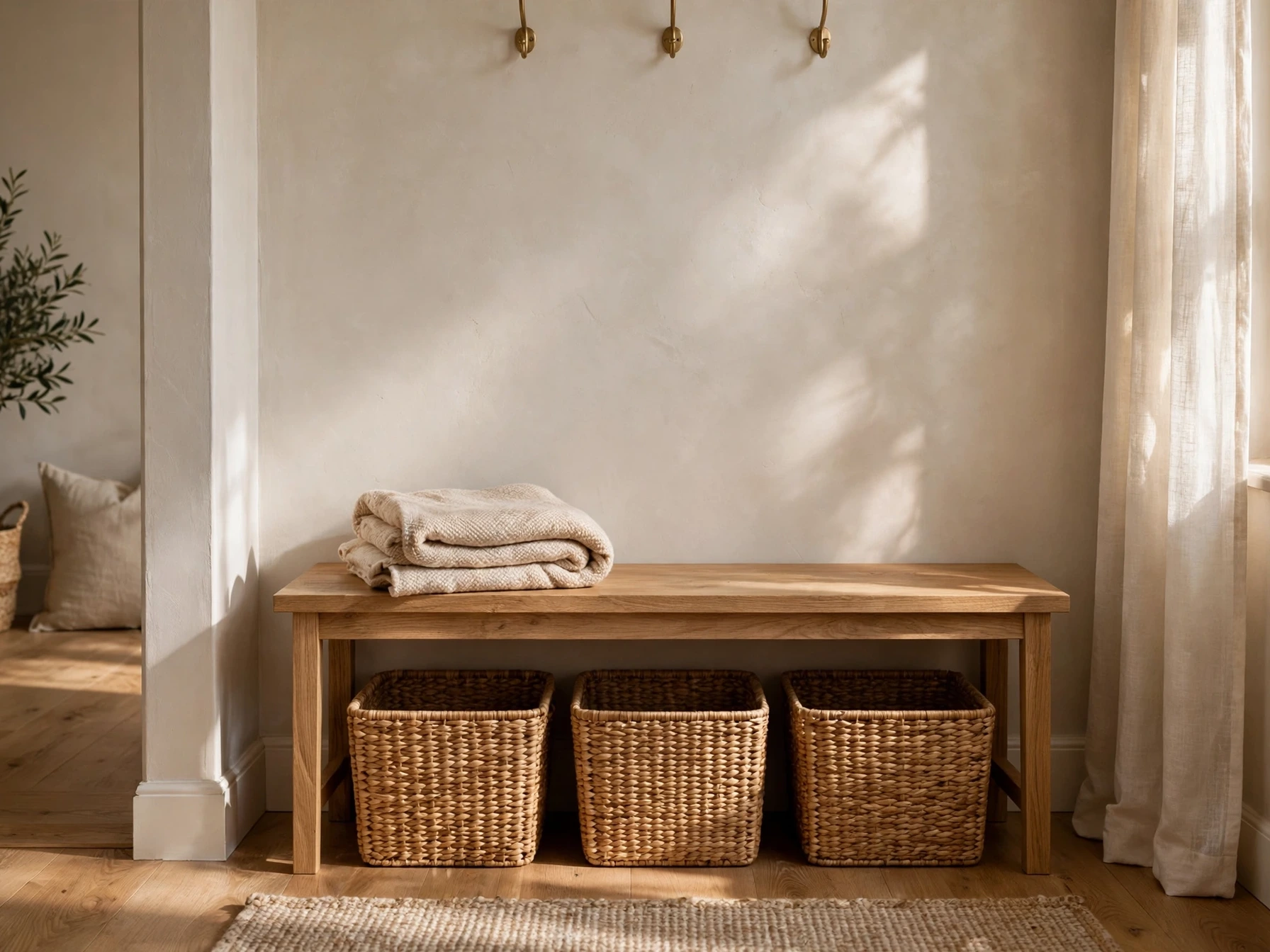
7. Hide the TV Clutter in a Low Media Unit With Doors
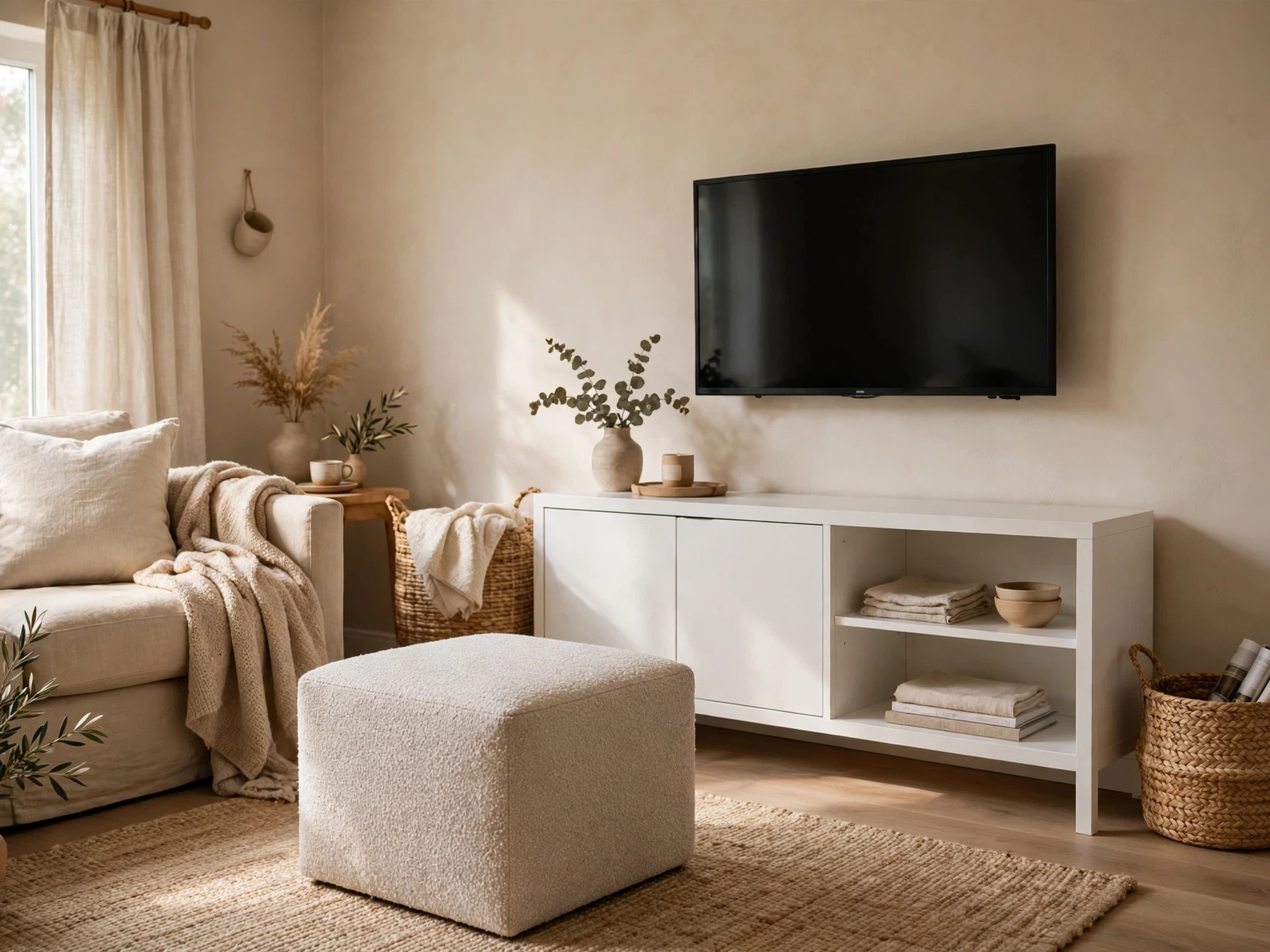
The television brings the most clutter in the room: the box, the cables, the controllers, the game discs, the remote that always goes missing. A low media unit with closed doors hides all of it in one move. The television sits on top, the mess sits behind the doors, and the room looks calm the moment the doors close.
Choose a unit that is long and low rather than tall and deep — it anchors the wall without eating the room. Keep the top almost clear: the television and one small plant are enough. Inside, give every cable and controller a place, and label the shelf so the next person to tidy up knows where things go. For the same calm, low furniture idea across the room, see our small living room shelving ideas.
Practical note: Drill a small hole in the back of the unit for the cables, or use a cable clip along the back edge. Cables that are hidden stay hidden; cables that dangle behind the unit will be visible from the sofa within a week.
Shelves, Corners & Vertical Space
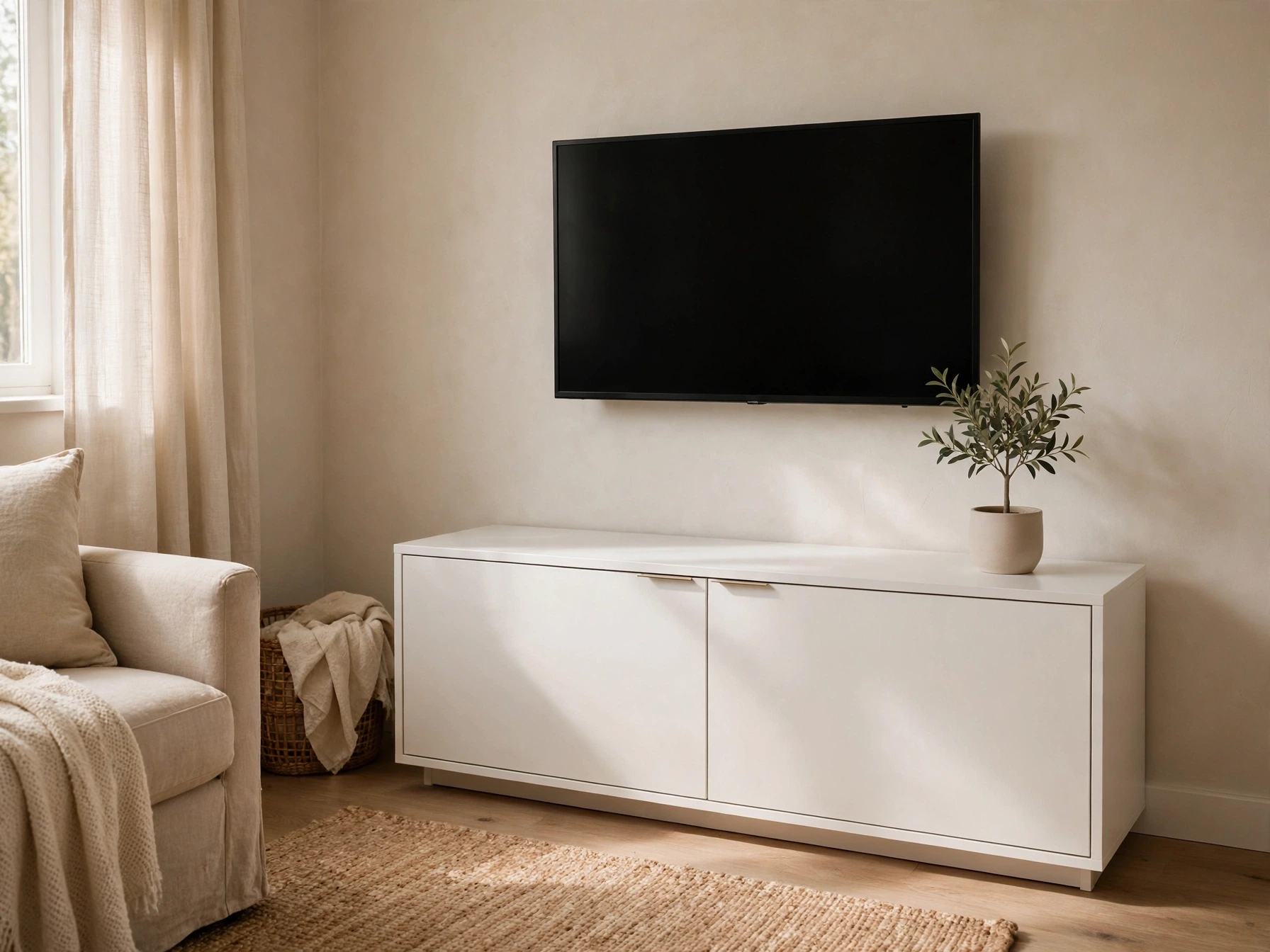
8. Float Shelves Above the Sofa
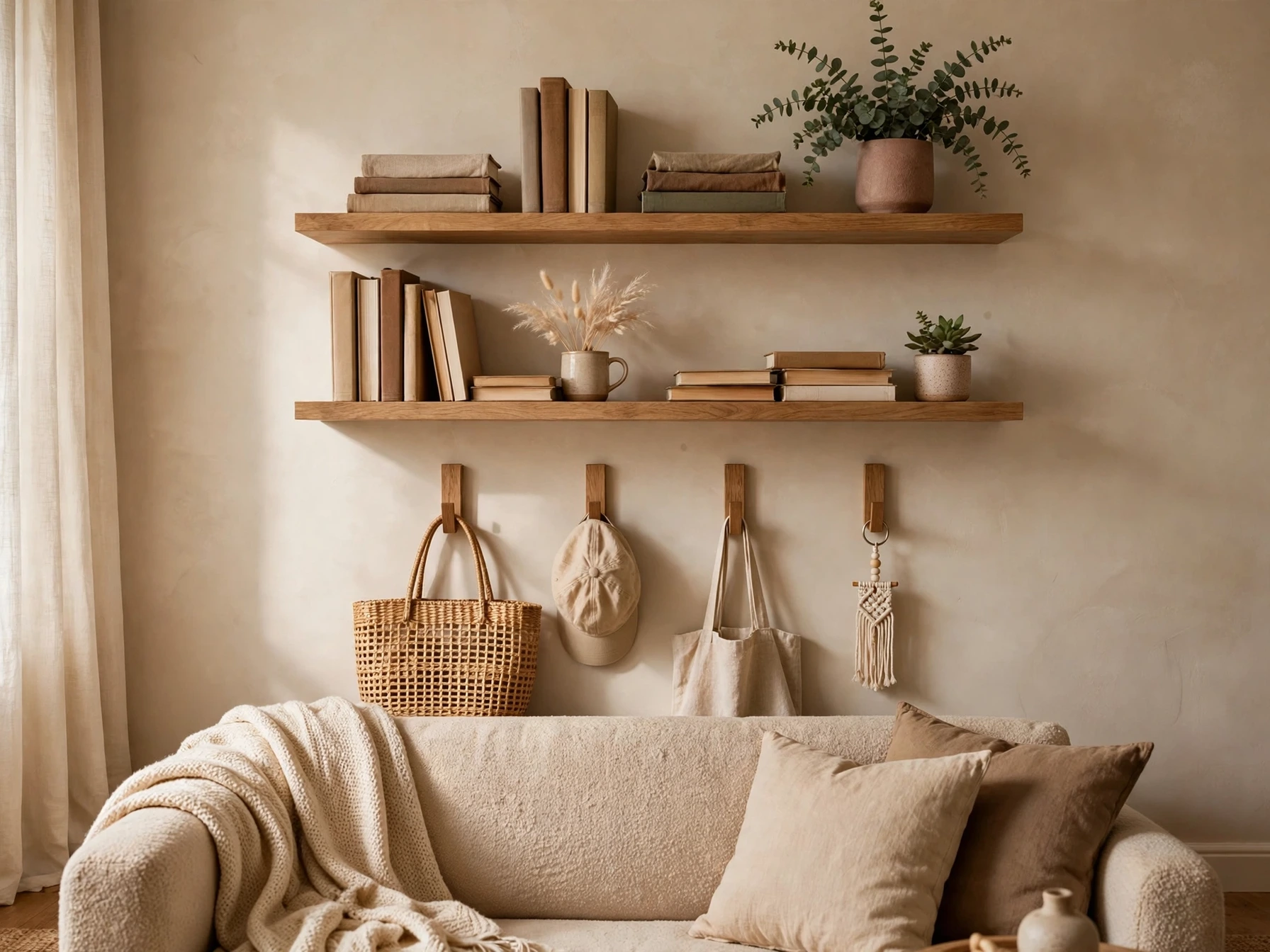
The wall above the sofa is the most underused surface in a small living room. One or two floating shelves there hold the books, the plant and the framed photo that would otherwise crowd the coffee table — and they draw the eye upward, which makes the whole room feel taller.
Style the shelves like a display, not a store cupboard: three or four items per shelf, grouped by colour, with breathing room between them. Keep the heaviest things — the books — on the lower shelf and the lightest on the top one, so the arrangement feels balanced from across the room. For more ideas on styling the wall above the sofa, see our living room wall decor ideas for renters.
Practical note: Hang the lowest shelf at about head height when you are sitting on the sofa. Any lower and you will bump it every time you stand up; any higher and the shelves stop being useful storage.
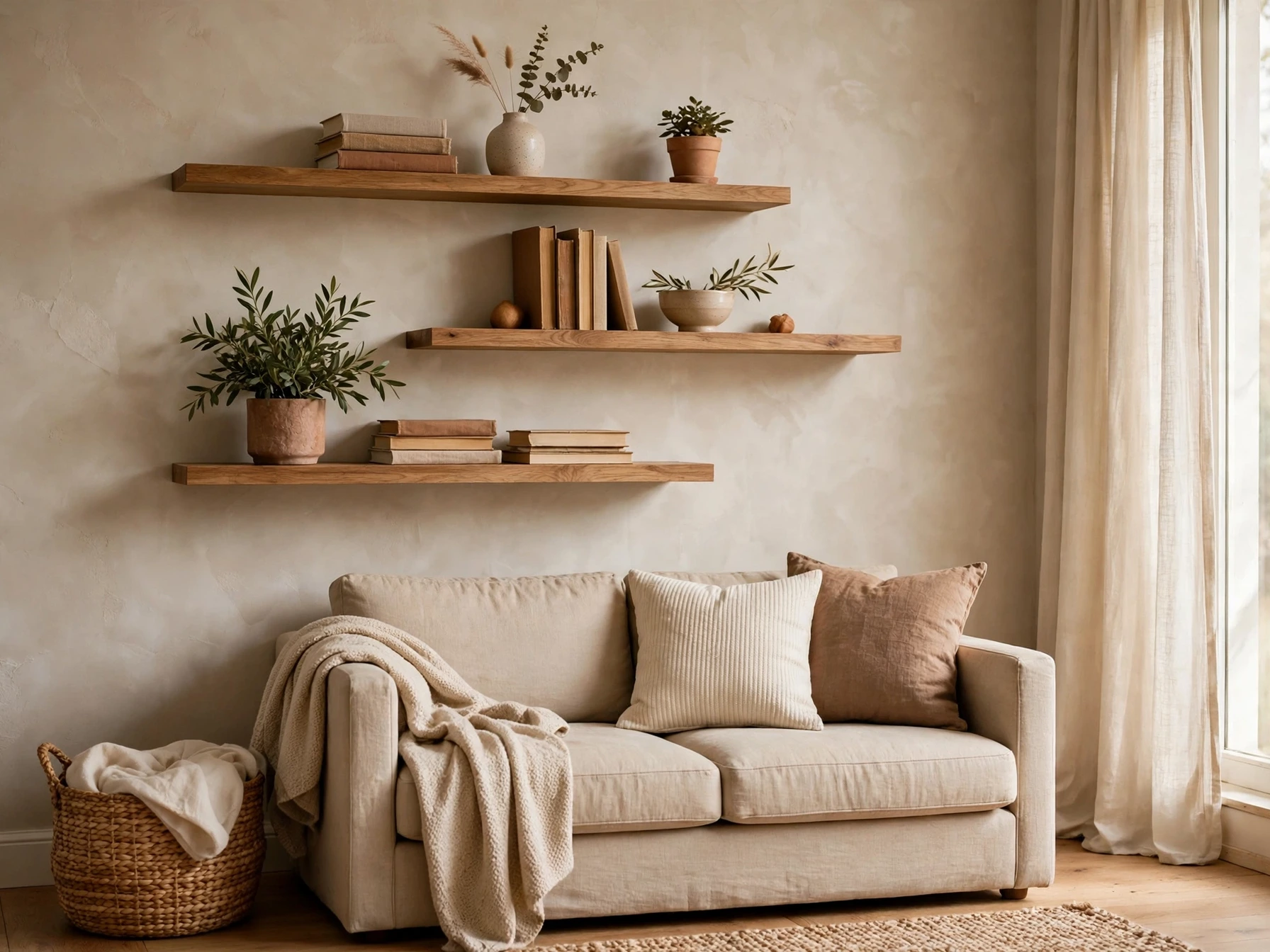
9. Fill the Dead Corner With a Tall Narrow Bookcase
Every small living room has a dead corner — the one beside the sofa where nothing fits and the dust gathers. A tall, narrow bookcase turns that corner into the room’s best storage. It holds books, boxes and baskets in a footprint no wider than a cushion, and it uses the height the rest of the room wastes.
Choose a bookcase that is taller than it is wide, and keep the top third for display — a plant, a framed print, one object you love. The lower shelves do the real work: lidded boxes for the clutter, books standing upright, baskets for the things you reach for daily. A bookcase in the corner makes the room feel finished instead of unfinished.
Practical note: Anchor the bookcase to the wall, especially in a home with children or pets. A tall, narrow piece in a corner is easy to pull over, and a small bracket keeps it steady for good.
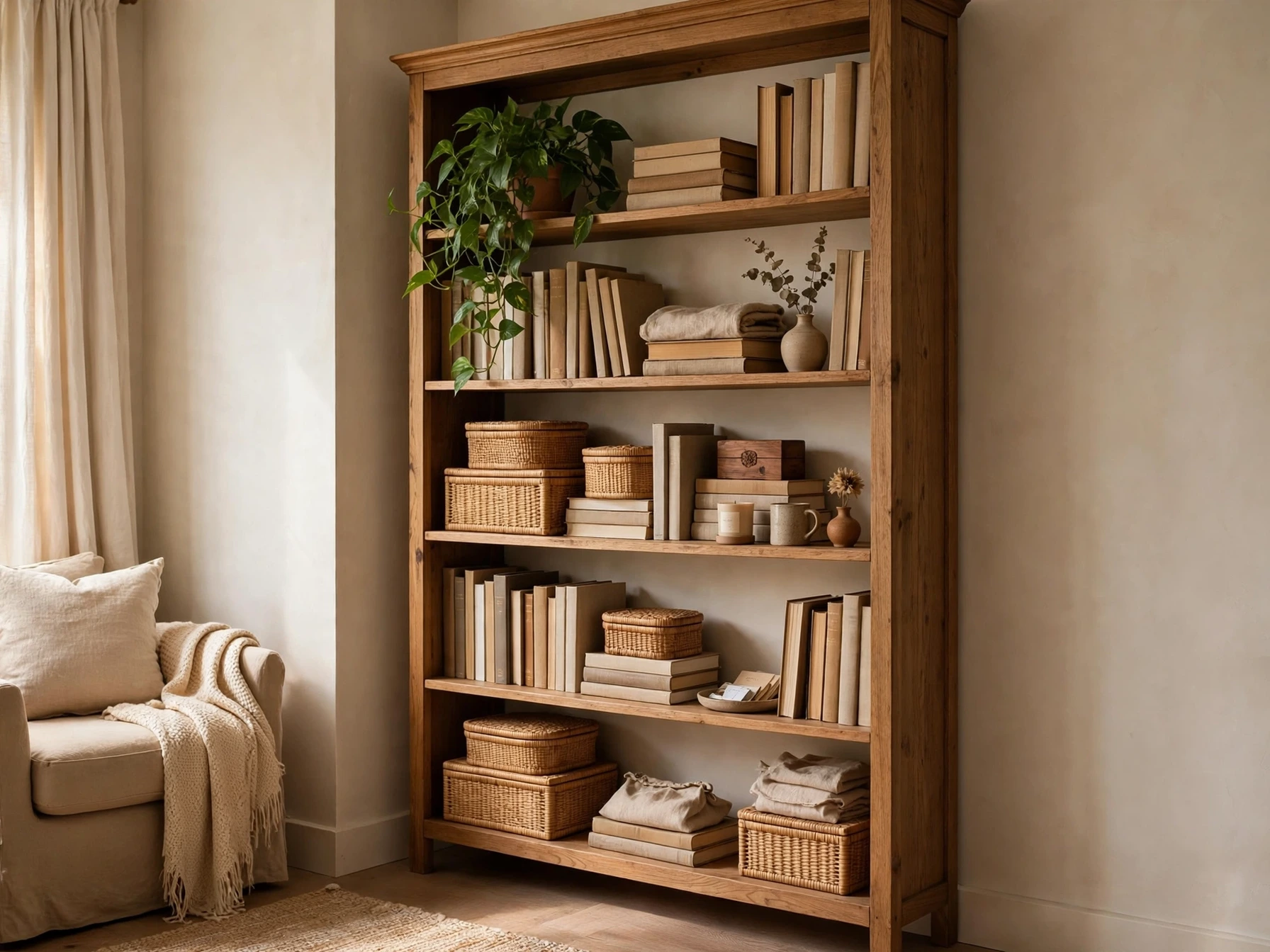
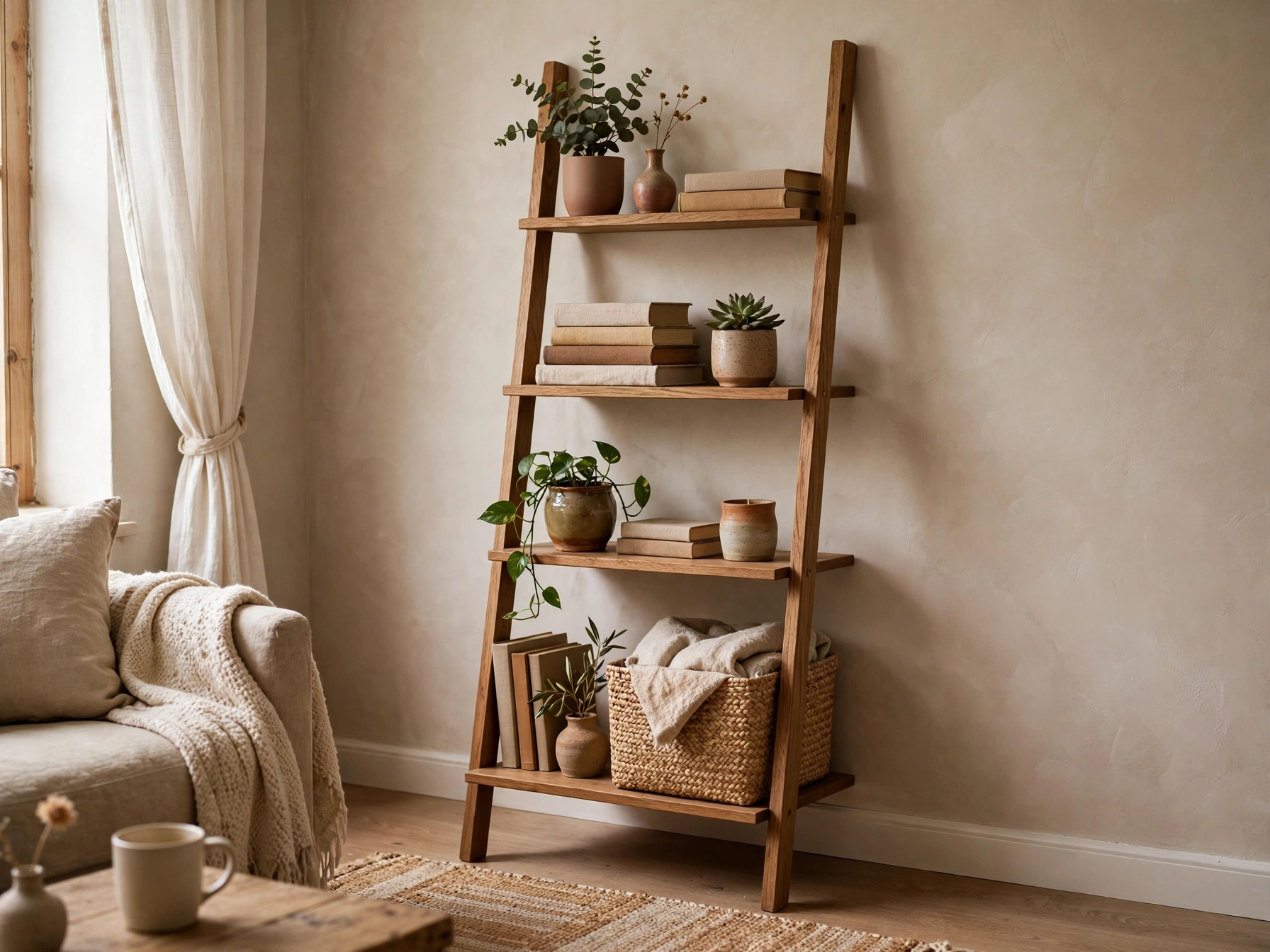
10. Lean a Ladder Shelf for Books and Baskets
A ladder shelf leans against the wall and gives you five shelves in the footprint of one. The shelves get deeper toward the bottom, so the big baskets sit low where they are easy to reach, and the small plants and books sit high where they catch the light. It is the gentlest way to add a lot of storage to a small room.
Because it leans rather than stands, a ladder shelf feels lighter than a bookcase — it does not block the wall or make the room feel boxed in. Keep the top shelf for one pretty thing and let the lower shelves do the work: a basket for the blankets, a box for the chargers, a stack of books for the evening.
Practical note: A ladder shelf suits a wall that has nothing on it yet. If the wall already holds the television or a large frame, put the ladder shelf on the opposite wall so the room stays balanced.
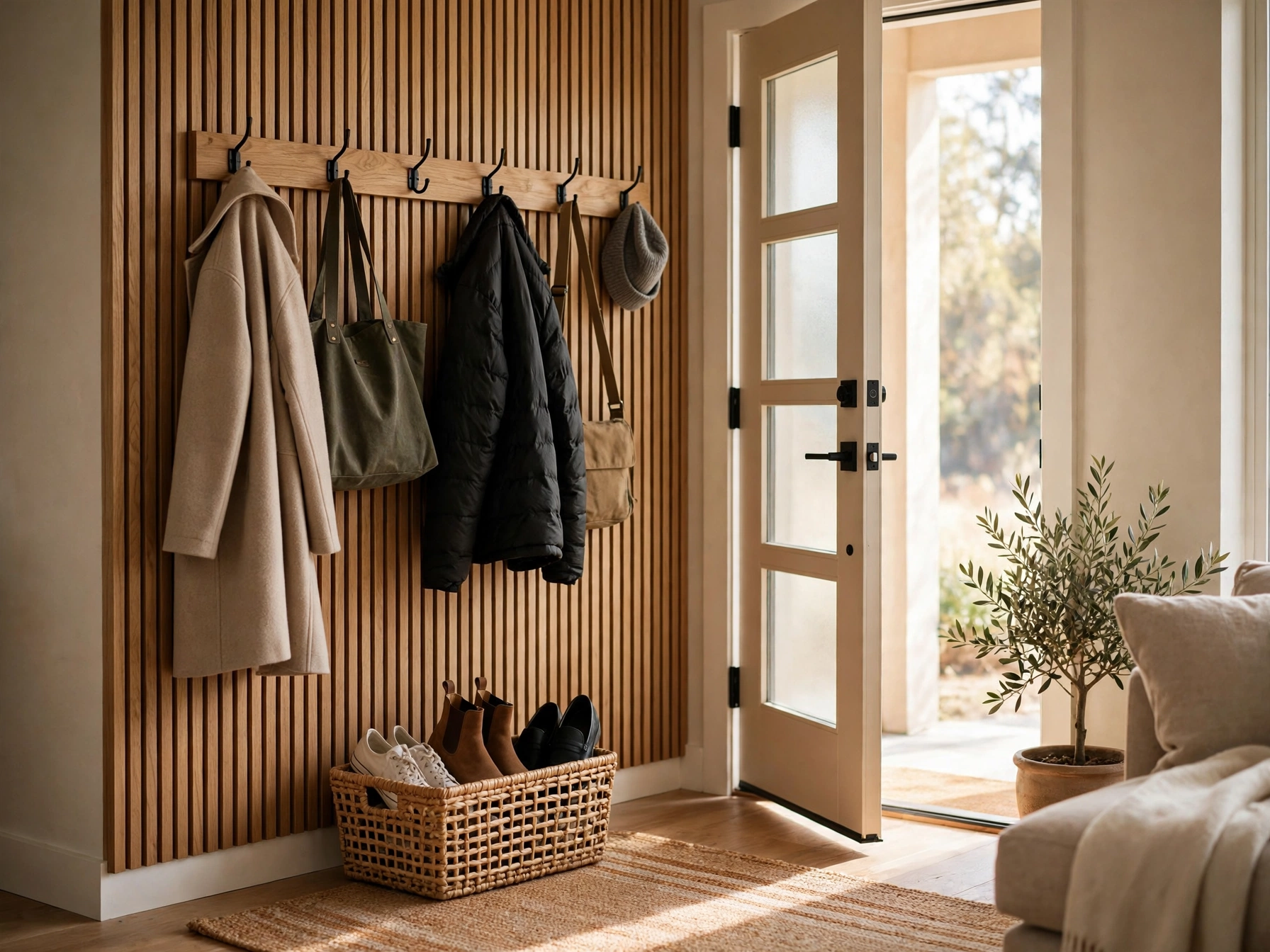
11. Hang Hooks and a Rail by the Door
The coats, the bags and the dog lead have to live somewhere, and in a small living room they usually live on the sofa. A row of hooks on a wooden rail by the door gives them a home that costs nothing in floor space. Hang the rail at shoulder height, put a small basket underneath for shoes, and the entry corner takes care of itself.
Use hooks that match each other — three or four in a row looks deliberate, while a mix of odd hooks looks like an afterthought. Hang the things you grab daily at the front, and the things you use weekly further along the rail. For the same warm wood idea at the other end of the room, see our cozy living room ideas for small spaces.
Practical note: Put the rail where you actually come in, not where you wish you came in. A rail by the real door gets used every day; a rail by the pretty wall stays empty while the coats pile up on the sofa.
Baskets, Boxes & Everyday Systems
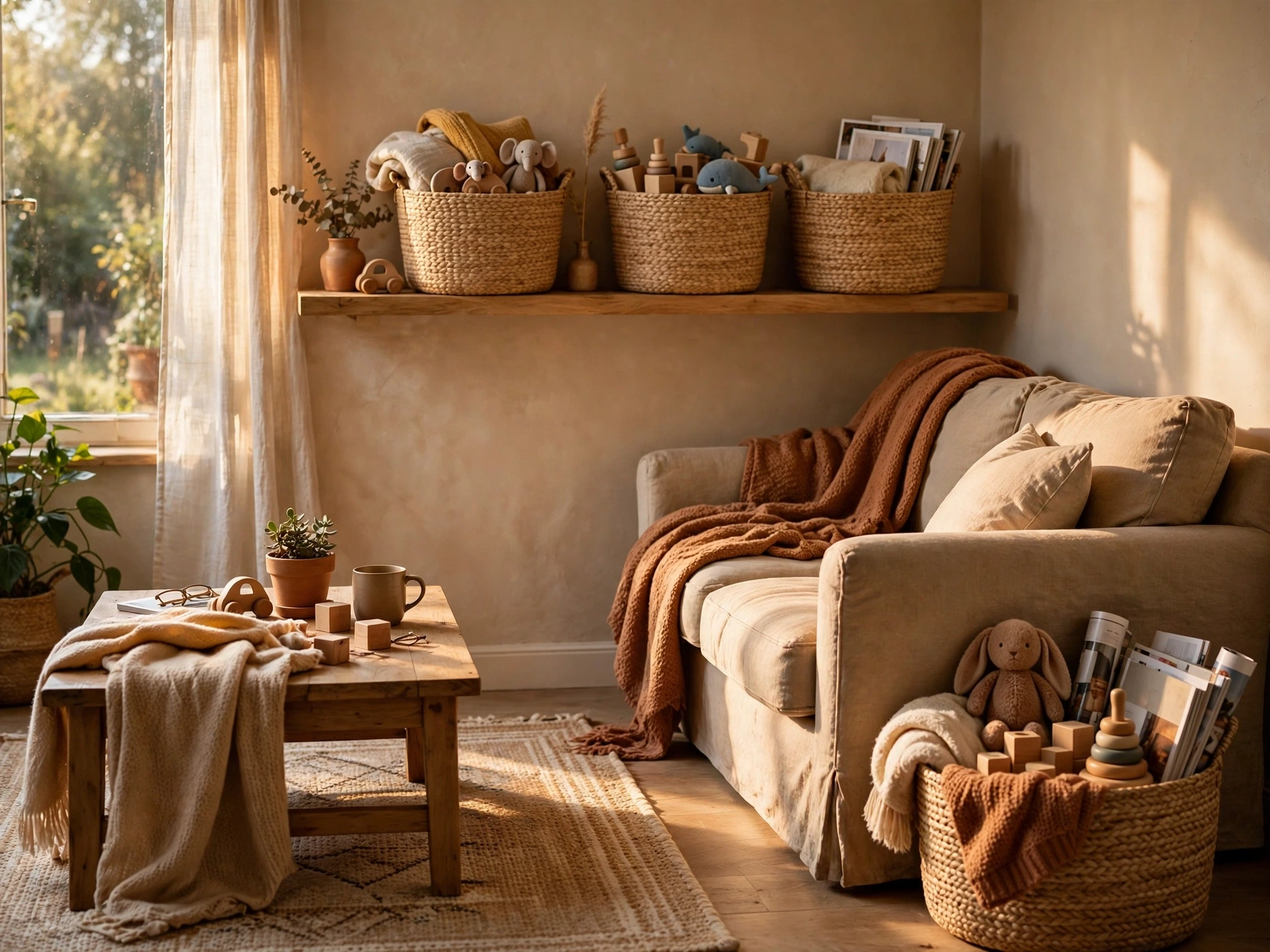
12. Corral Daily Clutter in Matching Baskets
Every living room collects drift: the spare cushion, the toy that migrated from the bedroom, the magazine that belongs in the recycling, the charger that belongs upstairs. Instead of fighting it, give the drift a home. Two or three matching woven baskets — one by the sofa, one on the shelf, one by the door — hold the day’s clutter in tidy places, and the rest of the room stays clear.
Keep the baskets the same material and a similar size. Matching baskets read as one calm system, while a mix of odd boxes looks like the clutter moved, not like it was solved. Empty the baskets every evening during the nightly reset, and the room never gets the chance to become a dumping ground.
Practical note: Put the baskets where the clutter actually lands, not where you wish it would land. A basket by the sofa catches the drift; a basket in the far corner stays empty while the clutter piles up beside the sofa.
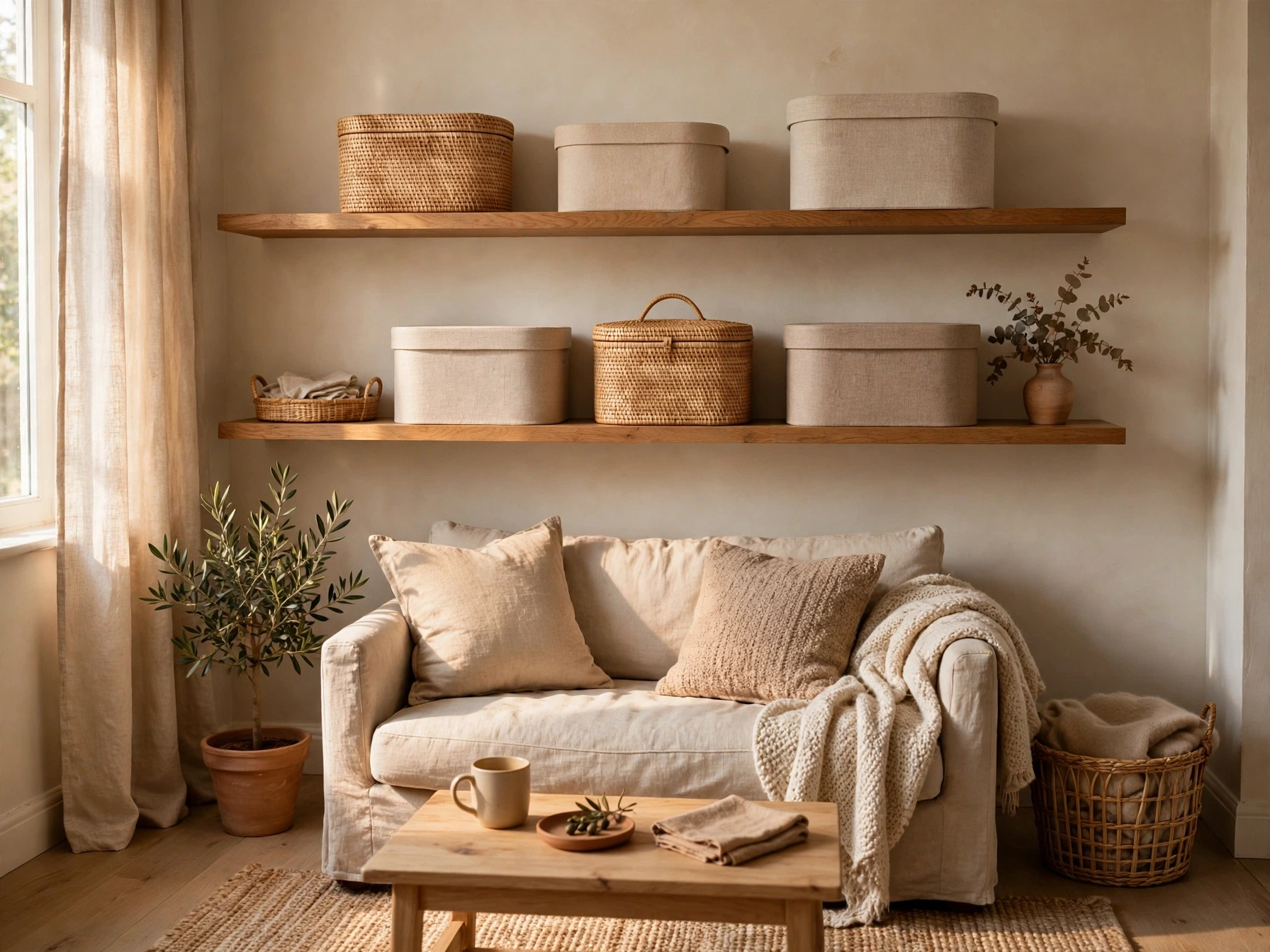
13. Use Lidded Boxes So Shelves Stay Calm
Open shelves are lovely, but they show everything — and everything on show in a small room looks like clutter, even when it is tidy. Lidded boxes fix that. Put the cables, the controllers, the spare batteries and the half-finished projects into matching boxes with lids, and the shelves look calm even when the boxes are full.
Choose boxes in one warm neutral colour so the shelves read as one quiet row. Label the front of each box so you can find things at a glance — a small label on the front is the difference between a box you use and a box you forget. Keep the boxes you reach for daily at arm height and the rarely used ones up high.
Practical note: A box that is too big becomes a dumping ground. Choose boxes small enough that you have to open them on purpose — one job per box, and the box stays useful.
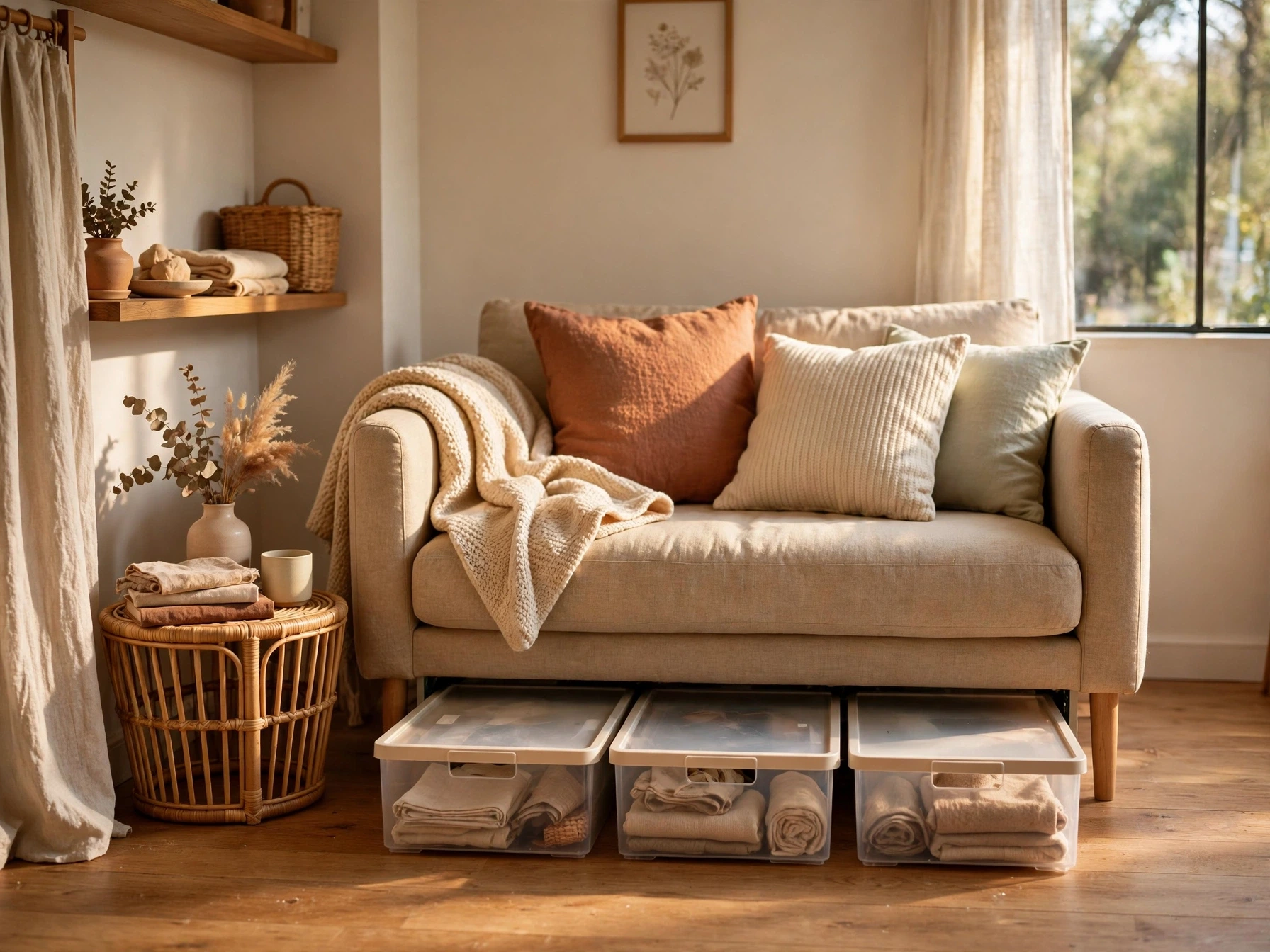
14. Slide Slim Bins Under the Sofa
The space under the sofa is storage hiding in plain sight. Two slim bins on wheels slide underneath and hold the things a small room has no other place for: the spare throws, the board games, the wrapping paper, the shoes that belong by the door but never make it there.
Measure the gap first — most sofas sit only a hand’s width off the floor, so the bins need to be genuinely slim. Choose bins with lids so nothing dusty drifts in, and handles on the front so they slide out with one pull. When the bins are tucked away, the room looks exactly the same as before — which is the point.
Practical note: Keep only the things you use weekly in the under-sofa bins. Things you use daily belong in a basket by the sofa, and things you use yearly belong in a cupboard — the under-sofa bins are for the in-between.
15. Do a Five-Minute Nightly Living Room Reset
Even the best-stored living room drifts during the day. A cushion ends up on the floor, a mug lands on the wrong table, a blanket gets left on the arm of the sofa. Once a day, spend five minutes putting everything back: cushions plumped, baskets emptied, remotes in the drawer, and the surfaces wiped clean.
Pick a fixed time — right after dinner works well — and set a timer. When it rings, stop. A short reset you actually do every night beats a long tidy-up you keep putting off. For the same habit on the other side of the room, see our living room decor ideas for small apartments.
Practical note: Keep a small basket by the sofa for the reset, so the things that belong in other rooms have somewhere to wait. A basket that collects the drift makes the reset a single trip instead of five.
5 Living Room Storage Tips That Keep It Calm
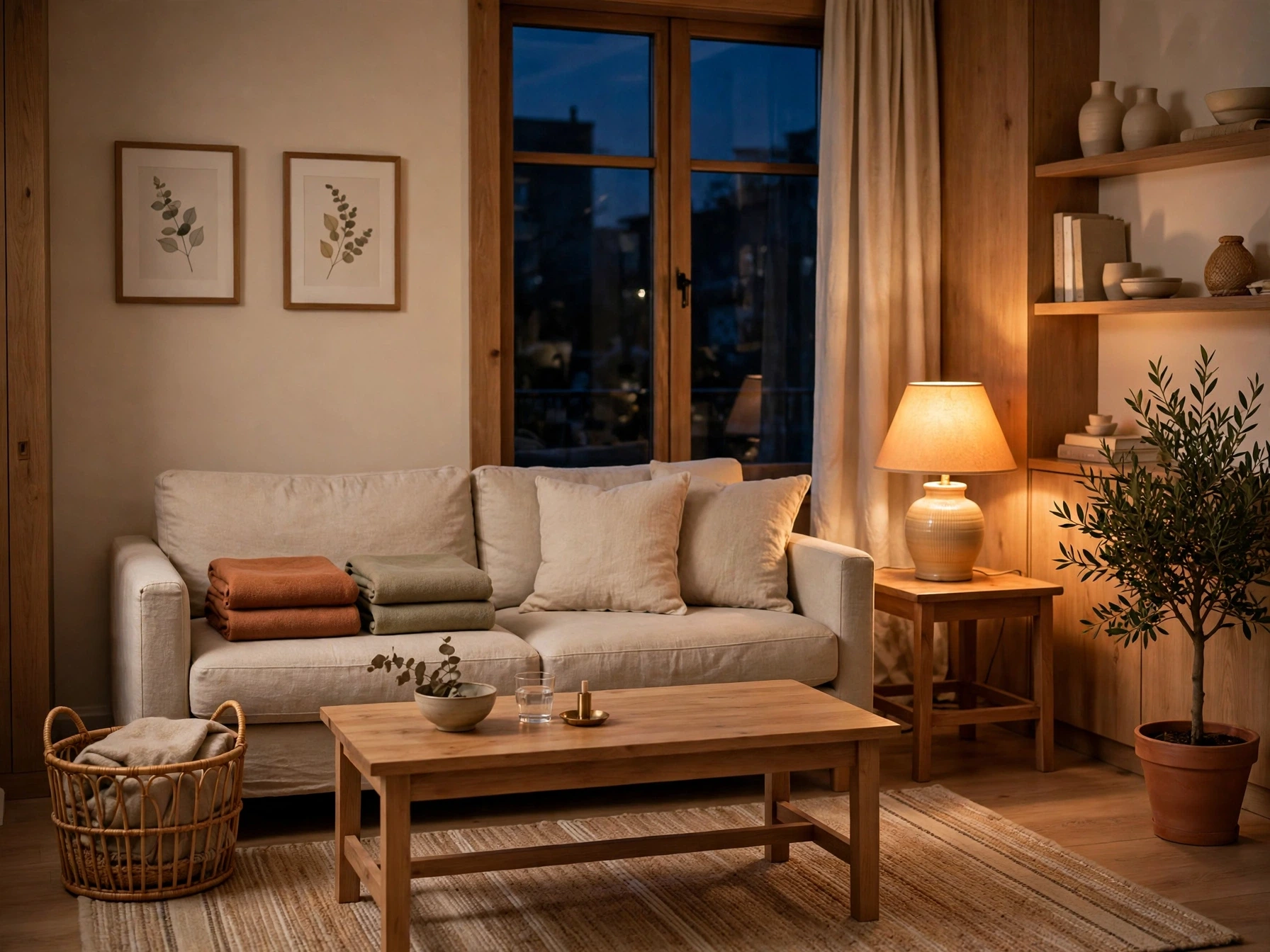
- Use the walls before the floor. A shelf, a rail and a row of hooks give you a whole new storage surface without taking a single inch of floor away from the sofa.
- Hide storage inside furniture you already own. An ottoman that opens, a bench with baskets below, a low unit with doors — the clutter disappears without a single extra piece of furniture.
- Match your baskets and boxes. Two or three in the same material and colour read as one calm system; a mix of odd boxes looks like the clutter moved, not like it was solved.
- Store things where you use them. Blankets by the sofa, books by the reading corner, coats by the door. Storage that lives where the thing is used gets used — storage anywhere else stays empty.
- Reset every night. Five minutes of putting things back and wiping the surfaces beats a long tidy-up every weekend. A room that is reset nightly never gets the chance to become a dumping ground.
For more warm small-space ideas, see our cozy living room ideas for small spaces and our small living room shelving ideas. For autumn warmth in the same room, see our pumpkin home decor ideas and our fall decor ideas for small apartments.
Living Room Storage FAQs
How do I add storage to a small living room without making it feel crowded?
Use the walls before the floor and hide storage inside furniture you already own: an ottoman that opens, a bench with baskets below, a low media unit with doors, and shelves above the sofa. Storage that lives inside the room’s own furniture adds no extra pieces and takes no extra floor.
What is the best storage furniture for a small living room?
A storage ottoman, a coffee table with a drawer or lift-up top, and a low media unit with closed doors. Each one does two jobs at once — it is a seat or a surface and a cupboard — so the room gains storage without gaining furniture.
How do I hide clutter in a living room with open shelves?
Put the clutter into matching lidded boxes and label the front of each one. Open shelves show everything, so the boxes are what the eye sees — one calm row in a warm neutral colour, with the mess hidden inside.
Can I add living room storage in a rental without damaging the walls?
Yes — everything on this list is removable: leaning shelves, freestanding bookcases, baskets, ottomans and benches need no drilling at all. For floating shelves and rails, use removable hooks or a tension system where drilling is not allowed. For more renter-safe ideas, see our living room wall decor ideas for renters.
Final Thoughts
A small living room does not need a big budget or a renovation to feel calm. One storage ottoman, matching baskets, a shelf above the sofa and a low unit with doors are enough to hide the clutter — with the floor still clear for living.
Start with the idea that costs nothing: take everything out that does not belong, keep only what you use every week, and put it back where you actually use it. Then add the next idea only when the first one feels like home. For more small-space inspiration, see our small living room shelving ideas and our cozy living room ideas for small spaces — the same calm, hidden storage works in every corner of the room.
Save this post to your living room board and hide one pile of clutter this weekend.