
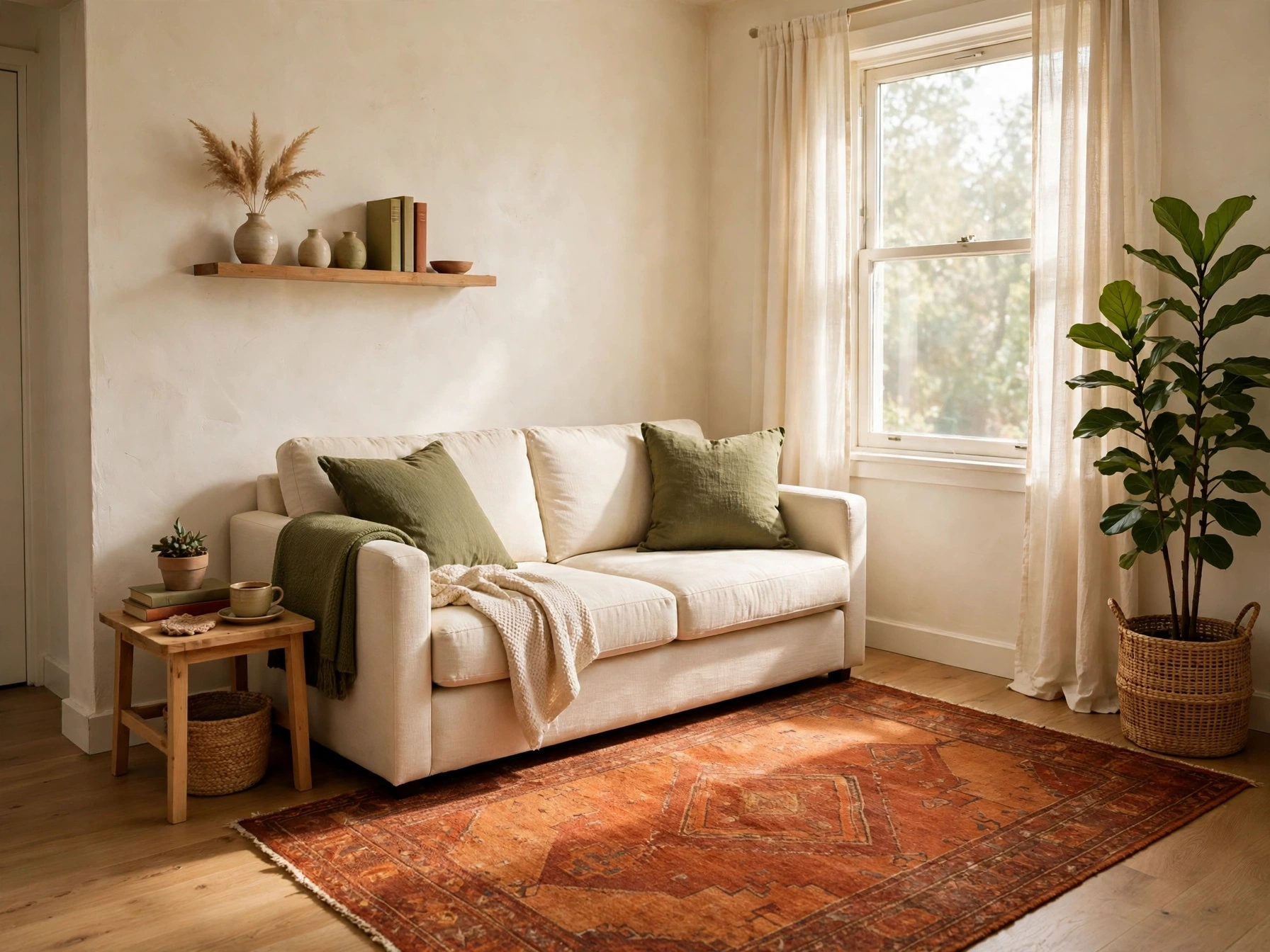
A small living room does not need more furniture. It needs a better plan. When the sofa fits the wall, the rug marks the seating area, and every object has a place to live, a tiny room stops feeling cramped and starts feeling calm.
The 20 living room decor ideas below are practical, affordable, and made for real apartments: rentals, studios, and older homes with awkward corners. No renovation is required. Pick one idea today, try it for a week, and add the next one only when the first feels like home.
Why a Small Living Room Needs a Plan, Not More Furniture
A small living room fails when everything is pushed against the walls and nothing has a job. The sofa is too big for the wall, the coffee table blocks the walkway, and the shelves hold things you never use. You spend more time stepping around furniture than relaxing in the room.
A plan fixes that. Give the room one clear seating zone, one clear path through it, and one place for everything you keep there. When a room holds five well-chosen pieces instead of twelve random ones, it feels bigger, brighter, and much easier to live in.
20 Living Room Decor Ideas for Small Apartments
Layout & Flow
1. Start with a Rug to Define the Seating Zone
A rug is the fastest way to give a small living room a shape. Lay one under the front legs of the sofa and the chairs, and suddenly the seating area has edges — a room inside the room — even in a studio where the living area flows into the kitchen.
Choose a rug that is big enough for the seating group, not one that floats in the middle like a mat. In a small room, the rug should reach at least under the front legs of every seat, so the group feels connected instead of scattered.
Practical note: A low-pile rug in a warm neutral is easiest to clean and makes the floor look larger. For fall warmth on the same rug, see our fall decor ideas for small apartments.
2. Choose a Right-Size Sofa, Not a Three-Seater
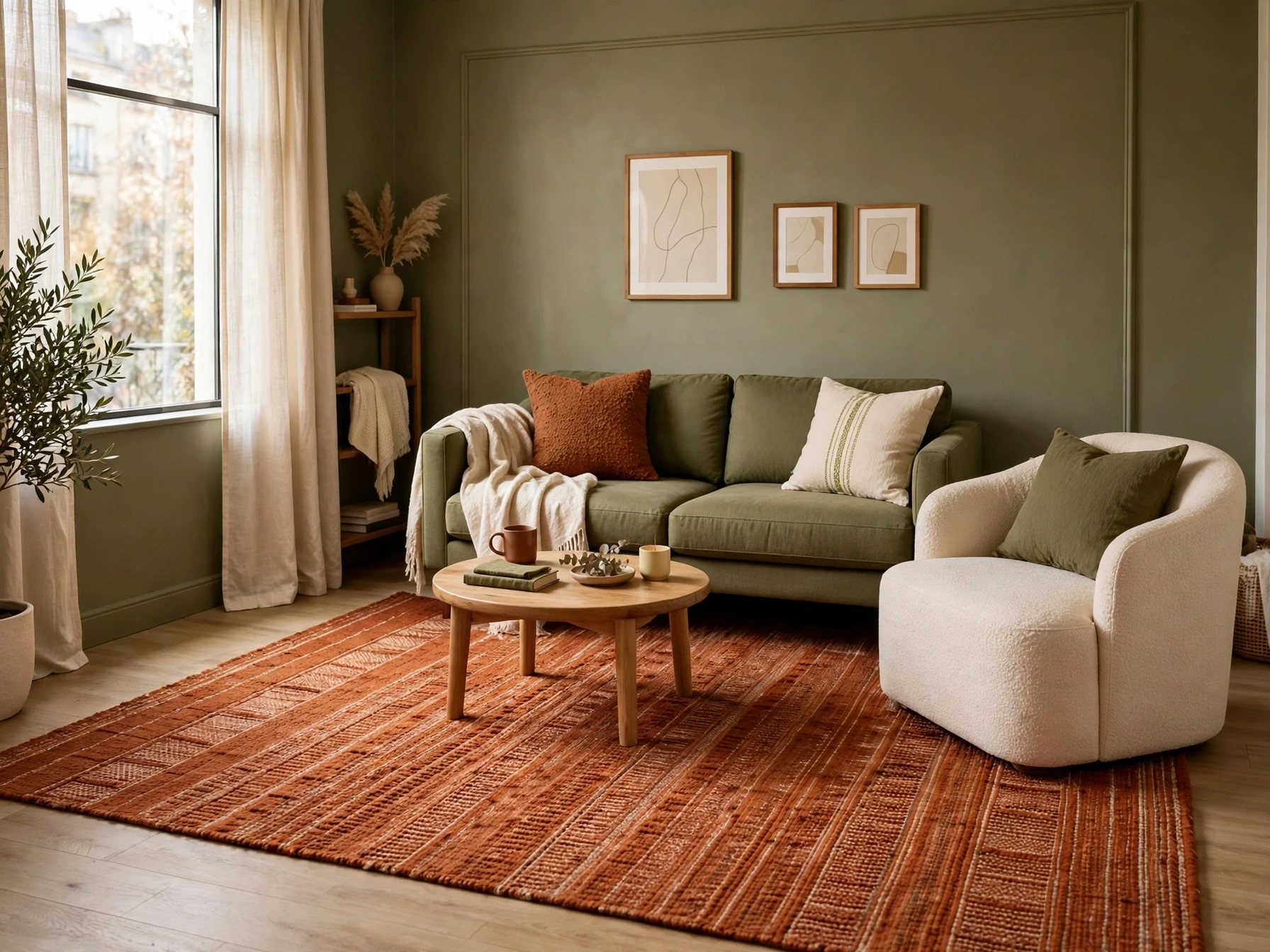
The single biggest mistake in a small living room is a sofa that is too large. A full three-seater eats the wall, blocks the walkway, and leaves no room for a side table or a lamp. An apartment-size sofa or a loveseat does the same job and leaves the room breathing.
Measure the wall before you shop, then subtract room for a side table and a clear path. A sofa with slim arms and raised legs looks lighter than a bulky one, because you can see floor underneath it — and visible floor makes a room feel bigger.
Practical note: Sit on it before you buy if you can. A loveseat that is comfortable for two people beats a three-seater that nobody can reach the end of.
3. Pull the Sofa a Few Inches Off the Wall
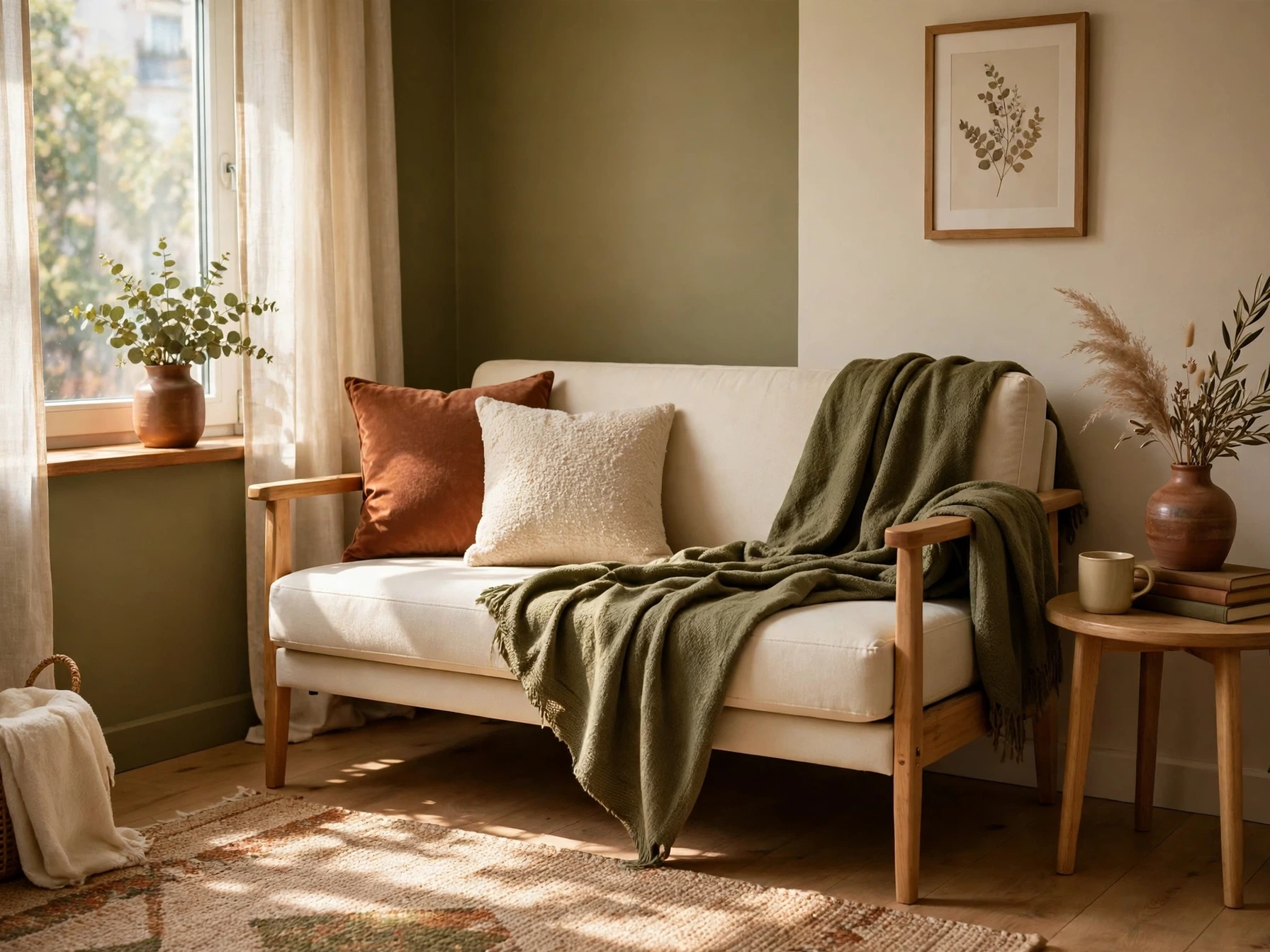
Pushing every piece of furniture flat against the wall is the instinct in a small room, but it usually backfires. Pulling the sofa just a few inches out creates a shadow line behind it, and the room suddenly has depth instead of a flat edge.
That small gap also gives you room for a narrow console or a floor lamp behind the sofa, and it stops the cushions from scuffing the paint. In a rental, it keeps the wall cleaner too, which matters at move-out time.
Practical note: Even three or four inches is enough. Walk behind the sofa once; if you can pass without turning sideways, the gap is right.
4. Keep One Clear Walkway Through the Room
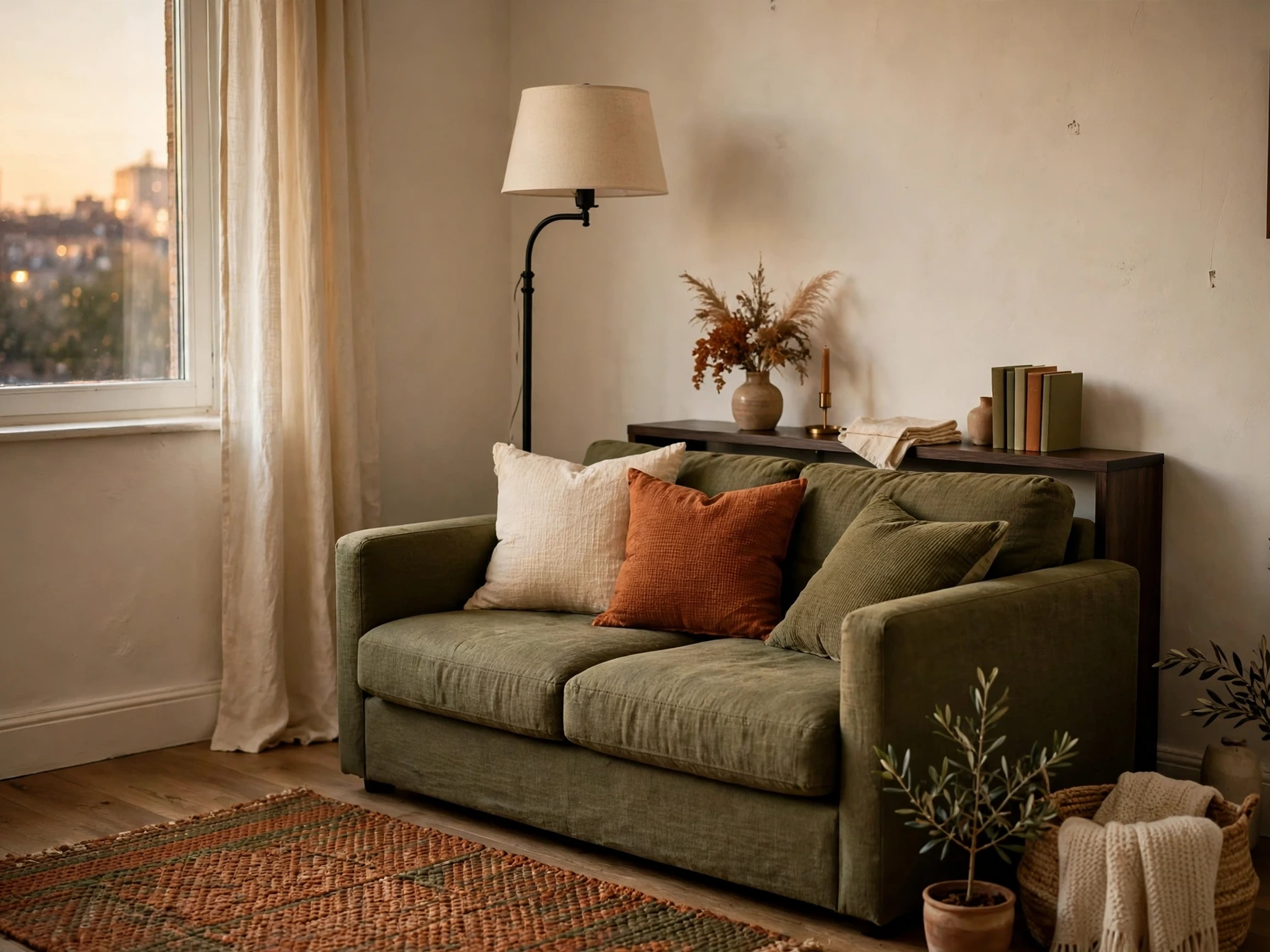
Every small living room needs one clear path from the door to the rest of the home. When the coffee table, the plant stand, and the shoe rack all crowd that path, the room feels like an obstacle course, no matter how pretty it looks.
Pick the path first, then arrange the furniture around it. The coffee table should sit close enough to reach from the sofa but far enough that you can walk past it without turning sideways. A clear walkway makes the whole apartment feel larger.
Practical note: Measure the path with your feet: if you can walk it carrying a full mug without slowing down, it is wide enough.
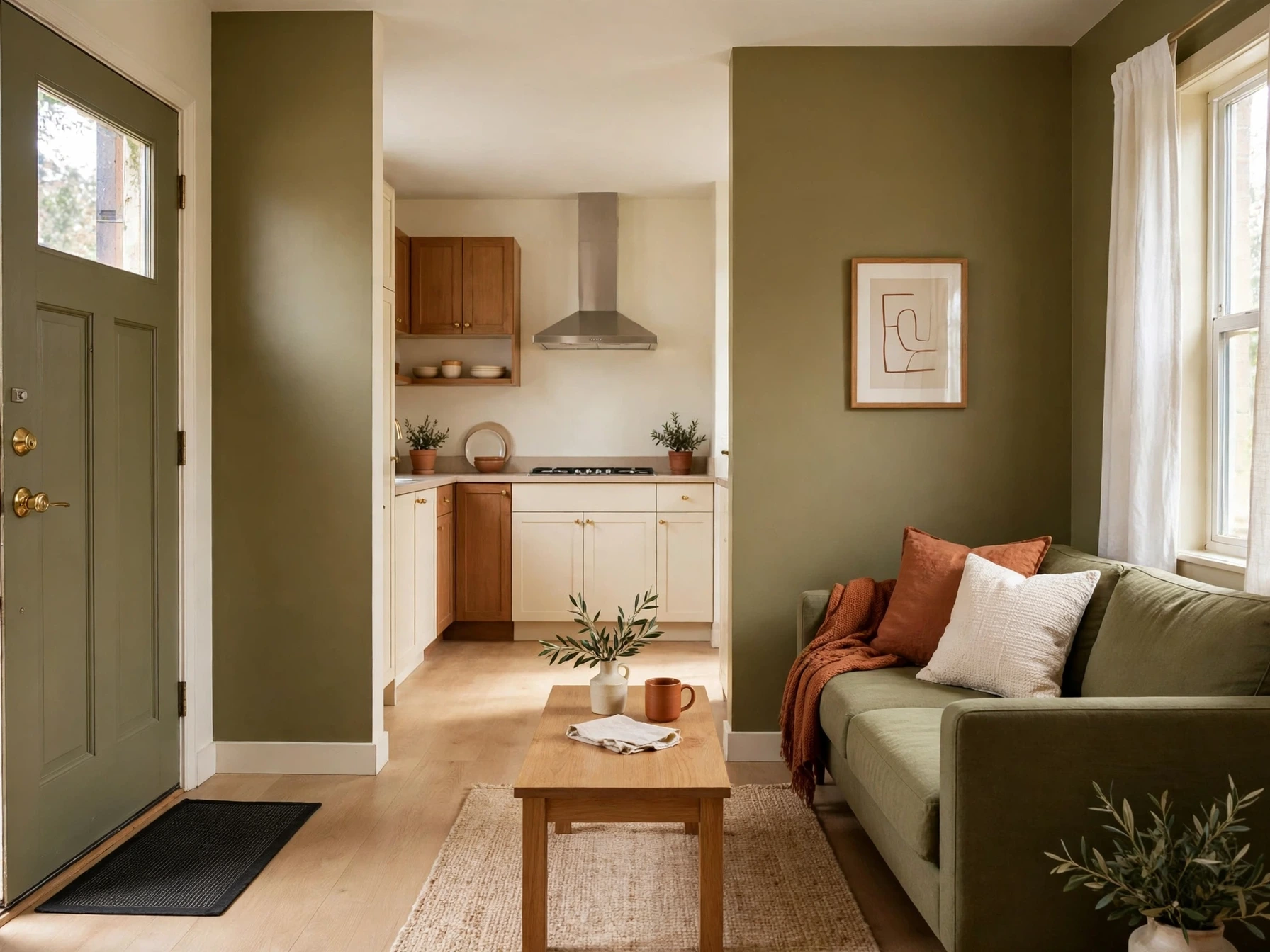
5. Turn an Awkward Corner into a Reading Nook
Every small apartment has one corner that seems useless — too narrow for furniture, too dark for a plant. A small armchair, a floor lamp, and a tiny side table turn that corner into the best seat in the house.
A reading nook gives the room a second purpose beyond the sofa and the television. It is also the easiest corner to style: one chair, one light, one stack of books, and the corner stops being wasted space.
Practical note: Choose a chair with a low back so it does not block light from the window. A basket beside it holds the books and the throw.
Storage & Surfaces
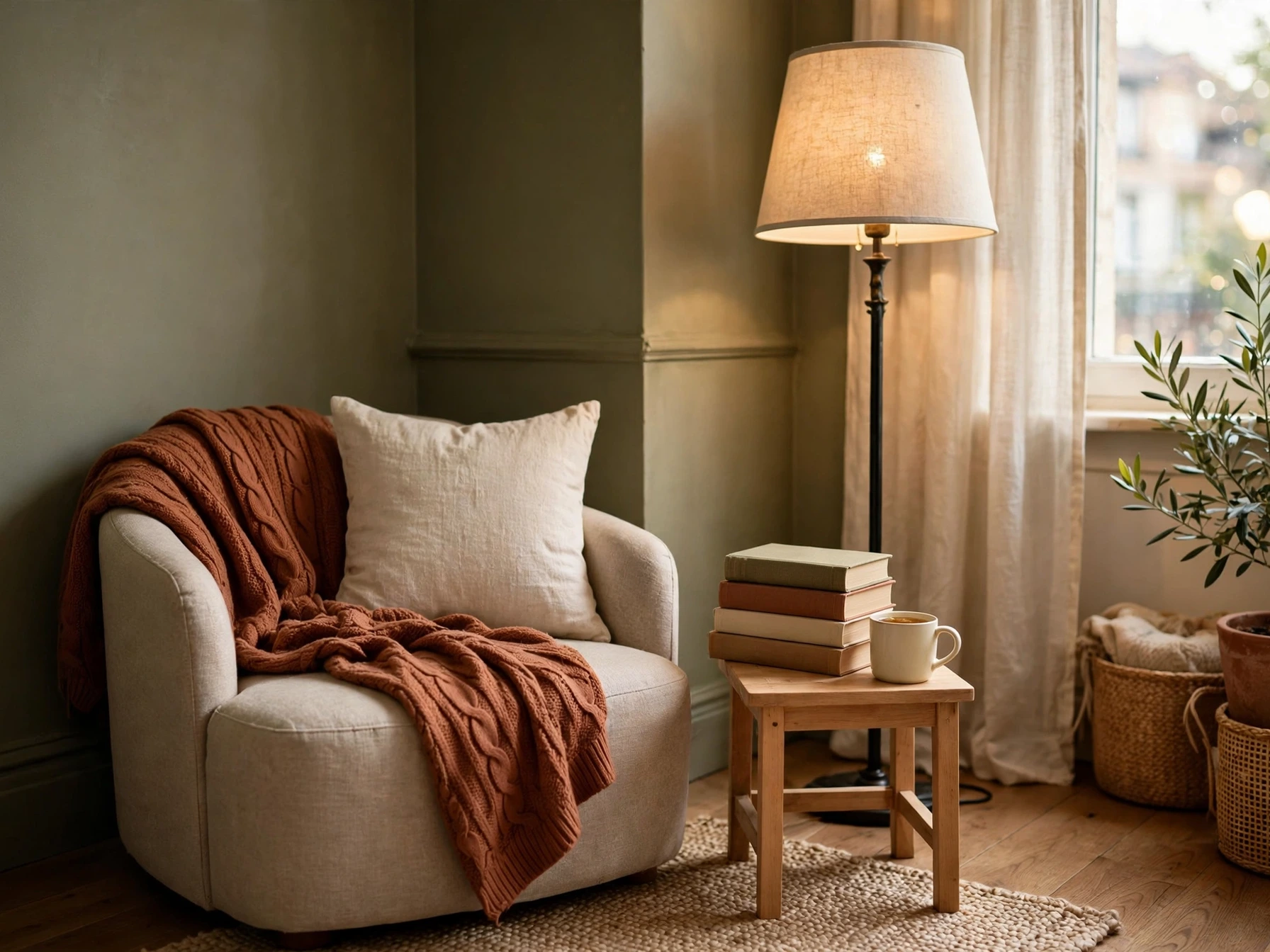
6. Mount the TV on the Wall
A television on a stand eats a whole piece of furniture’s worth of floor space. Mounted on the wall, the same television frees that floor for a plant, a basket, or simply empty space — and empty space is precious in a small room.
Wall mounting also lets you set the screen at the right height for the sofa, instead of whatever height the stand happens to be. Hide the cables in a slim trunking strip painted the same colour as the wall, and the television looks built in.
Practical note: Renters can use a no-drill television mount or a tall, narrow stand that leans against the wall. Check your lease before drilling.
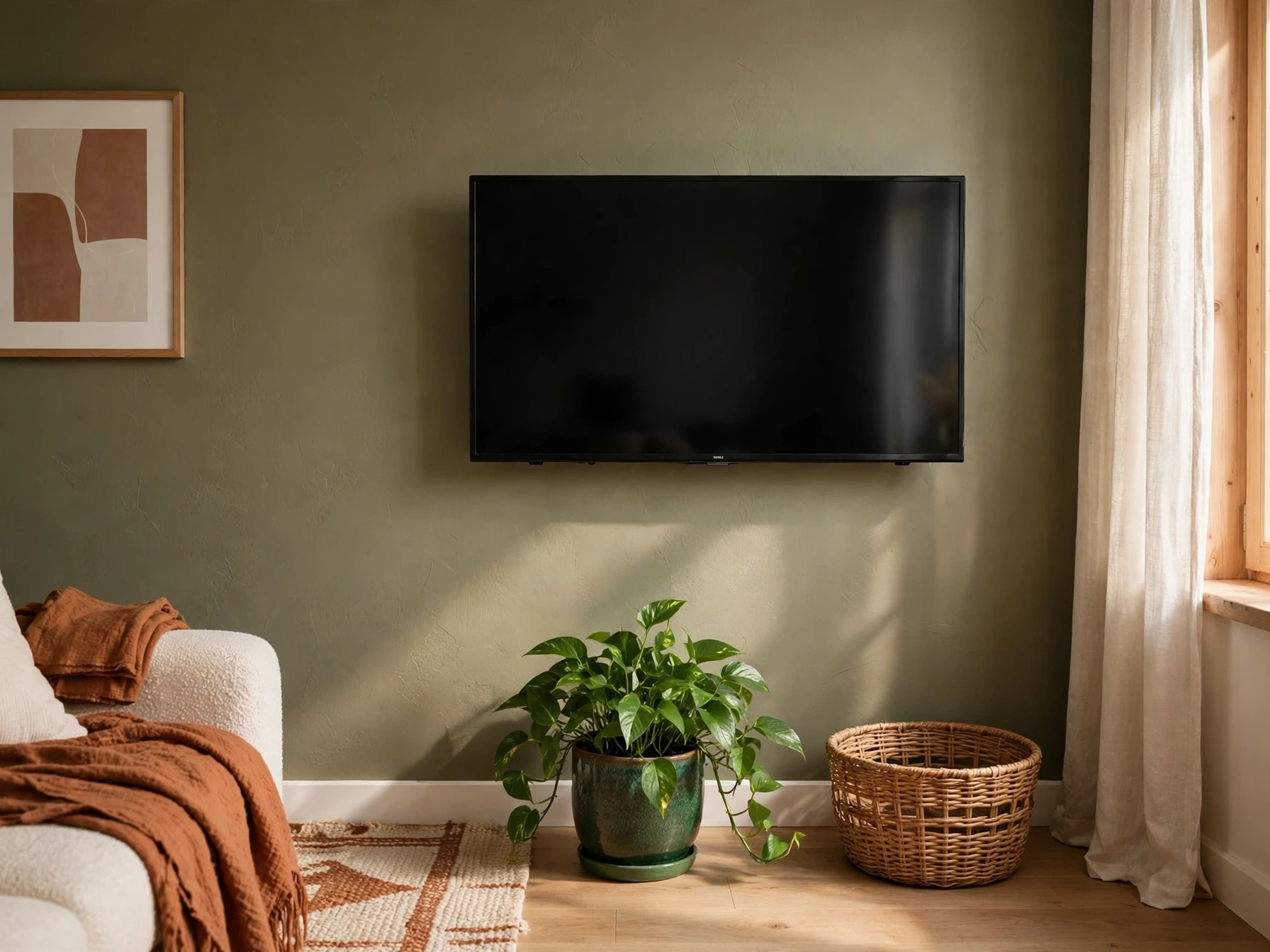
7. Pick a Coffee Table with Storage Inside
In a small living room, the coffee table should work as hard as the sofa. A table with a shelf, a drawer, or a lift-up top hides the remote controls, the magazines, and the charging cables that otherwise live on top of it.
A lift-up top is especially useful in a small apartment: it turns the coffee table into a laptop desk or a dinner table for one, then folds back down when you are done. Choose one with a light top so the room does not feel weighed down.
Practical note: Keep only three things on the tabletop — a book, a candle, and a small tray — and everything else goes inside.
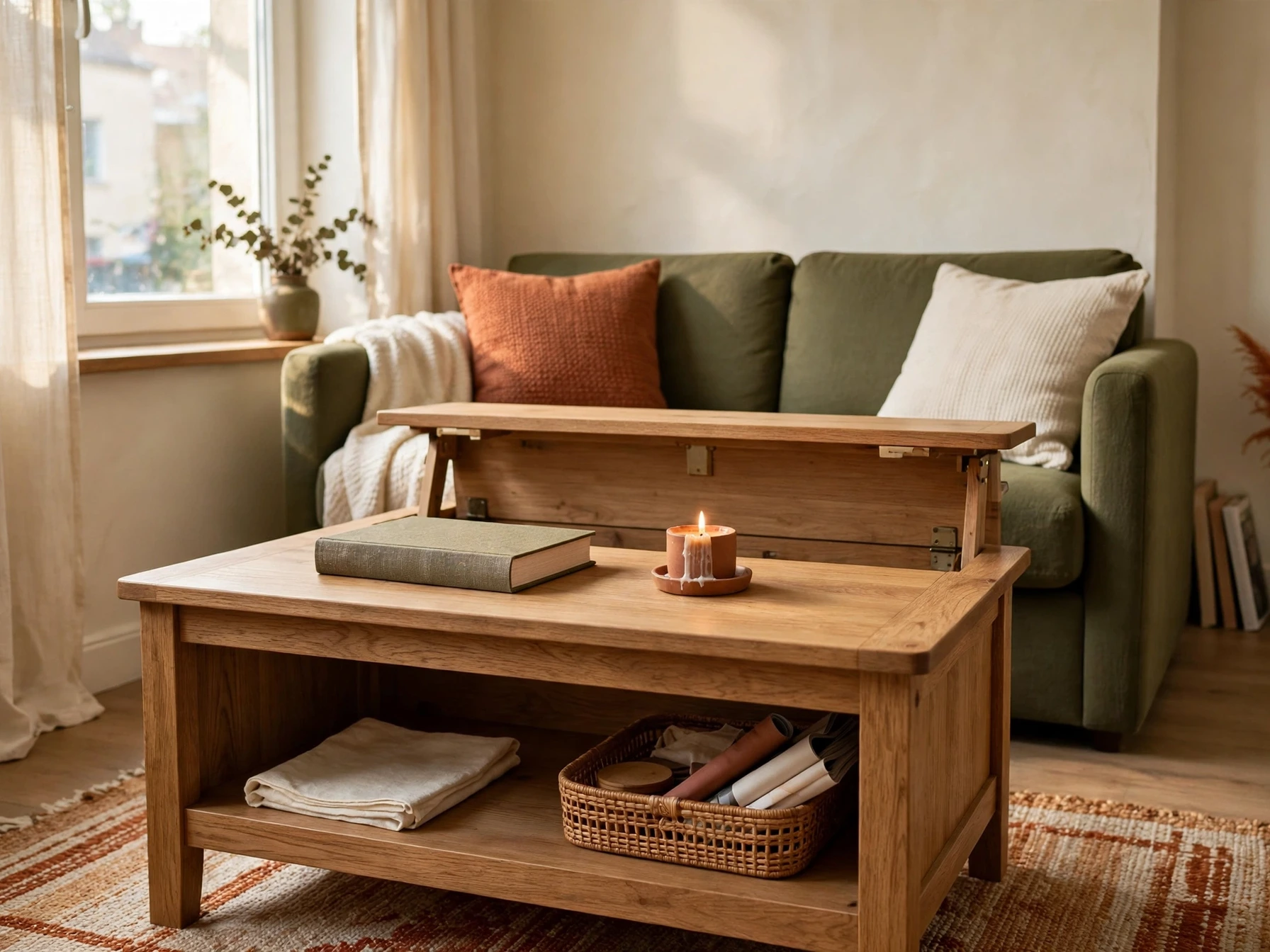
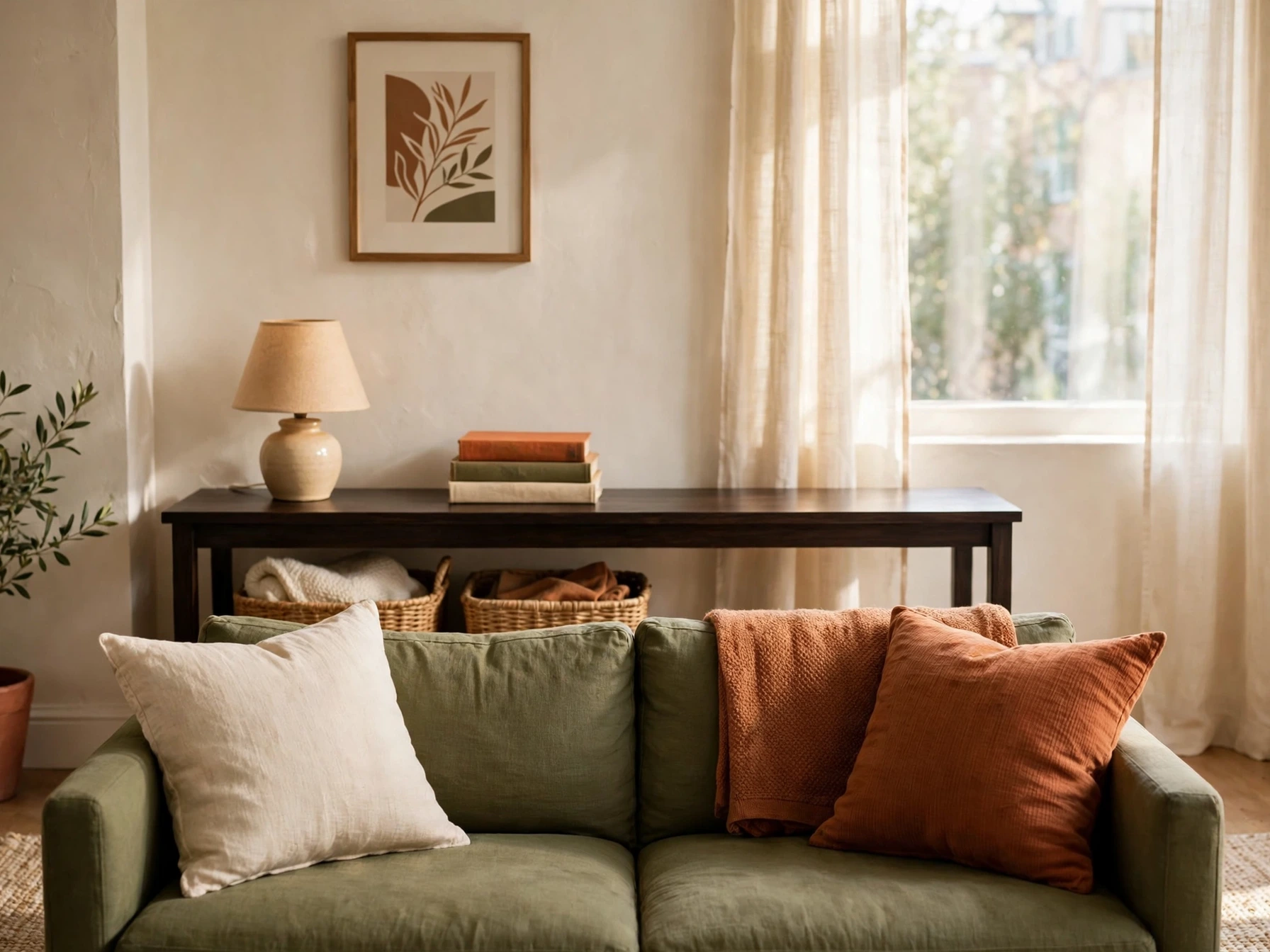
8. Add a Slim Console Behind the Sofa
A slim console table behind the sofa is one of the best small-room tricks there is. It gives you a surface for a lamp, a book, and a drink without taking a single inch from the walkway, because it sits in the gap the sofa already leaves.
A console also marks the edge of the seating zone in an open-plan apartment, so the living area feels separate from the kitchen or the hallway. Choose one no deeper than a hand’s width, and keep the top mostly clear.
Practical note: A console with a lower shelf doubles as a home for baskets. For more renter-friendly storage thinking, see our kitchen organization ideas for renters.
9. Use Wall Shelves Instead of a Bookcase
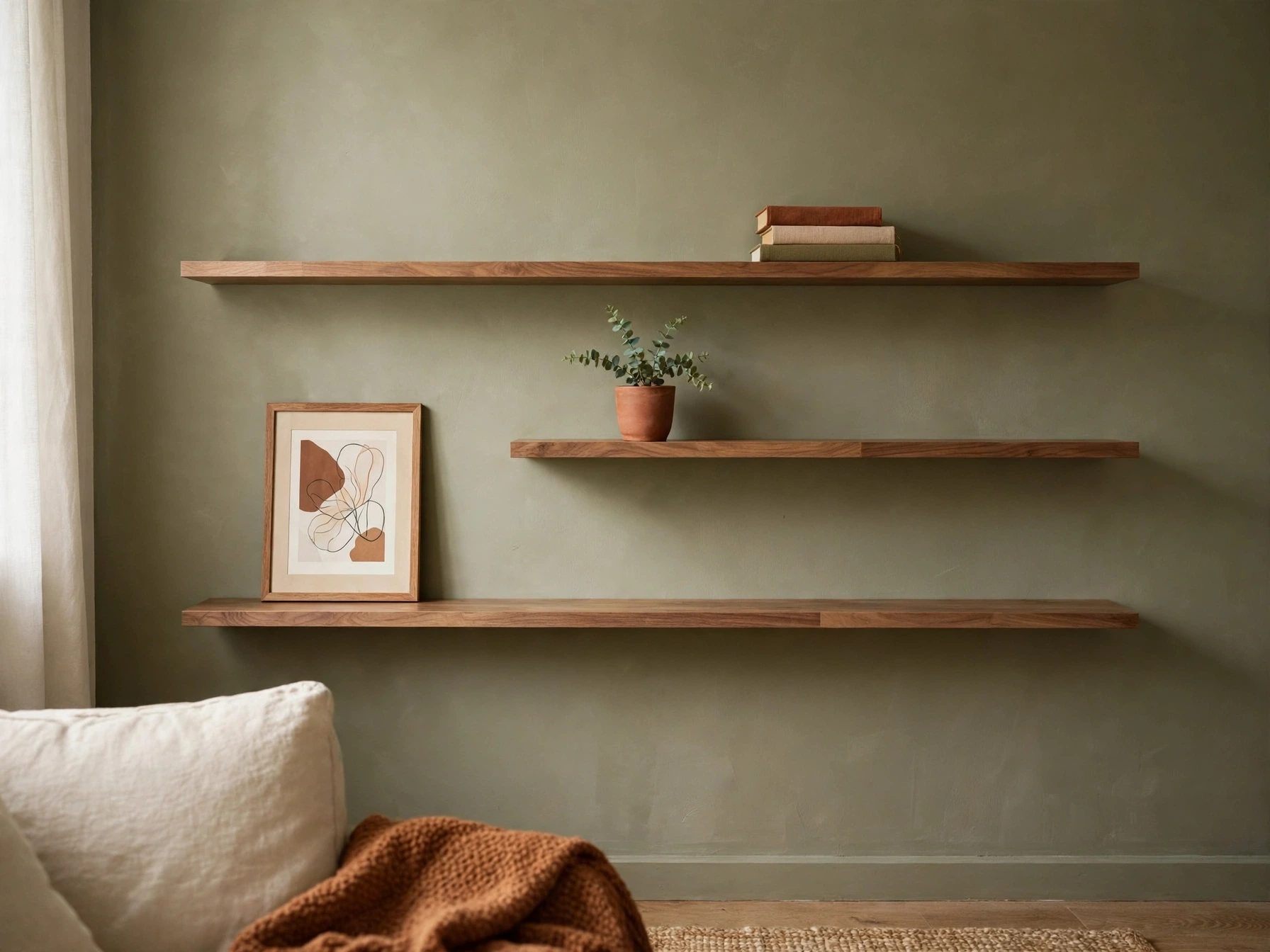
A full bookcase is a wall of furniture in a room that cannot spare it. Two or three floating shelves hold the same books and objects, take up no floor at all, and leave the wall below them free for a chair or a plant.
Style the shelves with breathing room: books on one end, a small plant or a framed print on the other, and empty space in between. A shelf that is 80 percent full looks calm; a shelf that is 100 percent full looks like storage.
Practical note: Hang the lowest shelf at eye level when you are sitting down, so the books are easy to reach from the sofa.
10. Hide Clutter in Baskets and Lidded Boxes
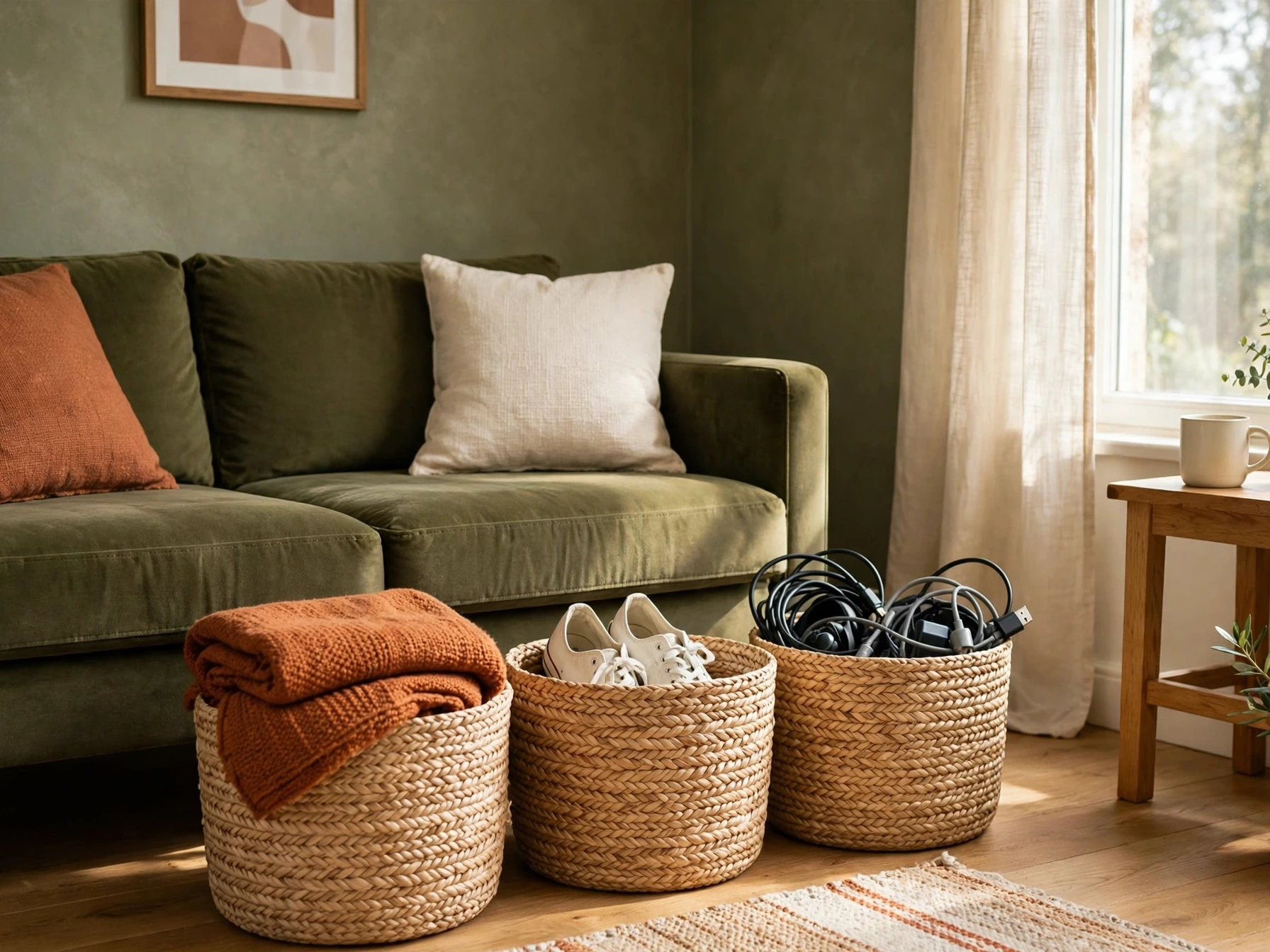
Small rooms look messy faster than big ones, because there is nowhere for clutter to hide. Baskets and lidded boxes are the hiding places: one by the sofa for throws, one by the door for shoes, one on the shelf for cables and chargers.
Choose baskets in the same natural material — seagrass, cotton, or woven paper — so they look like decor instead of storage. A basket that matches the room’s palette disappears into the styling while doing the hardest job in the room.
Practical note: Label nothing. In a living room, one basket per category is enough, and the lid is what keeps it looking tidy.
Light & Colour
11. Layer Three Kinds of Light
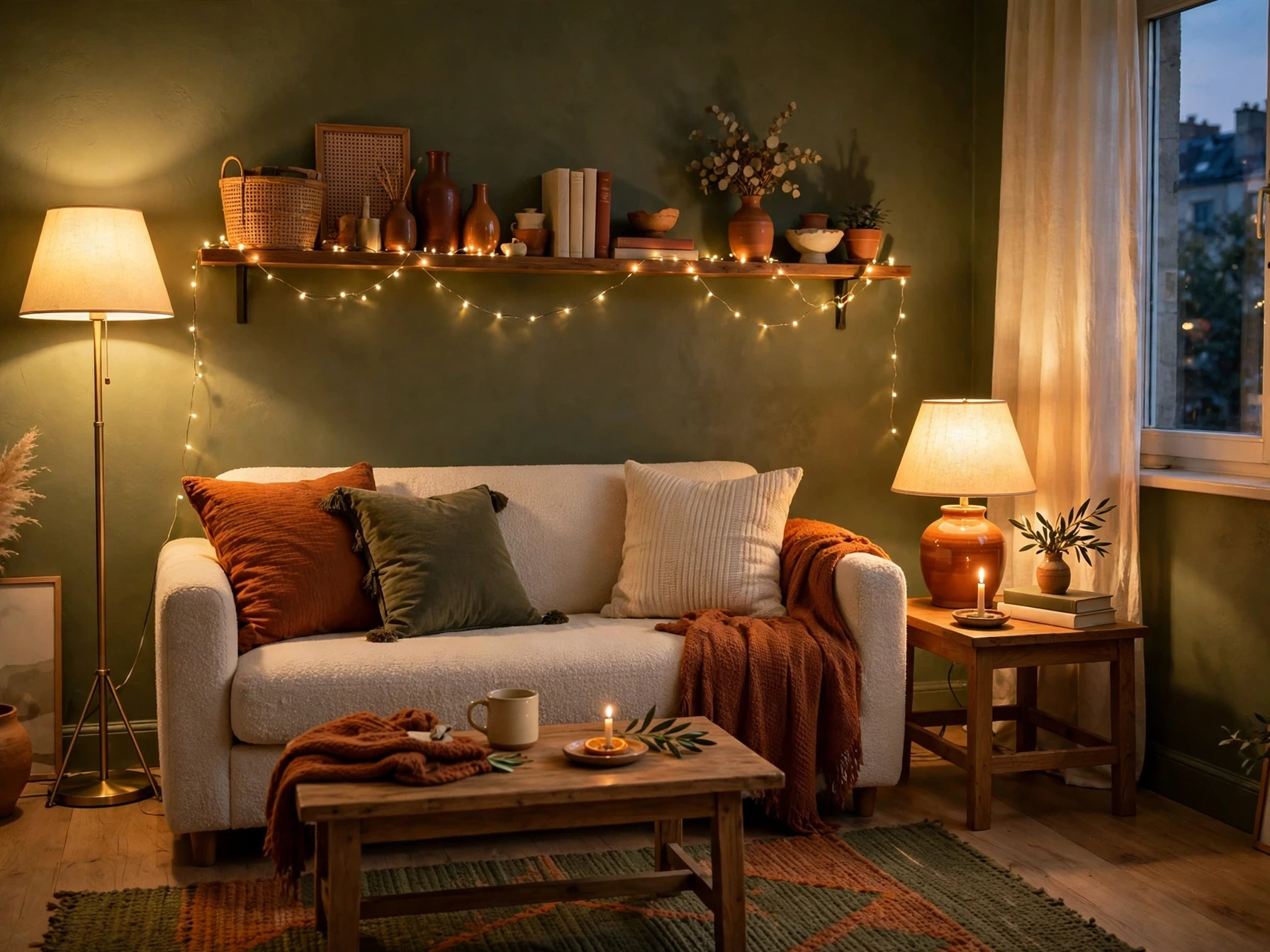
One ceiling light makes a small living room feel flat and harsh. Three layers — a ceiling or floor light for general glow, a table lamp for reading, and a small warm light like a candle or a string of fairy lights for evenings — make the same room feel deep and cozy.
Turn the layers on at different times of day. Bright light for cleaning and working, lamps for reading, and the warm low light for evenings. The room changes its mood without a single new piece of furniture.
Practical note: Warm bulbs around 2700K flatter a small room. A dimmer on the floor lamp costs little and changes everything after dark.
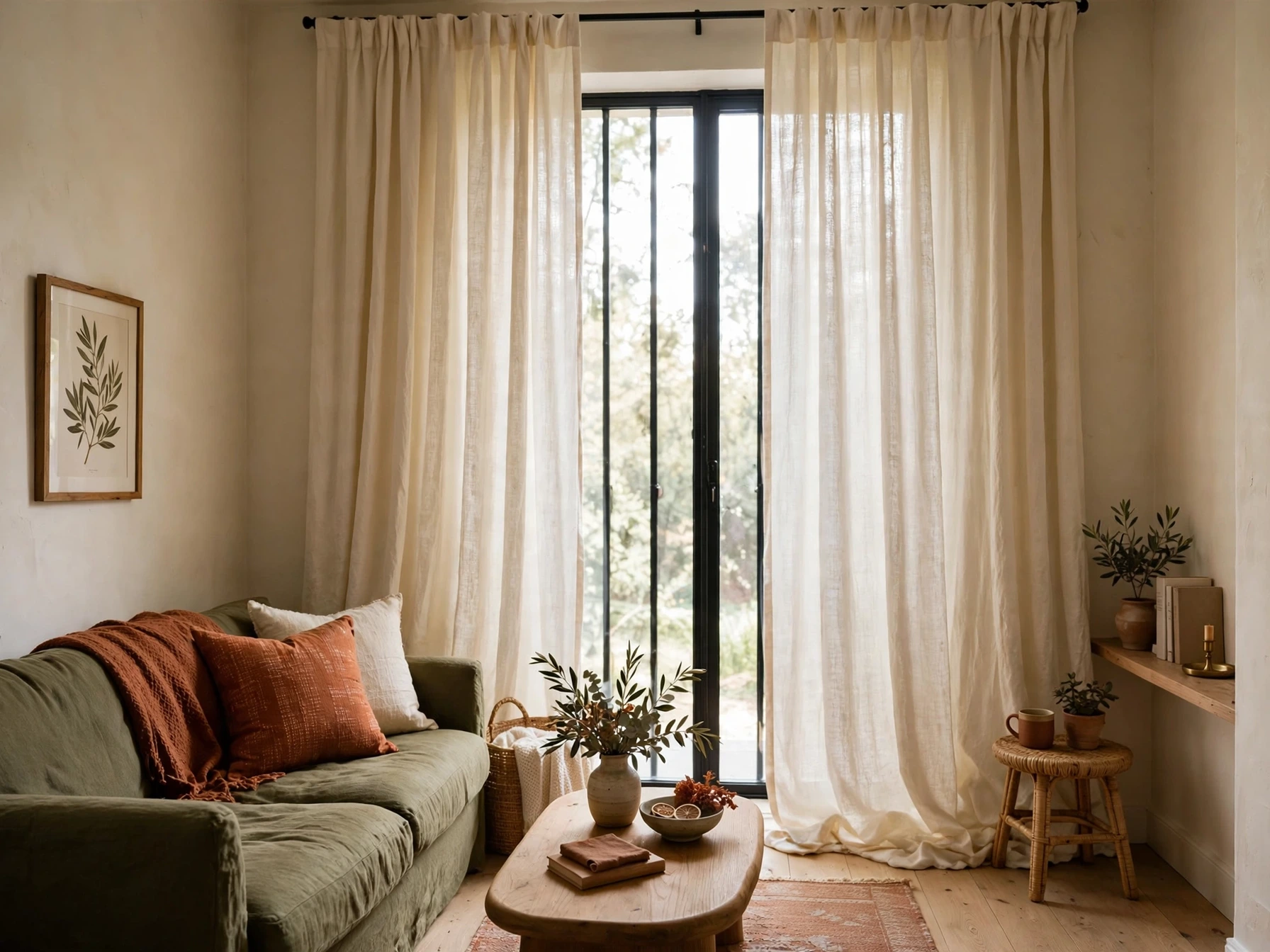
12. Hang Curtains High and Wide
Curtains hung just above the window frame make the window look small. Hung close to the ceiling and extending well past the sides of the window, the same curtains make the window — and the whole wall — look taller and wider.
Choose a light fabric in a warm neutral so daylight still filters through, and let the curtains just brush the floor. The long vertical lines draw the eye up, which is exactly what a small room with a low ceiling needs.
Practical note: A curtain rod that extends past the window on both sides lets the curtains stack clear of the glass, so you lose no daylight at all.
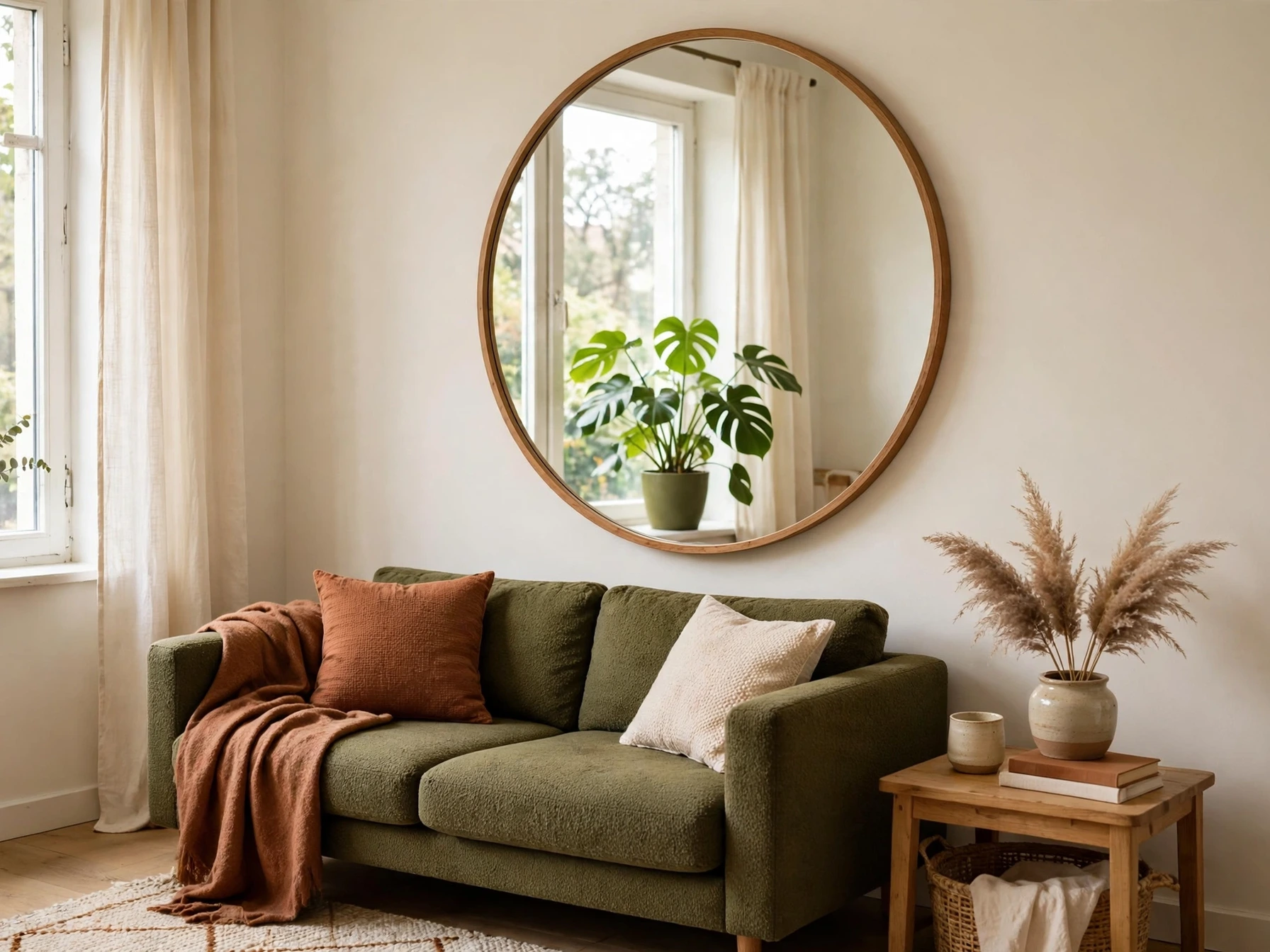
13. Add a Large Mirror to Bounce Light
A large mirror opposite a window doubles the daylight in a small living room. It reflects the brightest part of the room back into the darkest corner, and the reflection makes the wall feel like it opens into another space.
Hang one big mirror rather than several small ones — one large reflection reads as a window, while many small ones read as clutter. A simple wooden or black frame keeps it calm, and the mirror itself needs nothing else around it.
Practical note: Stand where you sit on the sofa and check what the mirror reflects. It should show the window or a plant, not the television or a blank wall.
14. Keep Walls Light and Add Colour in Textiles
Light walls make a small living room feel bigger, but an all-white room can feel cold. The fix is to keep the walls light and put the colour where it is easy to change: cushions, throws, the rug, and one piece of art.
That way the room stays bright, and the colour can change with the season — rust and mustard in autumn, sage and cream in spring — without a single tin of paint. For autumn colour ideas, see our easy fall home decor ideas for 2026 and our pumpkin home decor ideas.
Practical note: Pick three colours maximum for the textiles, and repeat each one at least twice in the room so the palette feels deliberate.

Style & Personality
15. Build a Gallery Wall with Renter-Friendly Hooks
A gallery wall is the fastest way to make a small living room feel like yours. A tight group of frames above the sofa — prints, photos, and one small textile piece — turns a blank wall into the room’s personality.
Renters do not need to drill. Adhesive picture strips hold light frames securely and peel off cleanly, and a picture ledge holds frames without a single hook. For a full renter-safe plan, see our gallery wall ideas for renters.
Practical note: Lay the frames on the floor first and arrange them there. When the floor version looks right, hang it the same way — it saves a dozen extra holes.

16. Add Plants — One Tall, a Few Small
Plants are the cheapest way to make a small living room feel alive. One tall plant in a corner gives the room height, and a few small ones on the shelves and the side table give it life at every level.
Choose plants that forgive forgetfulness if you are a beginner — a snake plant, a pothos, or a ZZ plant — and put them where you will actually see them. A plant hidden behind the sofa is a plant you will forget to water.
Practical note: Group plants in odd numbers and vary the heights. Three plants at three different heights look styled; three at the same height look like a row.
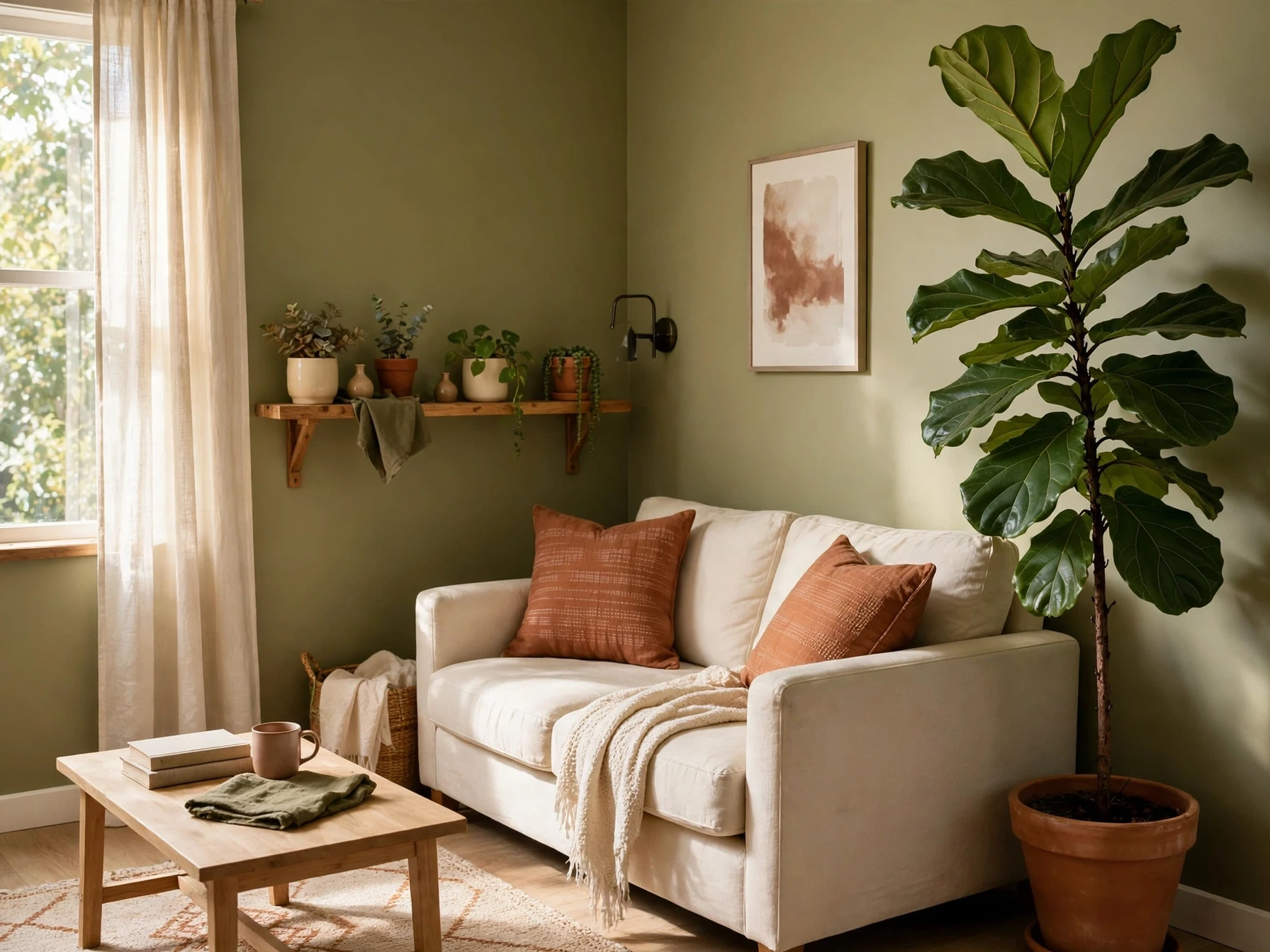
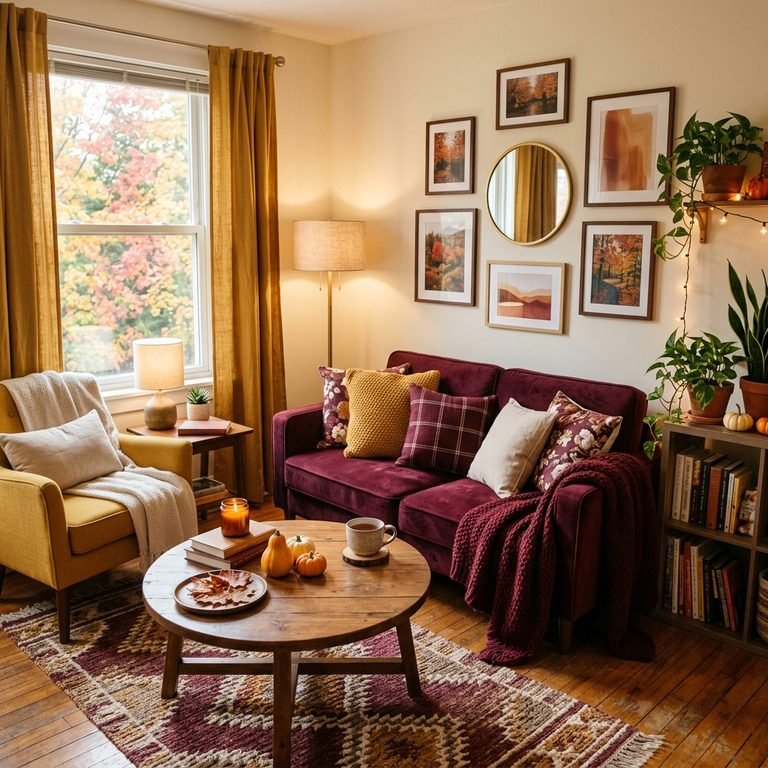
17. Layer Throws and Cushions in Fall Tones
Throws and cushions are the cosiest layer in a small living room, and the easiest to change. A chunky knit throw over one arm of the sofa, two cushions in rust and olive, and one small cushion in a pattern are enough — the room feels layered without looking stuffed.
Mix textures rather than colours: a knit, a velvet, and a linen in the same warm family feel richer than three cushions in three different colours. For the bedroom version of the same trick, see our cozy fall bedroom decor ideas.
Practical note: Two cushions per seat is the limit in a small room. More than that, and there is nowhere left to sit.

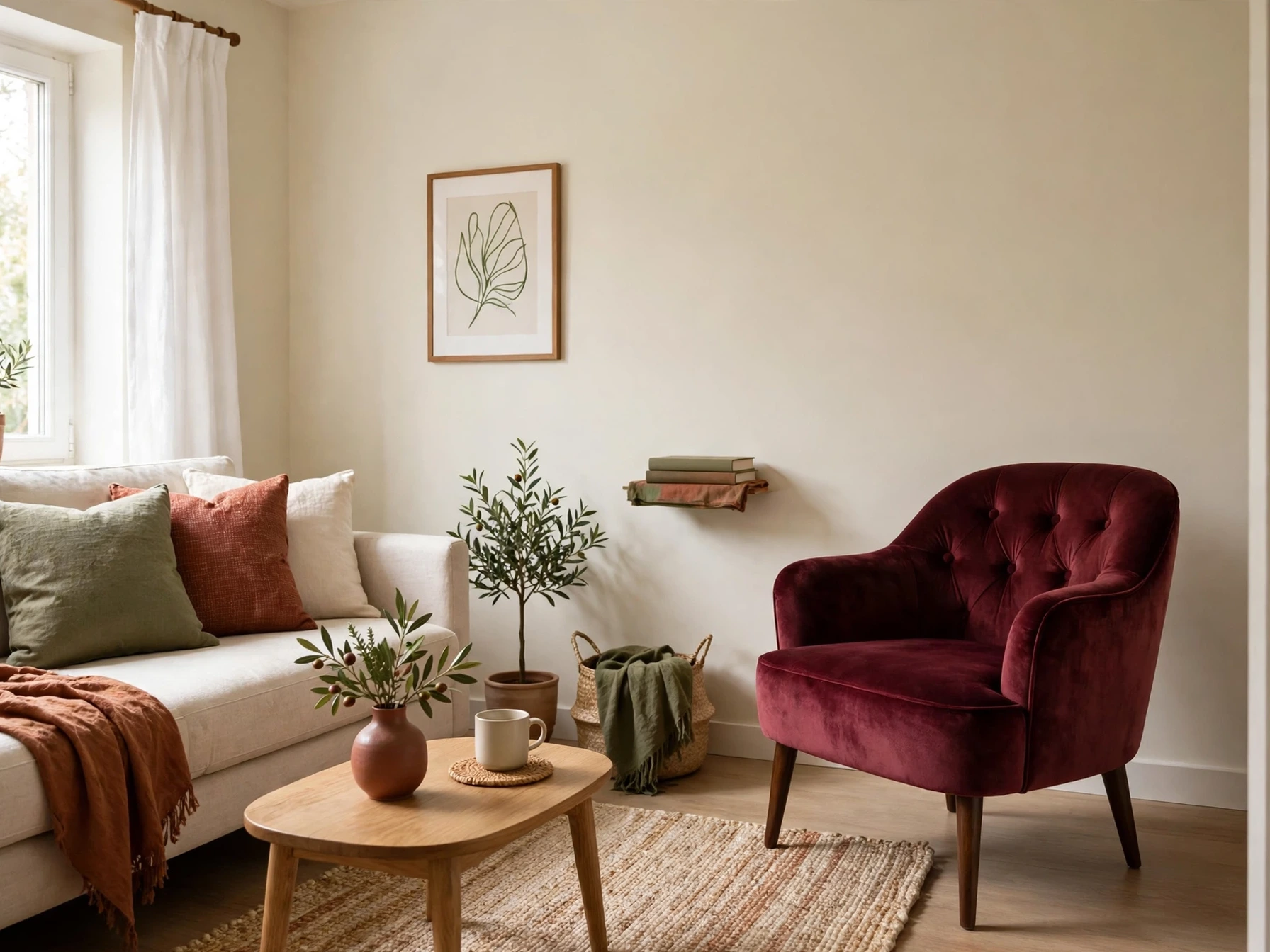
18. Add One Statement Piece and Let It Breathe
A small room needs one bold thing — a burgundy accent chair, a sculptural floor lamp, a large piece of art — and then everything else should stay quiet. The statement piece gives the eye somewhere to land, and the calm around it makes the room feel bigger.
The mistake is adding three statement pieces. One confident choice with empty space around it reads as style; three compete with each other and the room feels crowded. Pick the one you love most and give it room.
Practical note: If you cannot decide which piece is the statement, it is the biggest one in the room. Make it the best thing you own.
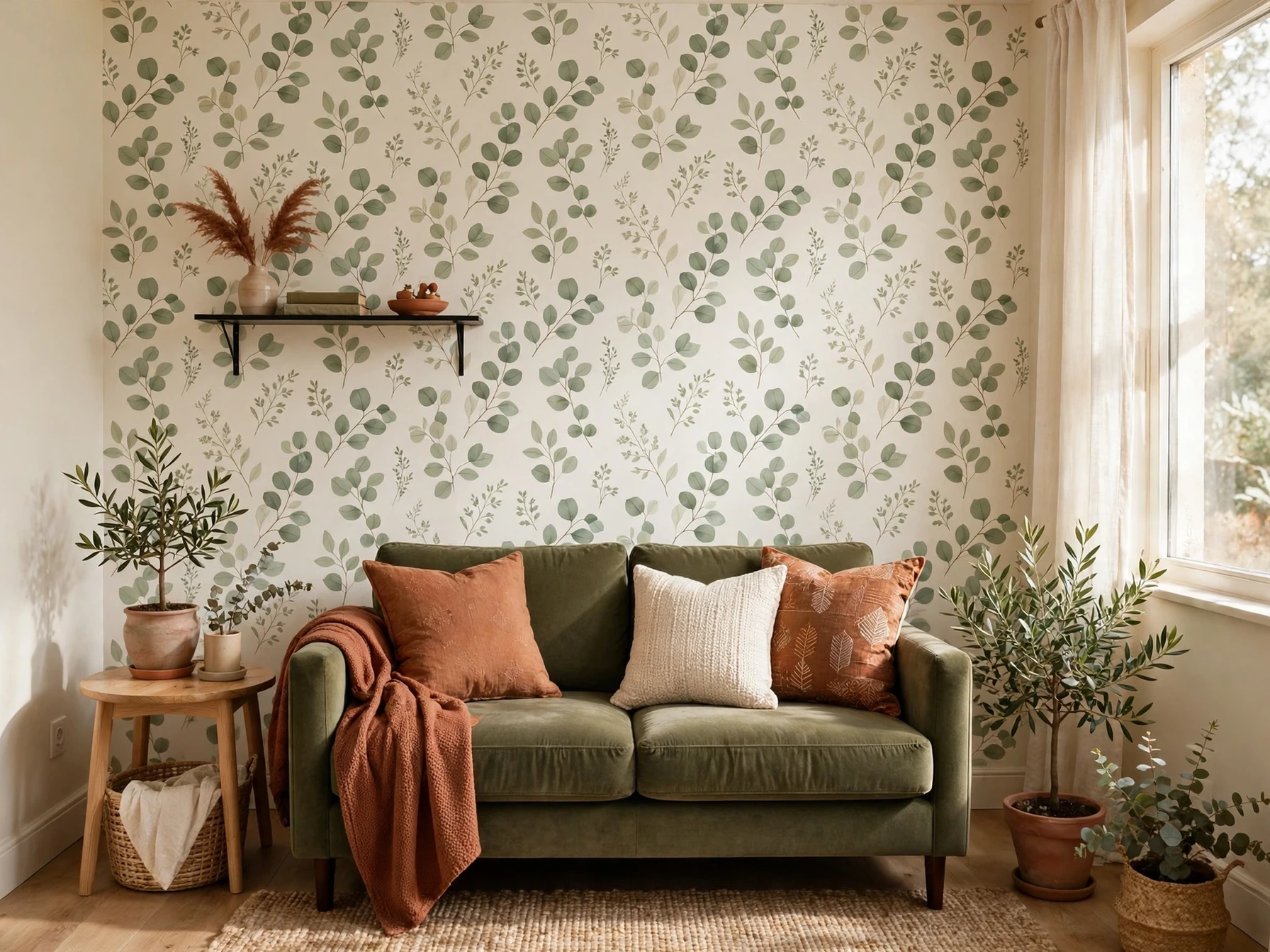
19. Try Peel-and-Stick Wallpaper on One Accent Wall
Peel-and-stick wallpaper is made for renters and small rooms. One accent wall behind the sofa — a soft botanical, a subtle geometric, or a warm textured print — adds pattern and depth without paint, and it peels off cleanly when you move.
One wall is the rule. Papering every wall in a small room closes it in; one wall opens it up by giving the eye a destination. Choose a print with a light background so the room stays bright.
Practical note: Order a sample first and stick it up for a week. Colours look different in your light than they do on a screen.
20. Do a Ten-Minute Weekly Reset
Even the best-decorated small room drifts without a short weekly reset. Once a week, spend ten minutes putting the cushions back, folding the throws, clearing the coffee table, and returning everything to its basket or shelf.
Pick a fixed time — Sunday evening works well — and set a timer for ten minutes. When the timer rings, stop. A short reset you actually do every week beats a long tidy-up you keep putting off, and the room greets you calm every Monday.
Practical note: Keep a small basket by the sofa for the week’s drift — the book you finished, the charger, the stray sock — and empty it during the reset.
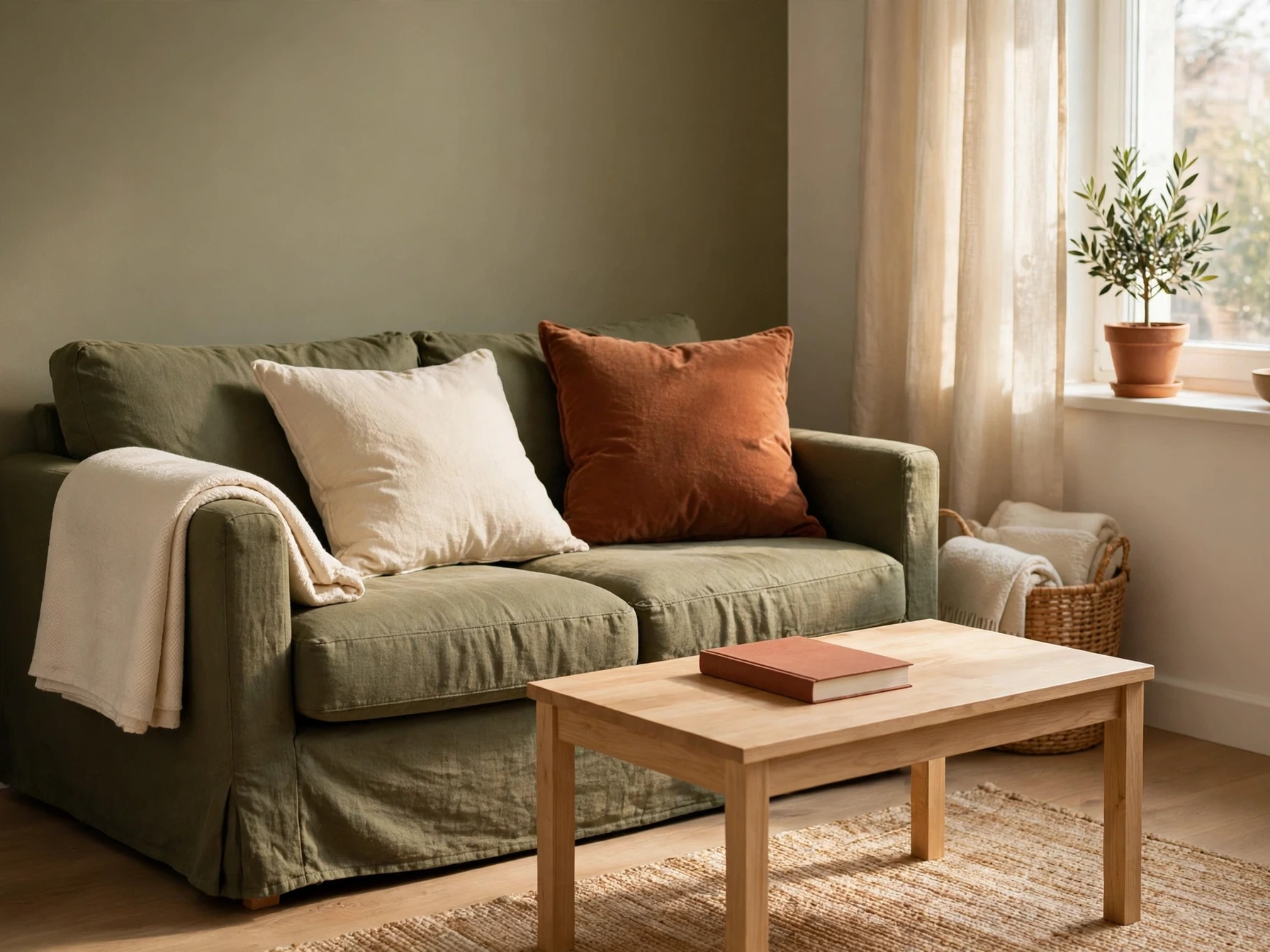
5 Living Room Decor Tips That Keep It Working
- Start with the rug and the sofa, not the accessories. The two biggest pieces set the room’s size and shape. Get those right first, and the small things fall into place.
- Leave breathing room on every surface. A coffee table with three objects looks styled; a coffee table with ten looks like storage. Empty space is part of the decor.
- Repeat each colour at least twice. A rust cushion and a rust throw, an olive plant pot and an olive book spine — repetition makes a small palette feel intentional.
- Buy the smaller version first. In a small room, the compact lamp, the narrow console, and the slim chair are almost always the right choice. You can add bigger pieces later if the room asks for them.
- Change one textile with the season. A new throw or two cushion covers in autumn, lighter ones in spring. The room feels fresh all year for very little money.
For the rest of the home in the same spirit, our cozy living room ideas for small spaces goes deeper on warmth and texture, and our small kitchen decor ideas on a budget carries the same palette into the kitchen. For the smallest rooms, see our small bathroom storage ideas.
Living Room Decor FAQs
How do I decorate a small living room on a budget?
Start with the rug and the sofa, then add one layer at a time: cushions and a throw, a mirror, and a plant. Shop second-hand for the bigger pieces and save the new budget for textiles, which change the look fastest. For well-timed buys, our Black Friday home decor deals shows how to plan purchases without overspending.
What size sofa is best for a small apartment living room?
An apartment-size sofa or a loveseat, usually between 68 and 78 inches wide, fits most small living rooms. Measure the wall, subtract room for a side table and a clear walkway, and choose the largest sofa that still leaves both.
How can I make a small living room look bigger without renovating?
Keep the walls light, hang curtains high and wide, add a large mirror opposite the window, choose furniture with visible legs, and keep the floor as clear as you can. Light, height, and visible floor do more than any single purchase.
How do I decorate a rental living room without damaging the walls?
Use adhesive picture strips for frames, a picture ledge for art, peel-and-stick wallpaper on one wall, and freestanding shelves instead of drilled ones. Everything peels or lifts off cleanly when you move.
Final Thoughts
A small living room does not need a renovation to feel calm. It needs a rug that defines the seating, a sofa that fits the wall, storage that hides the clutter, and light and colour layered with care.
Start with one idea from this list — the rug, the right-size sofa, or the ten-minute reset — and let the room get easier one change at a time. For more small-space ideas in the same warm style, see our DIY budget fall home decor ideas and our fall bedroom decor ideas.
Save this post to your living room board and start with the rug this weekend.



4 Comments