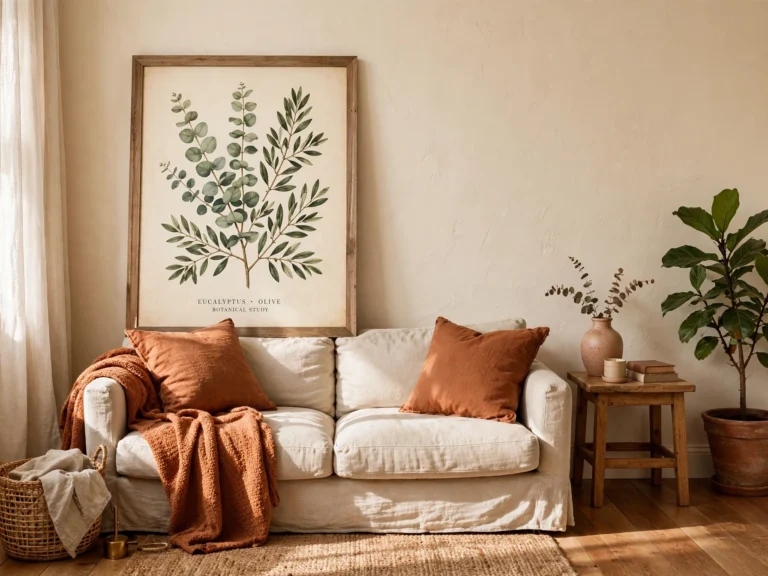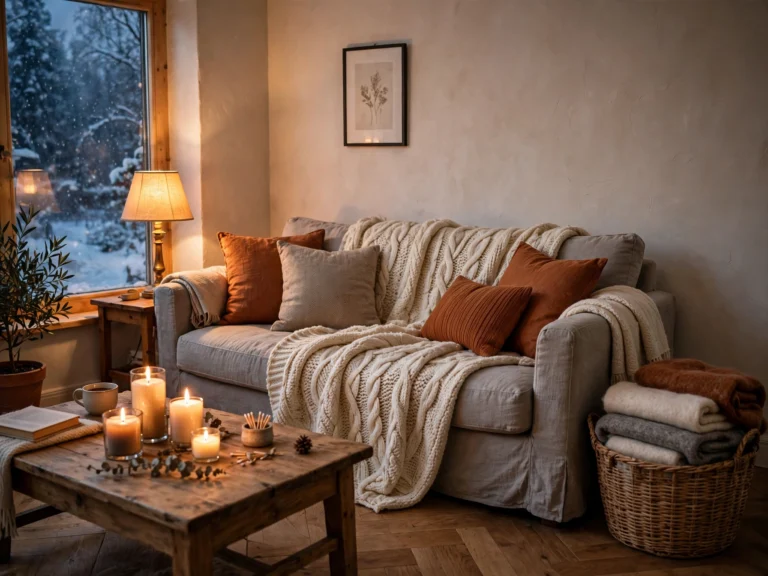
A small living room has one big problem: nowhere to put anything. The books pile on the coffee table, the plant lives on the floor, and the pretty things you own stay in a box because there is no shelf to show them on. Renters feel it most, because the obvious fix — screwing shelves into the wall — is exactly the thing a lease forbids.
The 12 small living room shelving ideas below are all renter-friendly: no drilling, no permanent changes, nothing that risks your deposit. They use shelves that lean, stand, hang from adhesive strips, or sit on furniture you already own. Pick one idea this weekend, live with it for a week, and add the next one only when the first feels like home.
Why Shelving Matters Most in a Small Living Room
Shelving is the one piece of furniture that gives a small living room both storage and personality at the same time. A shelf holds the books you actually read, the plant that softens the room, and the one or two objects that make the room feel like yours — and it does all of that on a wall or in a corner that was doing nothing at all.
The trick in a rental is to think of shelves as furniture, not fixtures. A leaning shelf, a slim bookcase, or a ledge on adhesive strips can be moved, rearranged, or taken with you when you move. That freedom is the point: a shelf you can change is a shelf you will actually use, and a small living room with one good shelf feels finished in a way that a room full of flat surfaces never does.
12 Small Living Room Shelving Ideas for Renters
Lean It or Stand It — No Drilling Needed
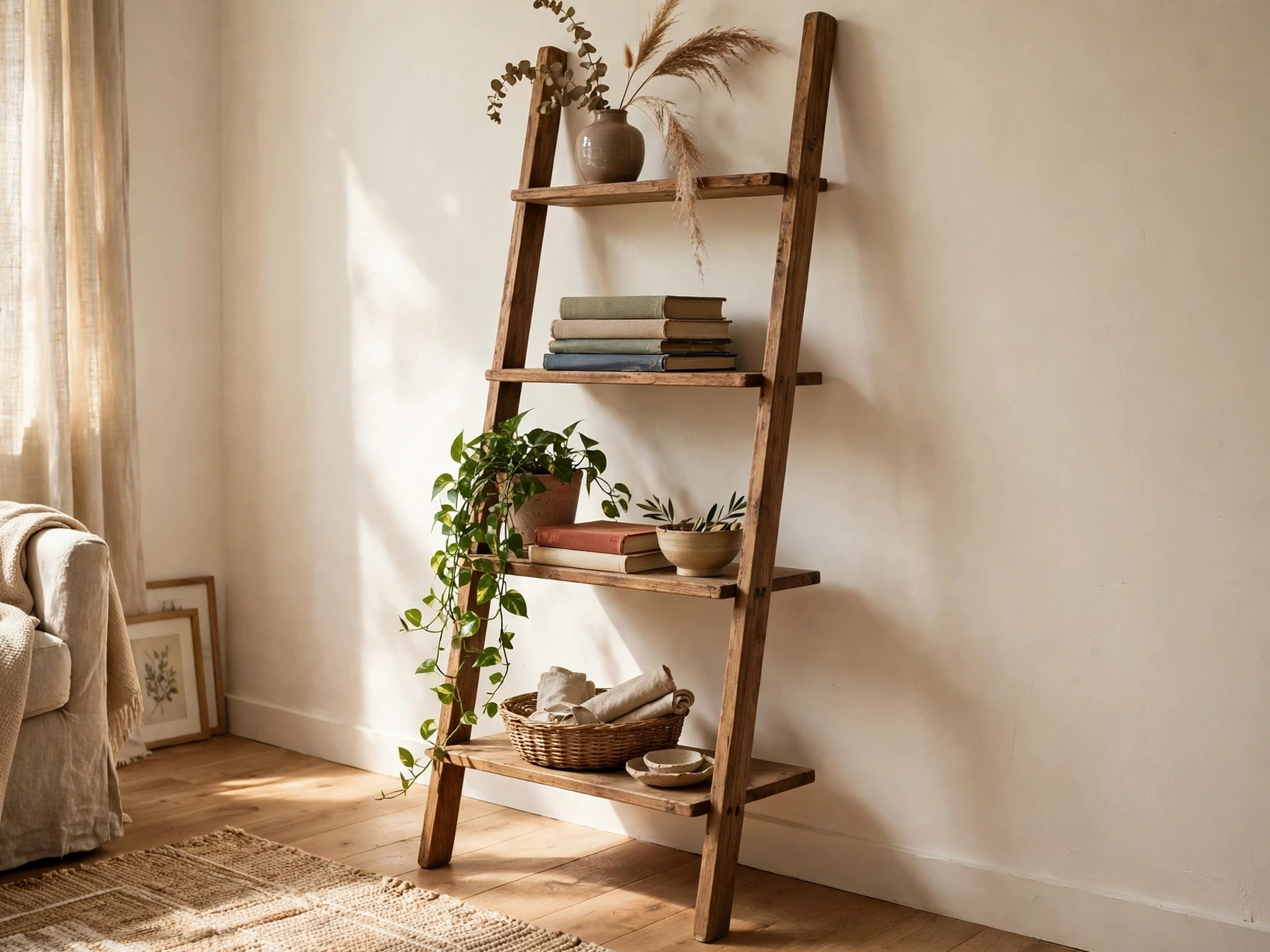
1. Lean a Ladder Shelf Against the Wall
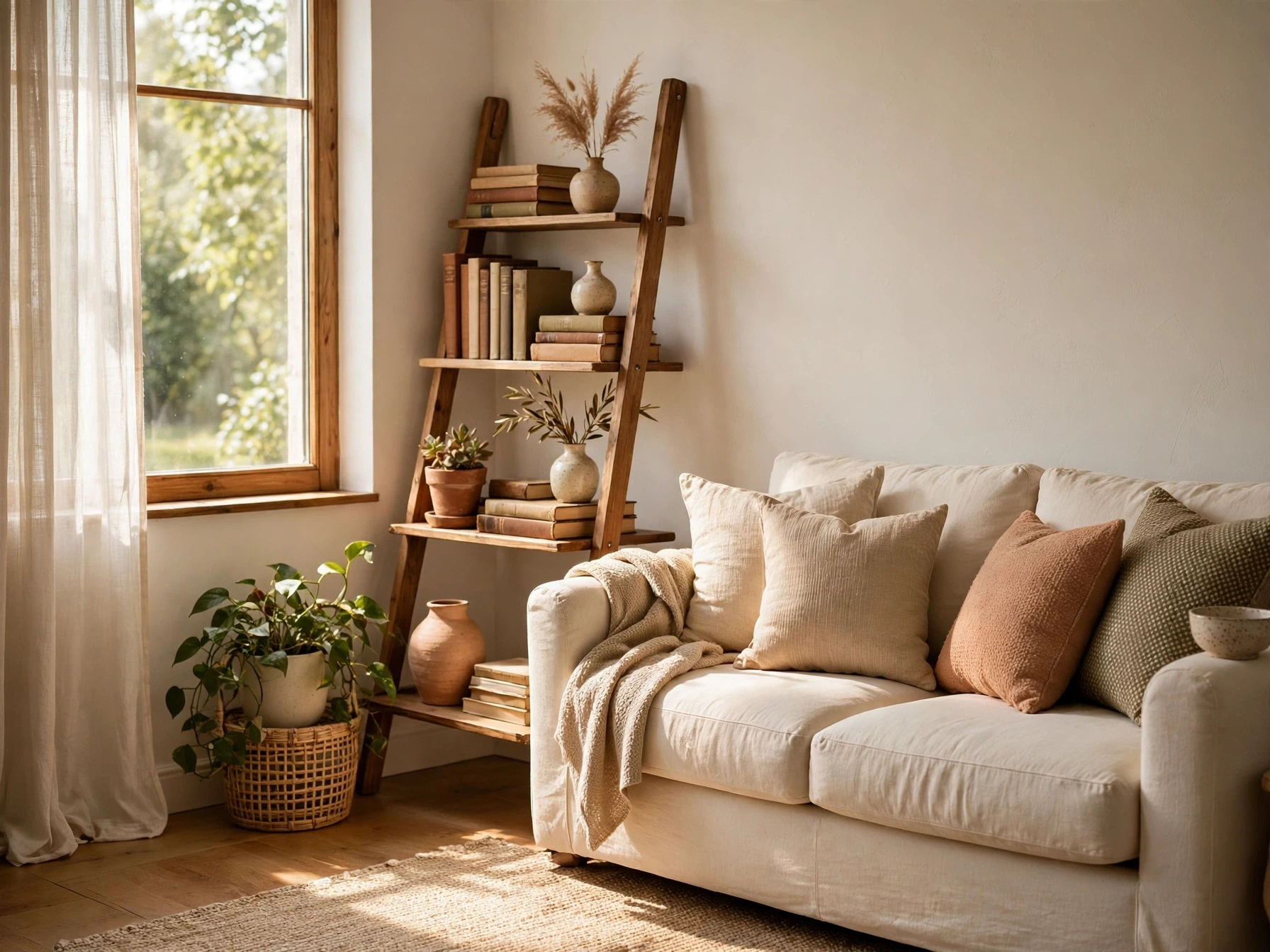
A leaning ladder shelf is the renter’s wall shelf: it stands against the wall, needs no screws, and holds books, plants, and ceramics on four or five slim tiers. It gives a small living room the airy, styled look of open shelving without a single hole in the plaster.
Style it the way you would a built-in shelf: three or four items per tier, grouped by colour, with one plant and one wooden piece for warmth. Keep the heaviest things on the lowest tier so the shelf stays stable, and leave a little empty space at each end so it reads as decor, not storage. For the rest of the room around it, see our living room decor ideas for small apartments.
Practical note: Put small adhesive pads under the feet so the shelf cannot slip on a smooth floor, and keep it out of the main walkway so nobody brushes past it with a full basket.
2. Roll In a Slim Freestanding Bookcase
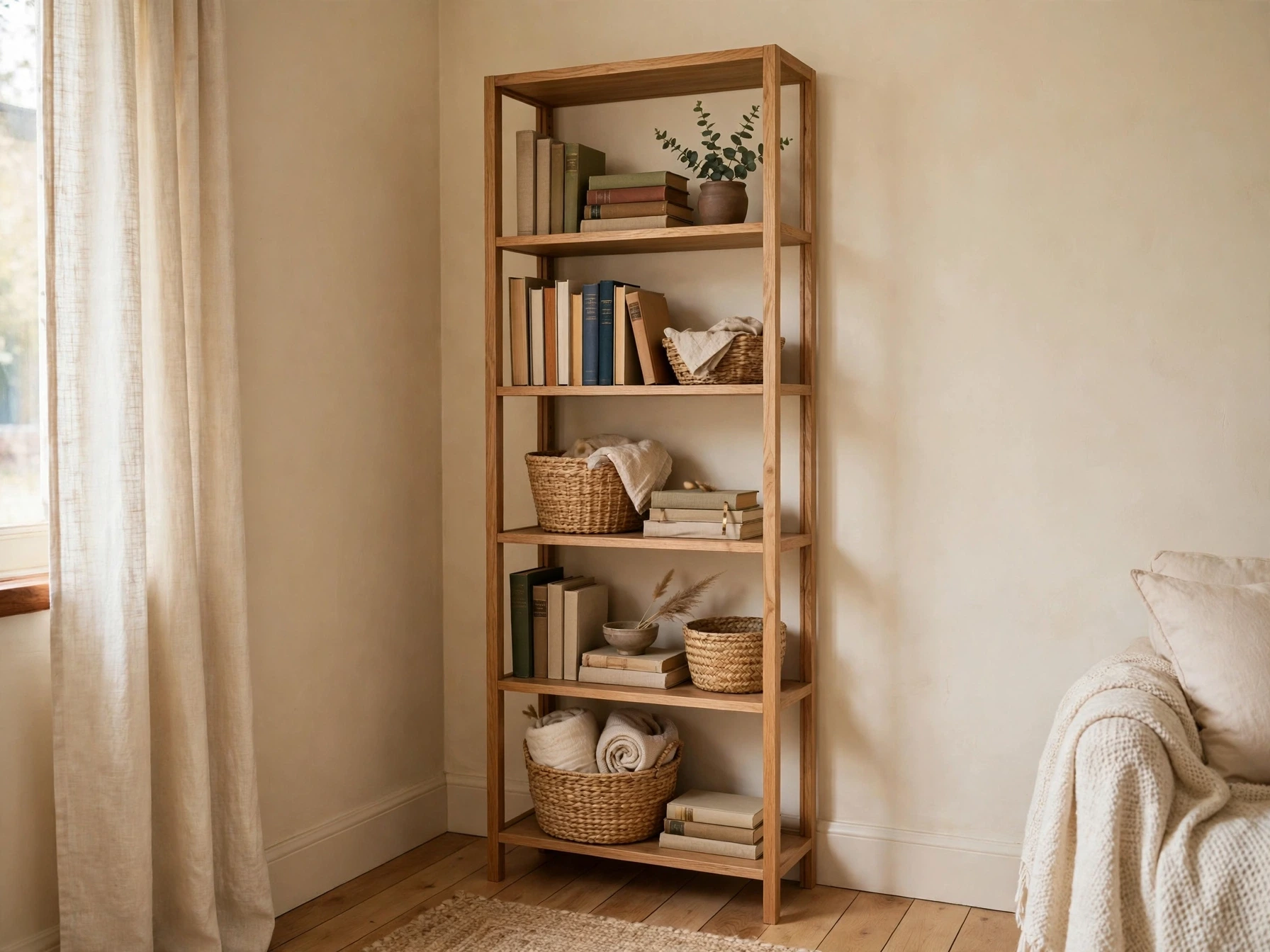
A slim freestanding bookcase is the workhorse of small living room shelving. It holds more than any leaning shelf, it needs no fixing to the wall, and it can be pushed into a corner, against a short wall, or beside the sofa — wherever the dead space is.
Choose a bookcase no deeper than a hand’s width more than your books, so it does not eat floor space it does not need. Mix books with baskets on the lower shelves: the baskets hide the clutter, the books add colour, and a small plant on top softens the whole piece.
Practical note: Anchor a tall bookcase with an adhesive furniture strap if you have children or pets, or keep the heaviest books on the bottom shelf so the weight sits low and the bookcase stays steady.
3. Use a Narrow Étagère as a Room Divider
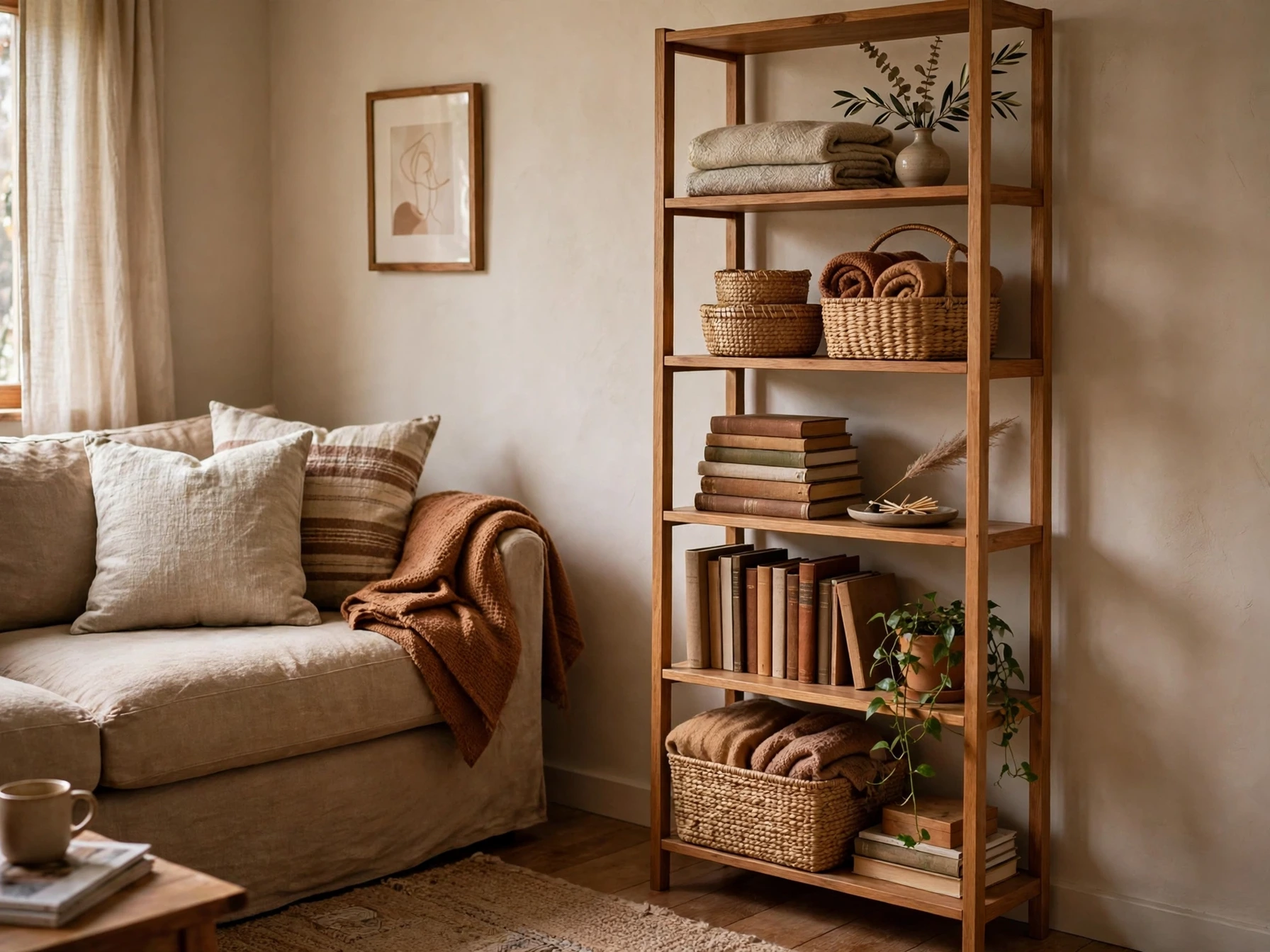
A narrow étagère — a tall, open tower of shelves — does two jobs in a small living room: it stores things, and it divides the room without closing it off. Put one at the end of the sofa or between the seating area and the dining corner, and the room suddenly has zones instead of one crowded space.
Because an étagère is open on both sides, light passes through it and the room still feels like one space. Style the shelves lightly so the divider reads as furniture, not a wall: folded throws and baskets on the lower shelves, books and one plant higher up.
Practical note: Keep the étagère narrower than the sofa is long, so it reads as a shelf rather than a partition. If it blocks the light from a window, turn it so the open side faces the light.
Shelves on Surfaces You Already Own
4. Style the Top of a Low Sideboard as a Display Shelf
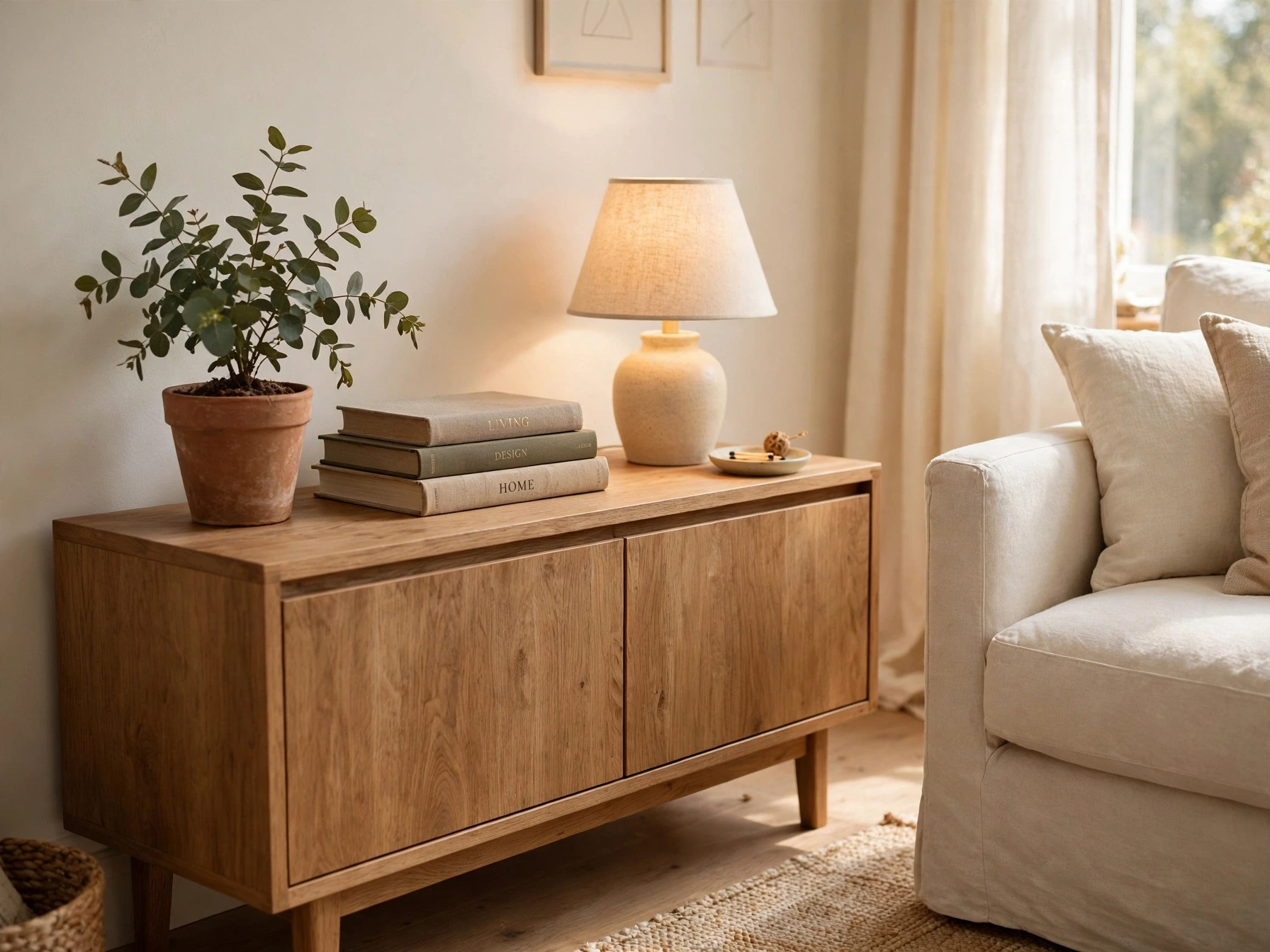
The top of a low sideboard or TV console is a shelf you already own. Clear it, then style it the way you would a wall shelf: a stack of books, a lamp, and a plant, grouped with breathing room between them. The sideboard suddenly becomes the room’s display shelf, and the living room gains a focal point without a single new piece of furniture.
Keep the styling low so the television or the wall above it stays the star. Three objects — something tall, something low, and something green — are enough. Anything more, and the sideboard starts looking like a shop counter instead of a calm surface.
Practical note: Put the lamp at one end of the sideboard and the plant at the other, with the books in the middle. That triangle is what makes the surface look designed rather than filled.
5. Hang a Picture Ledge With Adhesive Strips
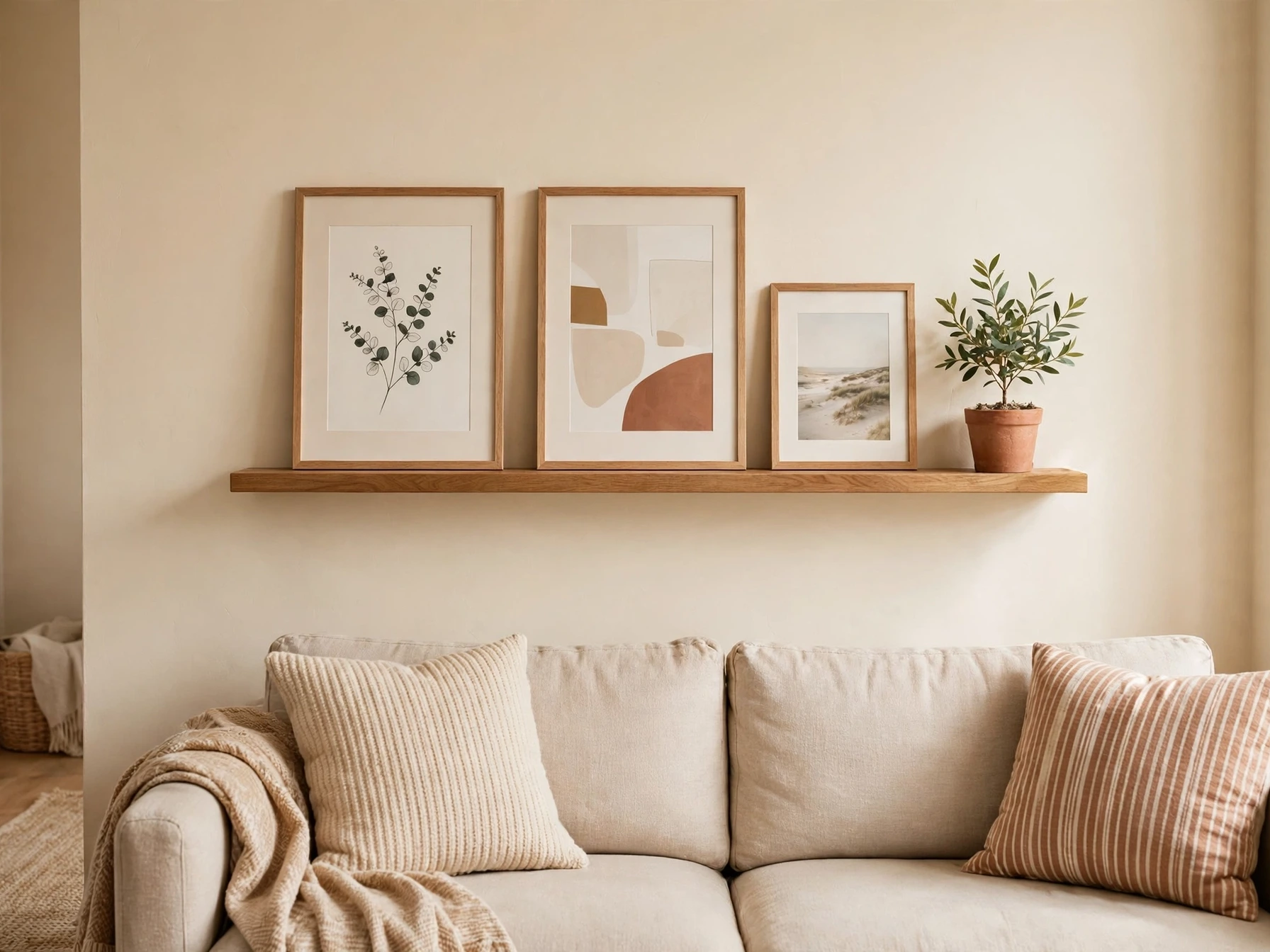
A picture ledge is a shallow shelf that holds framed prints, small plants, and ceramics — and it hangs on strong adhesive strips, with no drilling at all. One ledge above the sofa turns a blank wall into a gallery, and the prints can be swapped in minutes whenever you want a change.
Choose a ledge no longer than the sofa is wide, and check the weight rating of the strips before you load it. Lightweight frames, a small plant, and one ceramic piece are plenty; a ledge is for display, not for heavy books. For more renter-friendly wall ideas, see our gallery wall ideas for renters.
Practical note: Press each strip firmly for thirty seconds and wait an hour before you load the ledge. Test the hold with a light load first, and keep the ledge away from steamy or damp walls.
6. Stack Books and Trays on a Side Table
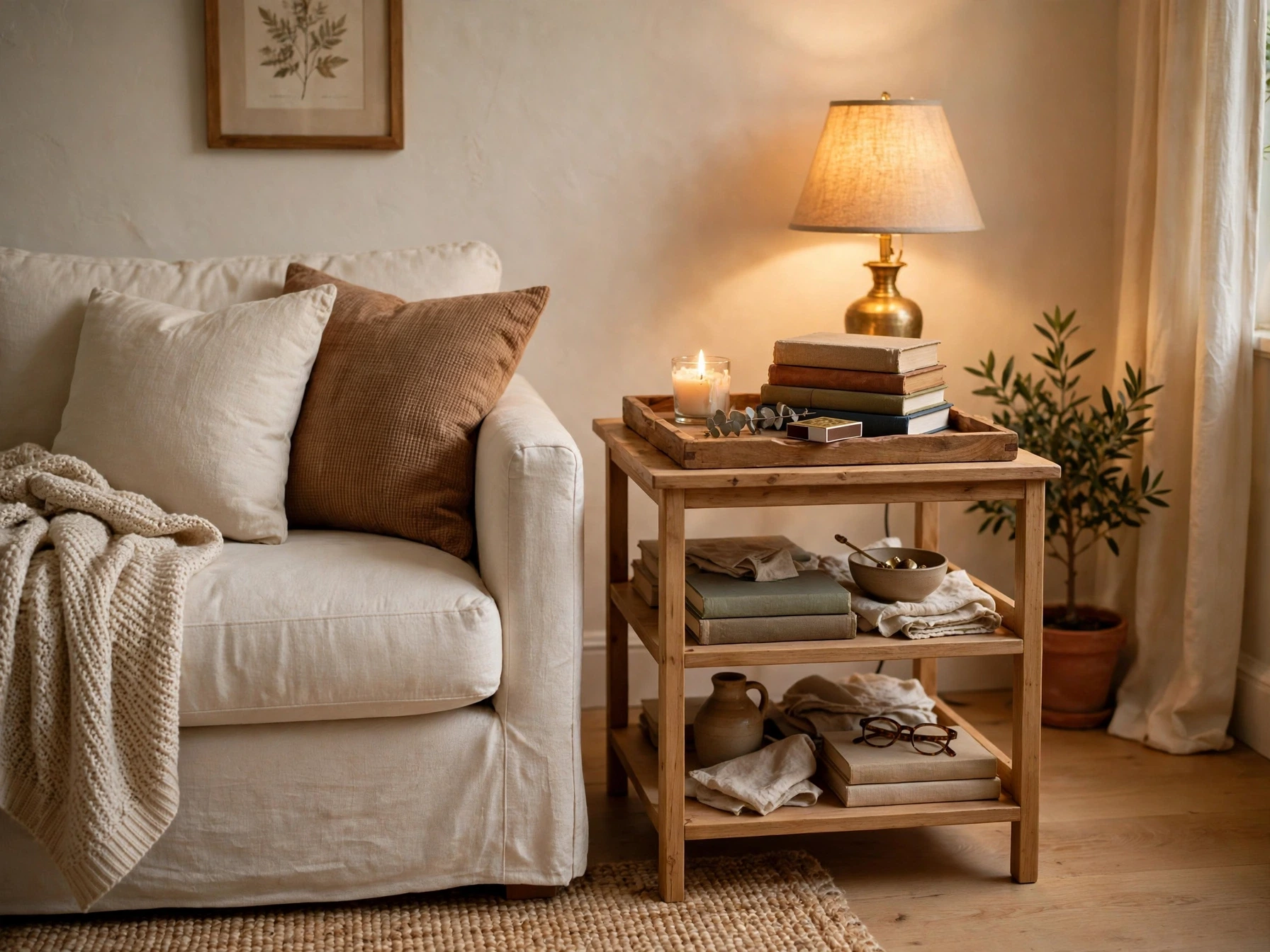
A side table is a shelf in disguise. Stack two or three books on it, add a wooden tray and a candle, and the table becomes a layered mini-shelf beside the sofa — a place for the book you are reading, the tea you are drinking, and the candle you light in the evening.
Keep the stack low so the table still works as a table. One pile of books, one tray, and one small object are enough; a side table that holds everything becomes a second storage unit. For the same layered styling over a kitchen counter, see our kitchen shelf decor ideas for open shelving.
Practical note: Use the tray to corral the small things — the remote, the reading glasses, the candle — so the table looks styled even on a messy day. Lift the whole tray away when you need the surface clear.
Corners, Doors & Windowsills
7. Tuck a Corner Shelf Unit Into an Awkward Corner
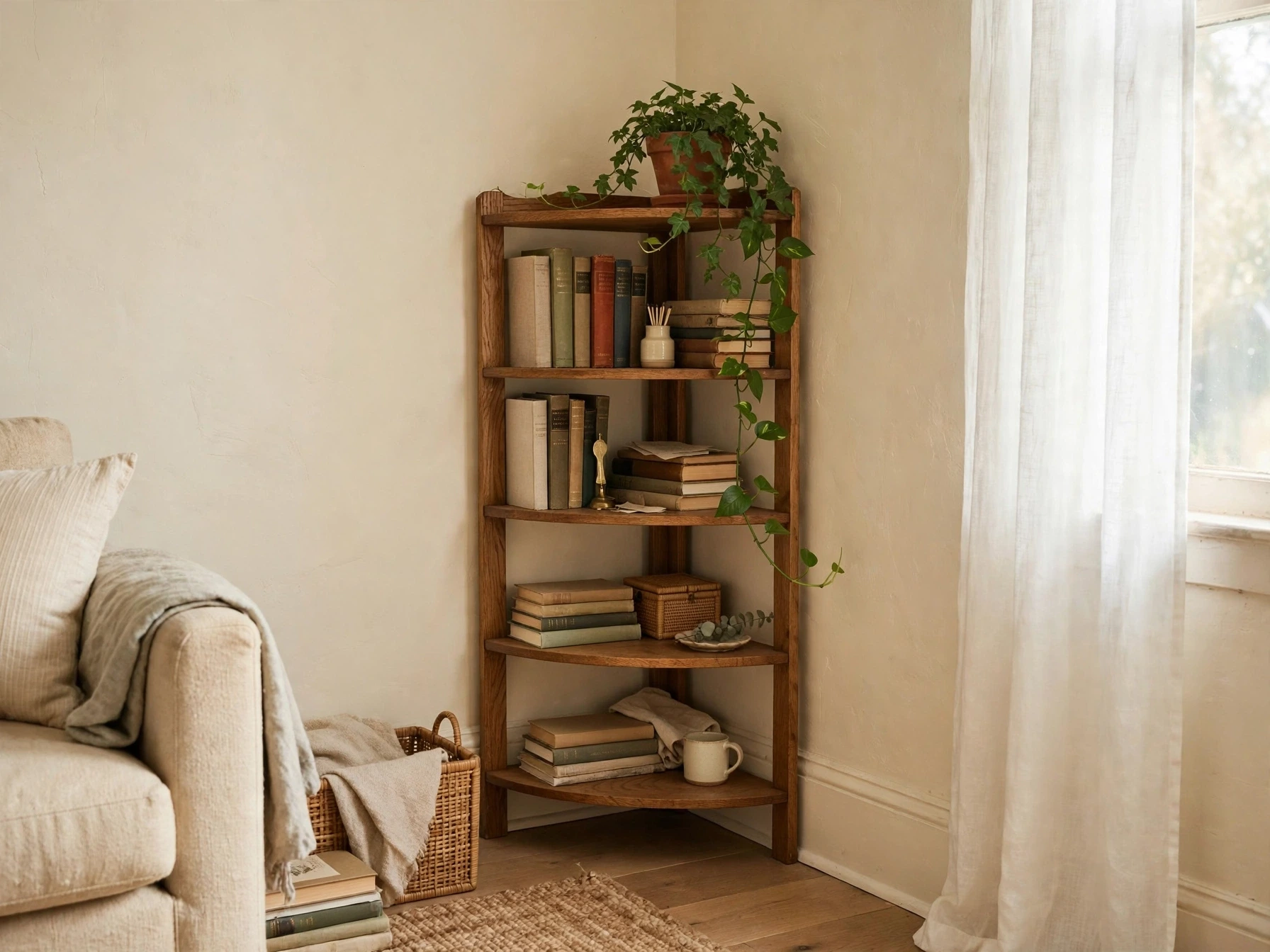
Every small living room has an awkward corner — the one behind the armchair, or beside the door, where nothing quite fits. A corner shelf unit is made for exactly that spot: its triangular shelves use the dead space, and the books and plant on it turn a forgotten corner into a feature.
Choose a unit that fits the corner without blocking the walkway, and style it lightly so it reads as furniture rather than a cupboard. A trailing plant on the top shelf softens the whole corner and draws the eye up, which makes the room feel taller.
Practical note: Measure the corner before you buy, including the skirting board, which can push a shelf unit out further than you expect. A unit that is slightly too wide will block the door or the curtain.
8. Hang an Over-Door Rack With a Shelf
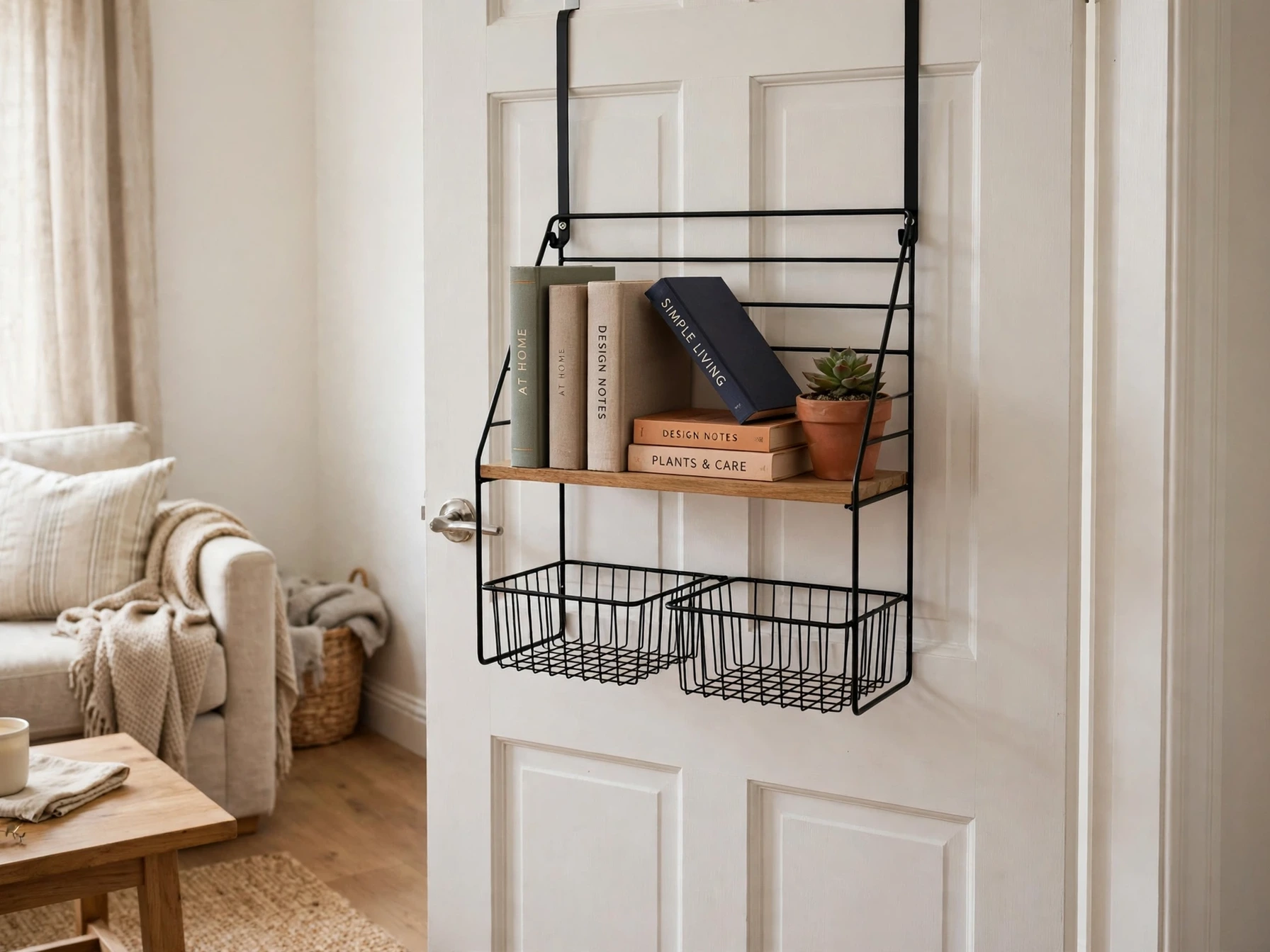
The back of the living room door is free shelving. A slim over-door rack with a small shelf hooks over the top of the door and holds books, a plant, and a basket — and it needs no drilling at all, lifting off cleanly when you move.
Choose a rack no deeper than a hand’s width, so the door still closes fully and nothing rattles when it swings. Keep the heaviest things at the bottom of the rack so the weight sits low and the door stays balanced.
Practical note: Check the door closes before you load the rack, or you will find everything on the floor. If the door is hollow, use the hook-over style only and skip any screw-mounted version.
9. Turn the Windowsill Into a Display Shelf
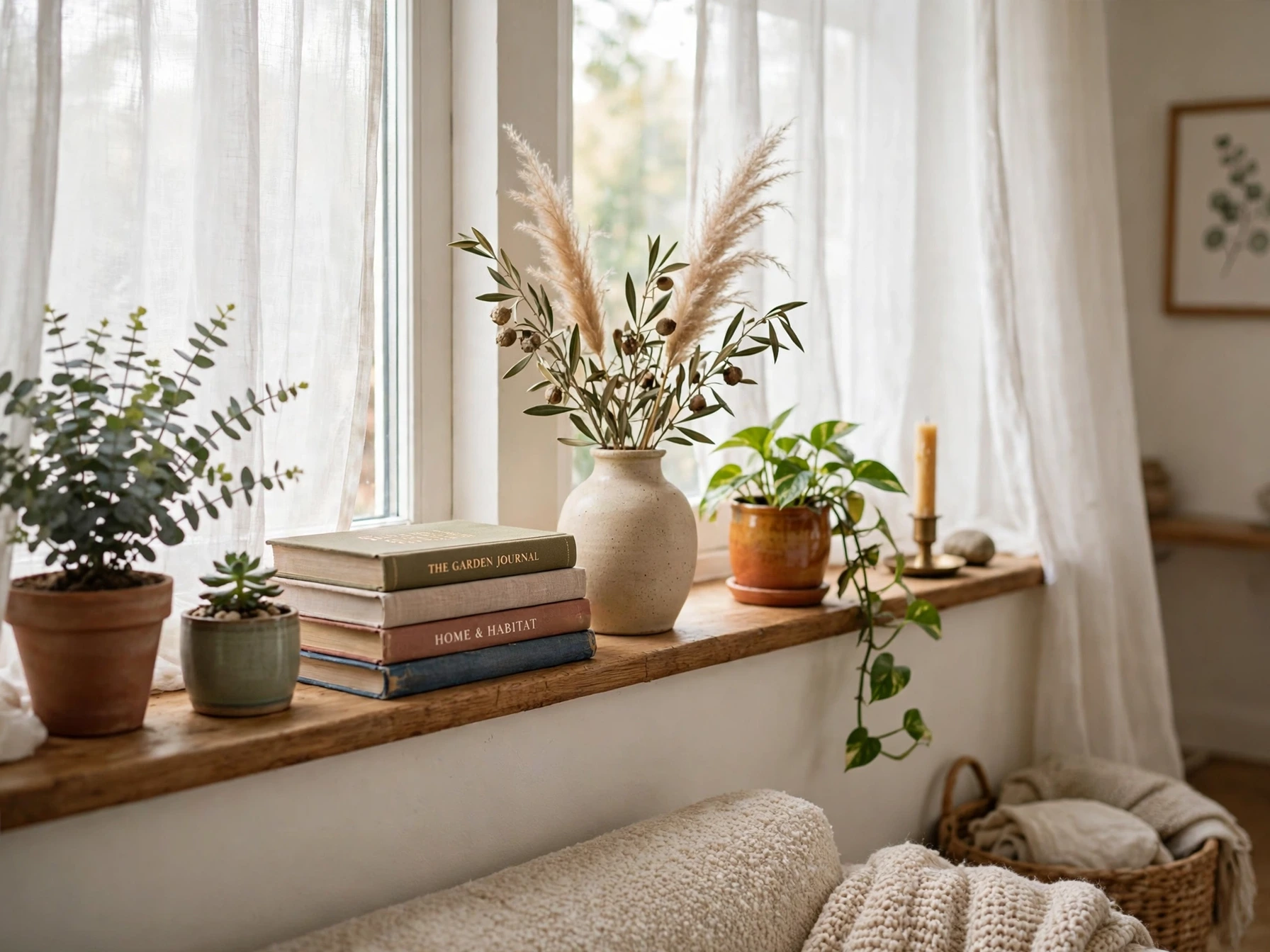
A wide windowsill is a shelf with the best light in the house. Style it with potted plants, a stack of books, and a ceramic vase, and the window becomes a display that changes with the daylight. Plants love it there, and the room gains a shelf without a single new piece of furniture.
Keep the display low so the light still comes through, and choose plants that like the light your window actually gets. A trailing plant at one end softens the hard edge of the sill, and a stack of books at the other anchors the whole arrangement.
Practical note: Wipe the sill when you water the plants, so dust and drips do not build up. If the window gets direct sun, use a small tray under each pot to protect the paintwork. For seasonal styling on the same sill, see our fall decor ideas for small apartments.
Style It, Then Leave It Room to Breathe
10. Put a Slim Shelf Behind the Sofa
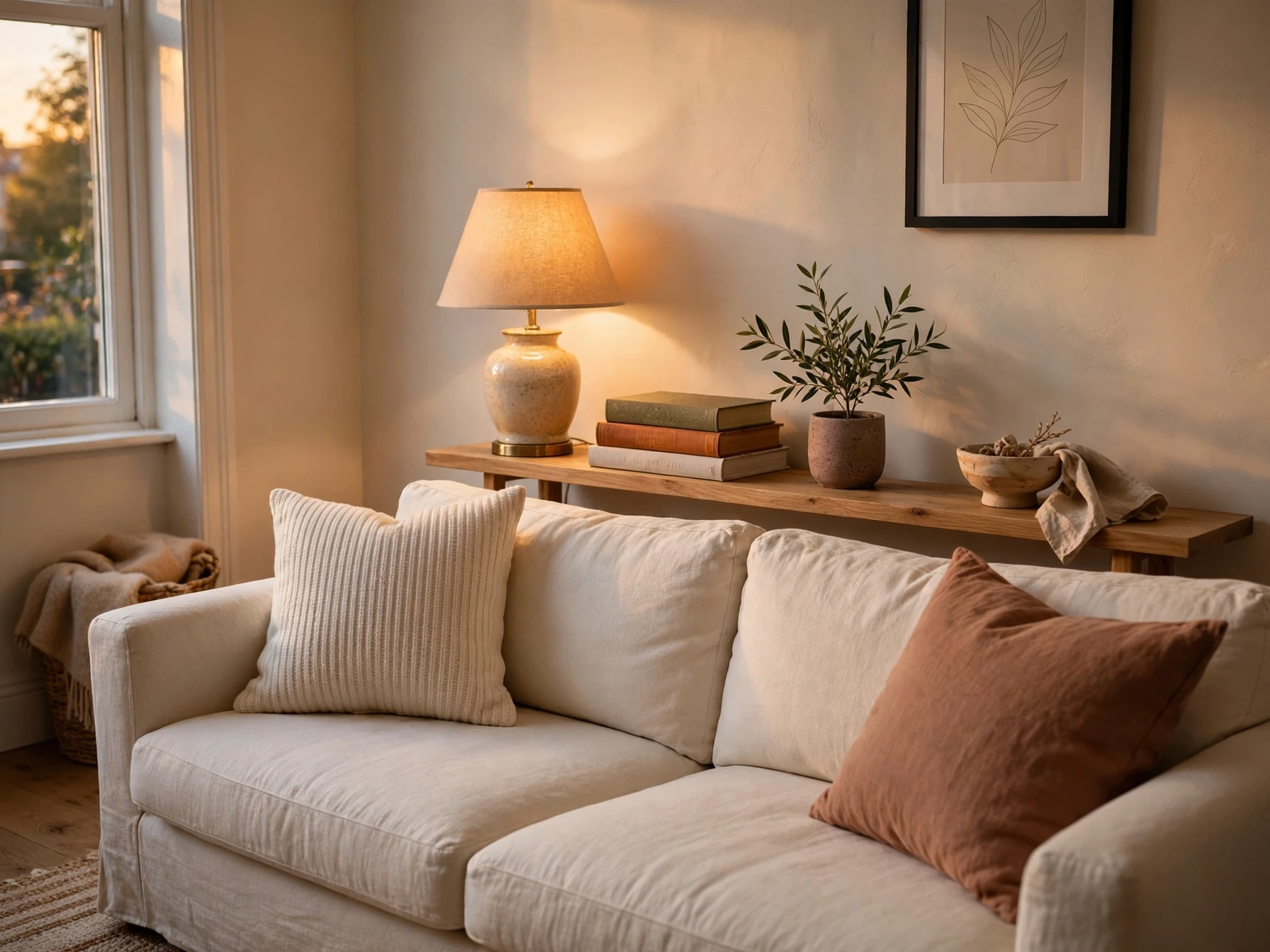
The strip of wall behind the sofa is the most wasted space in a small living room. A slim console shelf there — a narrow ledge or a low table pushed against the back of the sofa — holds a lamp, a stack of books, and a plant, and turns the back of the sofa into a styled surface instead of a blank gap.
Keep the shelf no wider than the sofa is long, and low enough that it does not tower over the cushions. A lamp on the shelf gives the seating area its evening glow, and the books are within reach of the person sitting down.
Practical note: Leave a hand’s width between the shelf and the sofa back so cushions can be plumped without knocking things over. If the shelf wobbles, put adhesive pads under its feet.
11. Style Shelves in Groups of Three
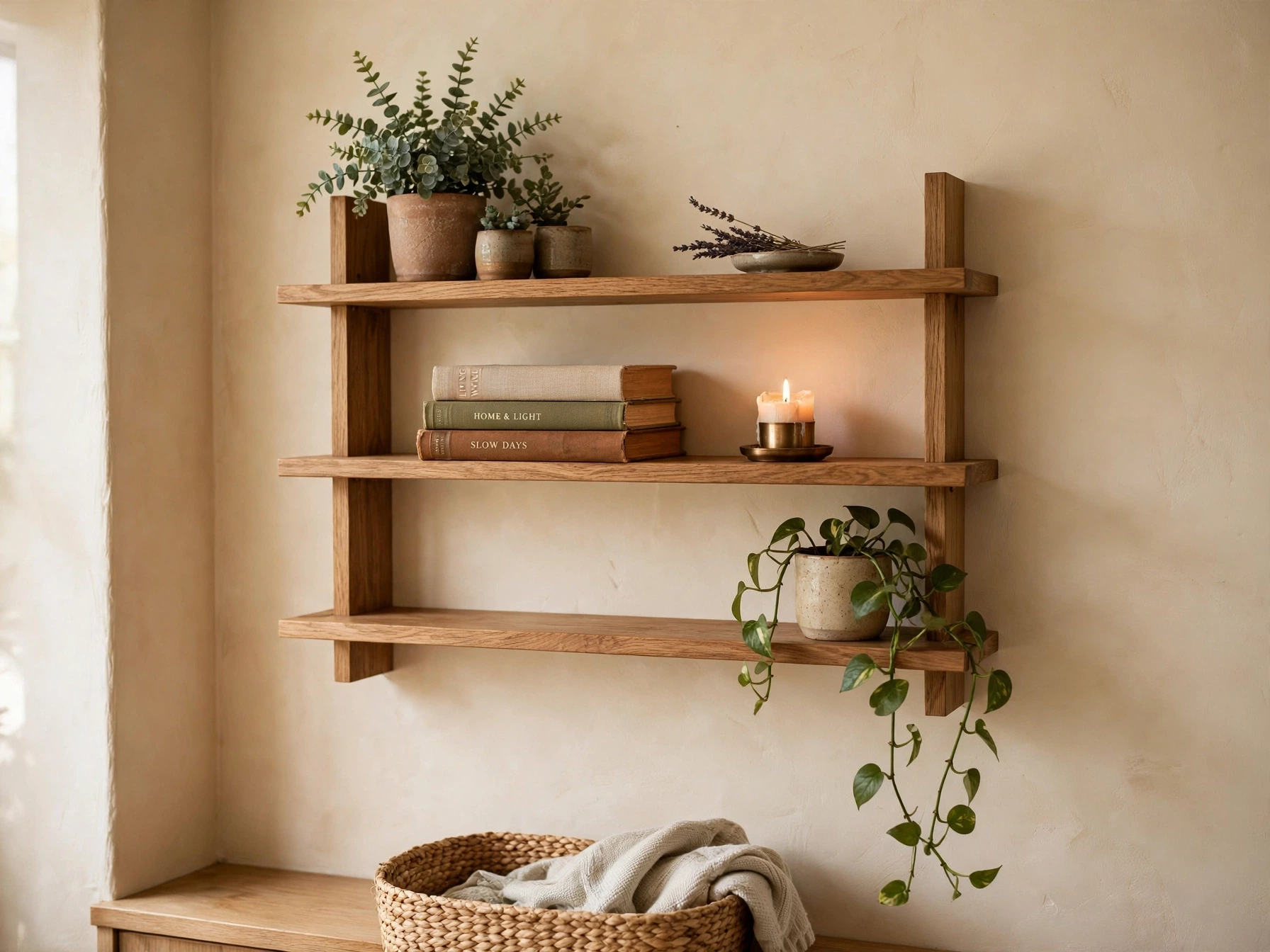
A shelf styled in threes always looks better than a shelf styled in a row. Group the objects — a stack of books, a potted plant, and a candle, for example — into one small cluster, then leave a gap, then start the next group. The eye reads each group as one calm arrangement instead of a long line of clutter.
Vary the heights inside each group: something tall, something low, and something in between. A tall plant, a low stack of books, and a candle in the middle is the classic trio, and it works on every shelf in the house. For the same warm, grouped styling across the whole room, see our cozy living room ideas for small spaces.
Practical note: Step back after styling and squint at the shelf. If it reads as one long strip, break it into groups. If it reads as three calm clusters with breathing room between them, it is done.
12. Leave One Shelf Mostly Empty
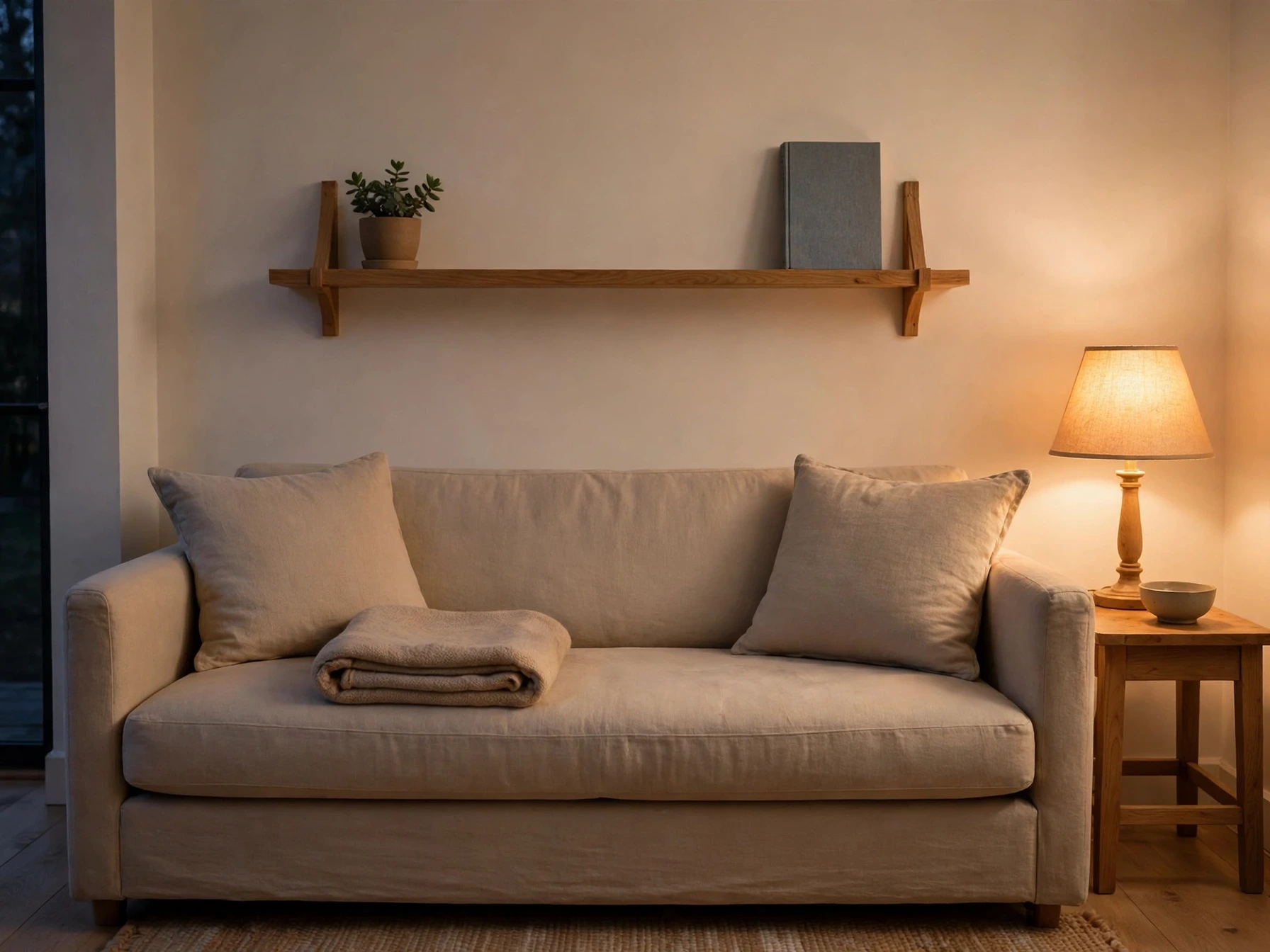
The hardest shelving idea is the simplest: leave one shelf mostly empty. A shelf with just a small plant and a book looks calm, confident, and designed — while a shelf crammed edge to edge looks like a cupboard that lost its door. Empty space is what makes the styled things on a shelf stand out.
Pick the shelf you see first when you walk into the room, and clear it down to two or three objects. Live with the emptiness for a week. Most people find the room feels bigger and calmer, and the empty shelf becomes the one they notice most.
Practical note: When you bring something new home, put it on the empty shelf first. If the shelf still looks calm, it stays. If the shelf starts to look crowded, something else has to go — one in, one out.
5 Small Living Room Shelving Tips That Keep It Working
- Pick one wood tone and repeat it. Warm oak, walnut, or pale pine — one wood across the shelves, the side table, and one small object makes a small living room feel designed.
- Decorate with things you use. Books, plants, baskets, and throws are decor already. Style the useful things first, and buy new decor only for the gaps.
- Keep the heaviest things low. Books and baskets belong on the bottom shelves, plants and ceramics higher up. A shelf that is heavy at the top feels unstable, however well it is fixed.
- Leave breathing room on every shelf. A shelf that is two-thirds full looks styled; a shelf that is completely full looks like storage. Empty space is part of the design.
- Change one shelf with the seasons. Swap the print, the plant, or the candle four times a year, and the living room feels new without a single renovation. For autumn warmth, see our pumpkin home decor ideas.
Small Living Room Shelving FAQs
How do I add shelves to a rental living room without drilling?
Use shelves that lean, stand, or stick: a leaning ladder shelf, a slim freestanding bookcase, an over-door rack, or a picture ledge on strong adhesive strips. All of it comes down cleanly when you move, and none of it needs a drill.
What is the best shelf for a very small living room?
A leaning ladder shelf or a slim bookcase no deeper than your books. Both use a wall or a corner that was doing nothing, hold a surprising amount, and can be moved or taken with you when you move home.
How do I style living room shelves without making them cluttered?
Style in groups of three — books, a plant, and a candle — with breathing room between the groups, and leave one shelf mostly empty. A shelf with three calm clusters looks designed; a shelf with thirty objects looks like a shop shelf.
How can I make a small living room feel bigger with shelving?
Use open shelves instead of closed cabinets, keep the styling light and low, and let the wall colour show through between the objects. Open shelving adds storage without adding visual weight, which is exactly what a small room needs.
Final Thoughts
A small living room does not need more space to hold the things you love. It needs one good shelf — leaning, standing, or stuck on with strips — styled in threes, with room to breathe.
Start with the idea that costs nothing: clear the top of the sideboard, or turn the windowsill into a display shelf, and live with it for a week. Then add the next shelf only when the first one feels like home. For more small-space inspiration, see our living room decor ideas for small apartments and our cozy living room ideas for small spaces.
Save this post to your living room board and try one shelving idea this weekend.