
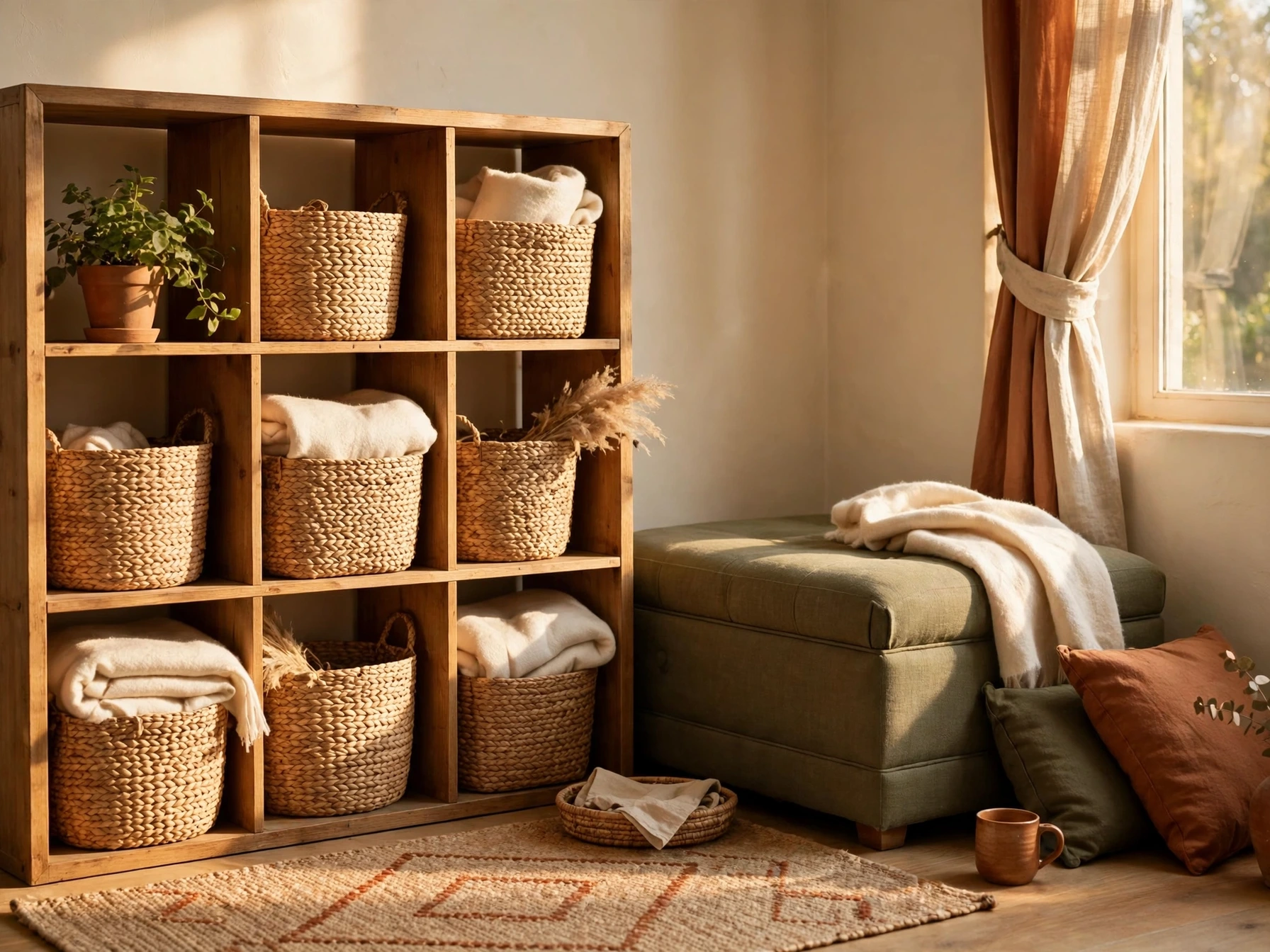
A small home does not need less stuff. It needs better places to put it. When every basket, bin, and box has a home of its own, the rooms feel calm and open — even when the square footage is modest and the budget is tight.
Black Friday is one of the best times of the year to buy storage for a small home, because the pieces that make the biggest difference — woven baskets, under-bed boxes, storage ottomans, cube shelves — are the pieces most often included in seasonal sales. The trick is knowing what to look for before the sale starts, so you buy storage that fits your rooms instead of storage that becomes clutter itself.
Why Small Homes Need a Different Storage List
A large home forgives a wrong purchase. A small one does not. A basket that is an inch too wide will not fit the shelf, a storage ottoman that is too deep blocks the walking path, and a set of bins bought without measuring ends up stacked in a corner, holding nothing. In a small home, every storage piece has to fit the exact spot it was bought for.
That is why the best black friday storage deals for a small home are rarely the biggest sets on sale. They are the baskets that slide neatly onto the shelf you already own, the flat boxes that disappear under the bed, the ottoman that holds blankets and doubles as a seat, and the cube shelf that stores a whole closet’s worth of things against one wall. Shop for the gaps you actually have, not for the storage in the showroom photo.
Best Black Friday Storage Deals for Small Homes
Baskets, Bins & Boxes
1. Start with Woven Baskets That Fit Your Shelves
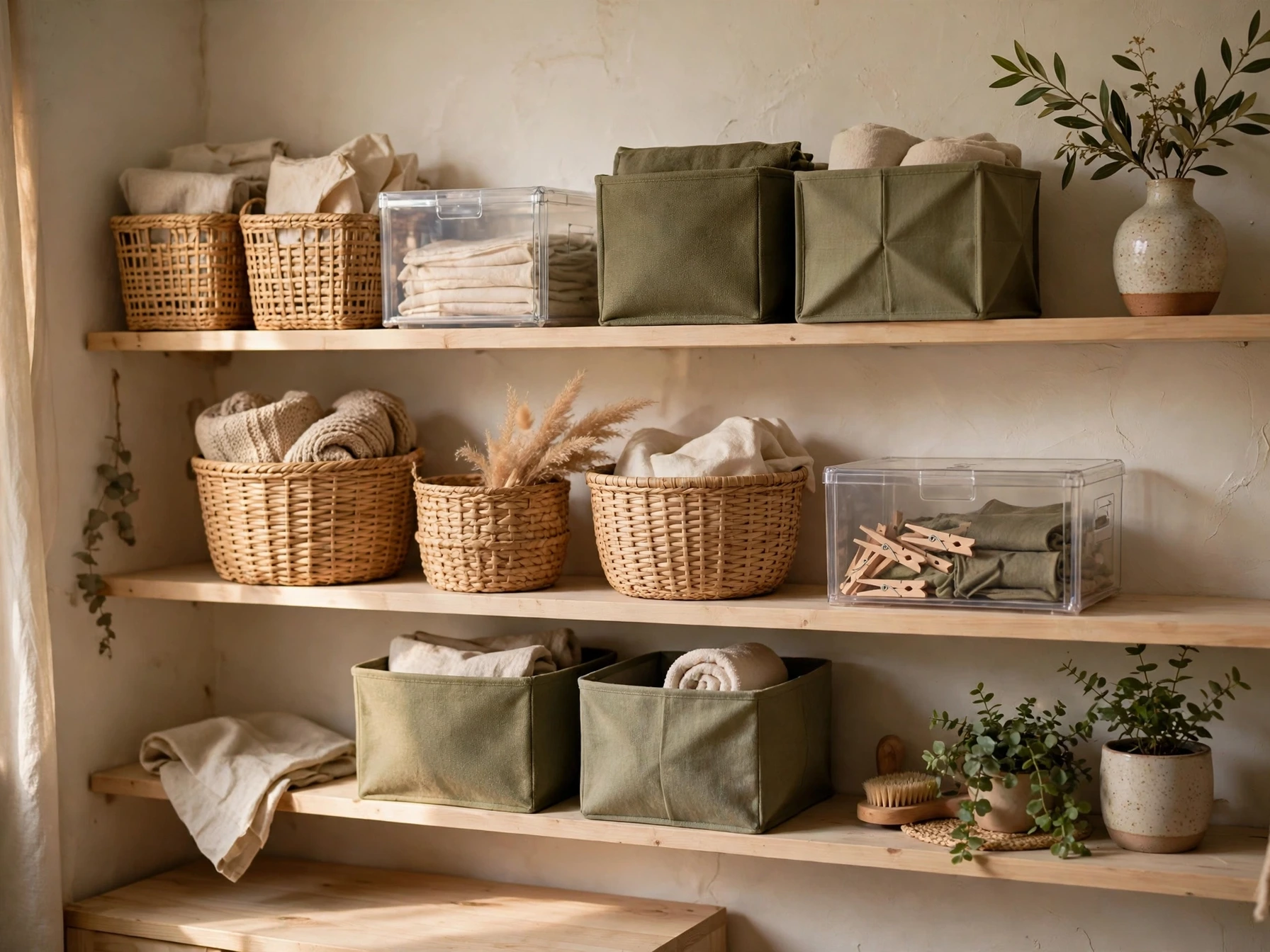
Woven baskets are the friendliest storage a small home can own. They hide the mess, soften a room with natural texture, and look good enough to sit out in the open — on a shelf, beside the sofa, or under a console table. A set of matching baskets turns a cluttered shelf into a styled one in a single afternoon.
Before the sale, measure the shelf, cubby, or nook where the baskets will live. A basket should slide in with a little air around it, not squeeze in tight. Seagrass, cotton rope, and water hyacinth are all good choices: they are light, sturdy, and warm in tone. Handles matter more than you think — a basket you carry often needs handles that feel solid in the hand.
Practical note: Buy one basket first and test the fit at home before buying the full set. Shelves are rarely as deep as they look, and one test basket saves a whole set of returns.
2. Choose Lidded Fabric Bins for Closets and High Shelves
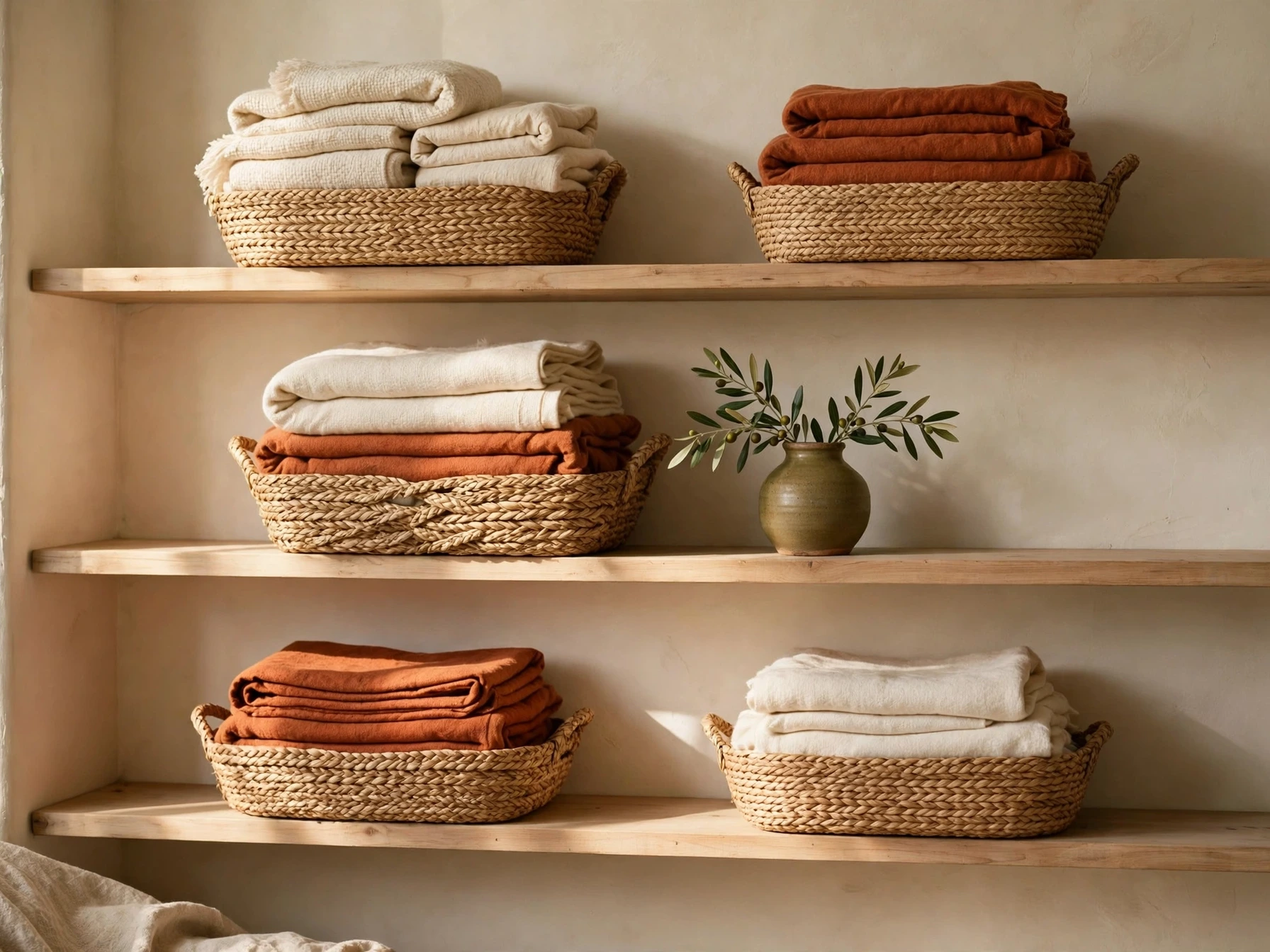
Lidded fabric bins are the quiet workhorses of small-home storage. They stack neatly, keep dust off out-of-season clothes and spare linens, and their soft sides will not scratch a shelf or a wall. On a high closet shelf, a lidded bin is the difference between a tidy stack and a pile that slides down every time the door opens.
Look for bins with a clear label window or a label holder on the front, so you can see what is inside without pulling every bin down. Sturdy sides matter too — a bin that holds its shape when it is full is far easier to stack than one that sags. Cream, olive, and warm grey tones keep a closet looking calm instead of busy.
Practical note: Keep one bin empty on purpose. When something new comes into the house, it has a place to go — and when the empty bin fills up, it is time to let something else go.
3. Use Flat Under-Bed Boxes for Hidden Storage
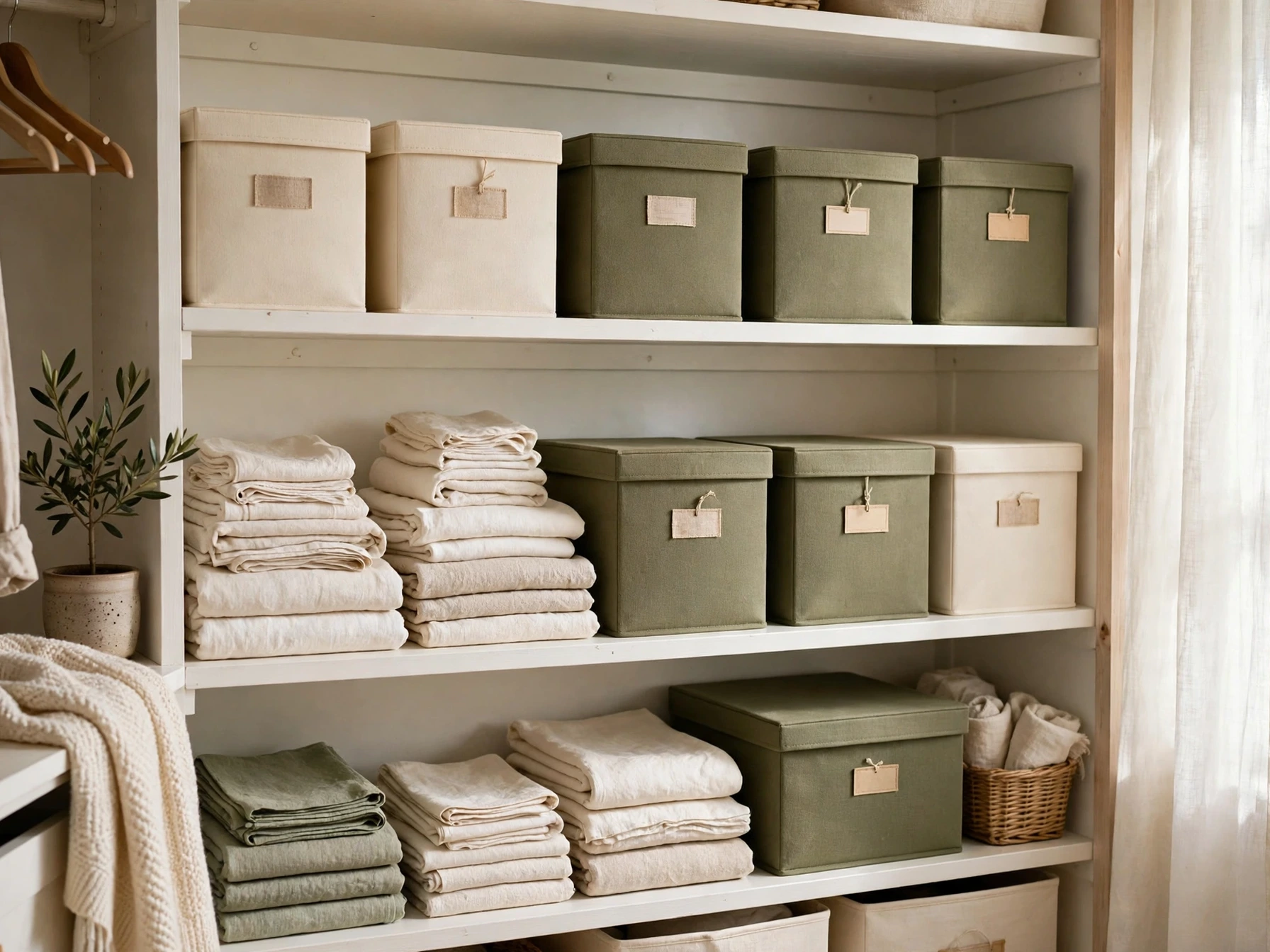
The space under the bed is the largest hidden storage area a small home already owns. Flat under-bed boxes turn it into a home for out-of-season clothes, spare bedding, shoes, and keepsakes — all out of sight, all easy to reach. A box with a clear lid or a label lets you find things without dragging every box out.
Measure the clearance under the bed before you shop, including the height of the bed skirt if you use one. The best under-bed boxes are low and wide rather than tall and narrow, and wheels or sturdy handles make them easy to slide in and out on carpet. A zip-top fabric box is kinder to wooden floors than a hard plastic one.
Practical note: Store only one kind of thing per box — winter jumpers in one, spare sheets in another. Mixed boxes are the ones you never open, because you never remember what is in them.
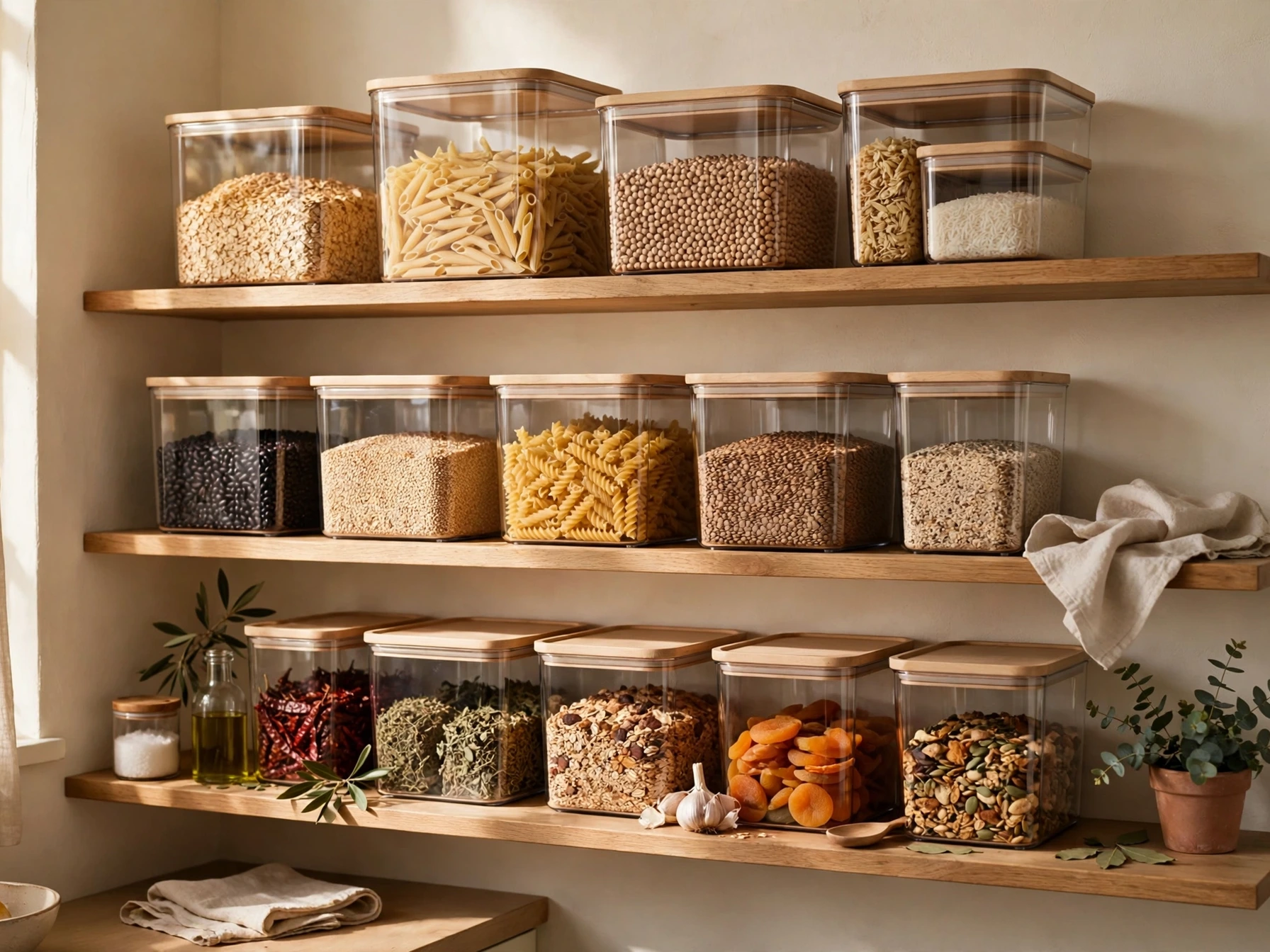
4. Stack Clear Bins for the Pantry and Kitchen
Clear stackable bins are the fastest way to make a small pantry feel twice as big. You can see everything at a glance, so nothing gets bought twice or forgotten at the back. In a small kitchen, that visibility is worth more than any extra shelf — it stops the slow creep of duplicate jars and half-used packets.
Look for bins with straight sides and lids that stack securely, so a tower of three or four stays steady. A small bin for spice packets, a medium one for baking supplies, and a large one for bulk dry goods covers most pantries. Handles on the front let you pull a bin out like a drawer, which matters when the shelf is deep and the good stuff is at the back.
Practical note: Decant only the things you use weekly into clear bins. The rest can stay in its original packaging on a higher shelf — a pantry that looks perfect but takes an hour to refill is a pantry you will stop using.
Furniture That Hides Storage
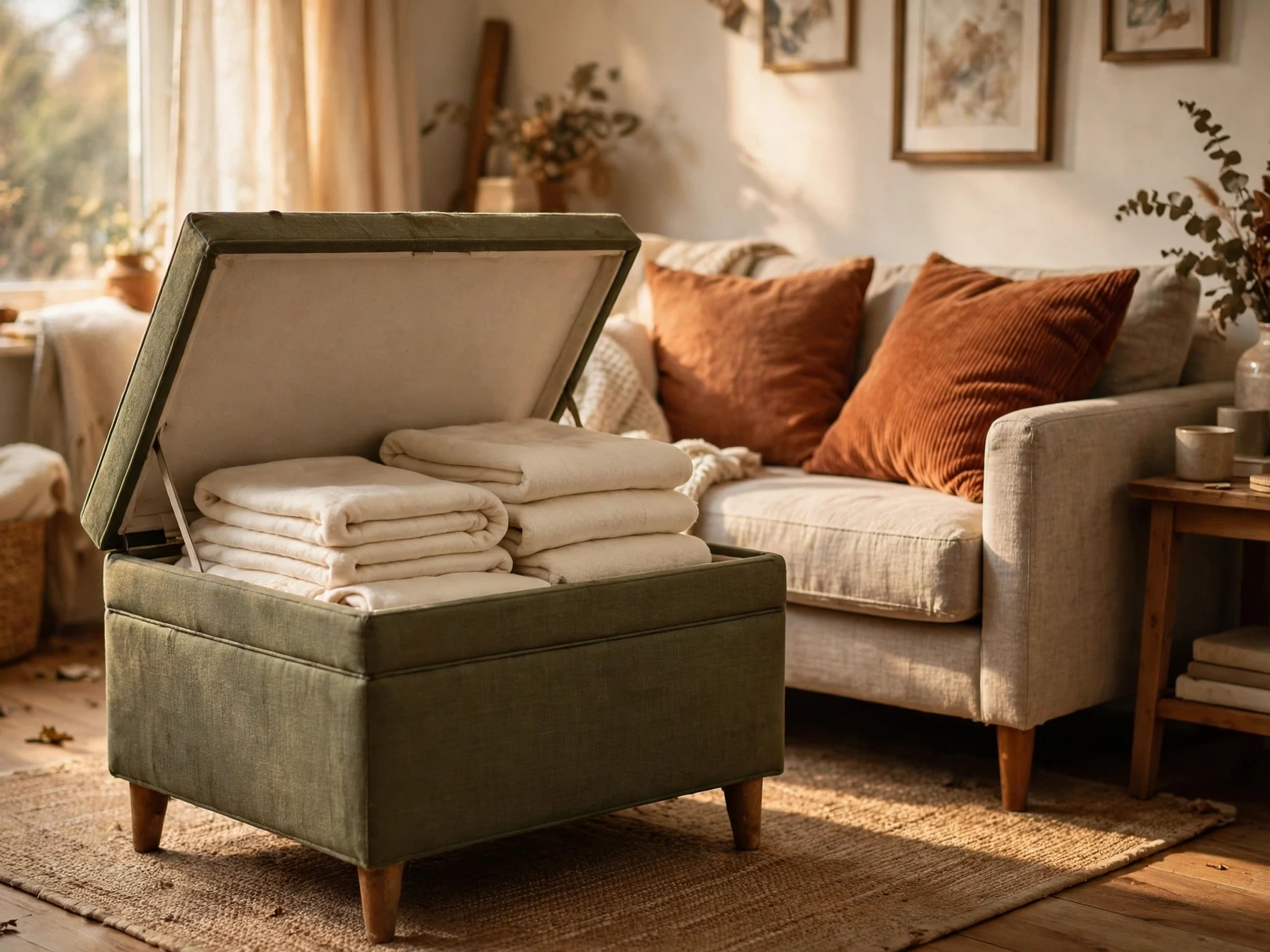
5. Pick a Storage Ottoman That Earns Its Floor Space
A storage ottoman is the hardest-working piece of furniture a small living room can own. It holds blankets, board games, and remote controls by day, then turns into a footrest, an extra seat, or a coffee table with a tray on top by evening. One piece, three jobs, one footprint.
Choose an ottoman with a lid that stays open on its own while you dig inside, and a base deep enough for a folded throw or two. A firm, flat top works as a tray table; a soft, tufted top is better for feet. Upholstery in a warm, forgiving fabric — olive, rust, or a deep cream — hides the wear of daily use far better than pale linen.
Practical note: Measure the ottoman against your sofa seat height. An ottoman that sits level with the seat is comfortable for feet and for sitting; one that is much higher or lower is neither.
6. Add an Entryway Bench with Cubbies
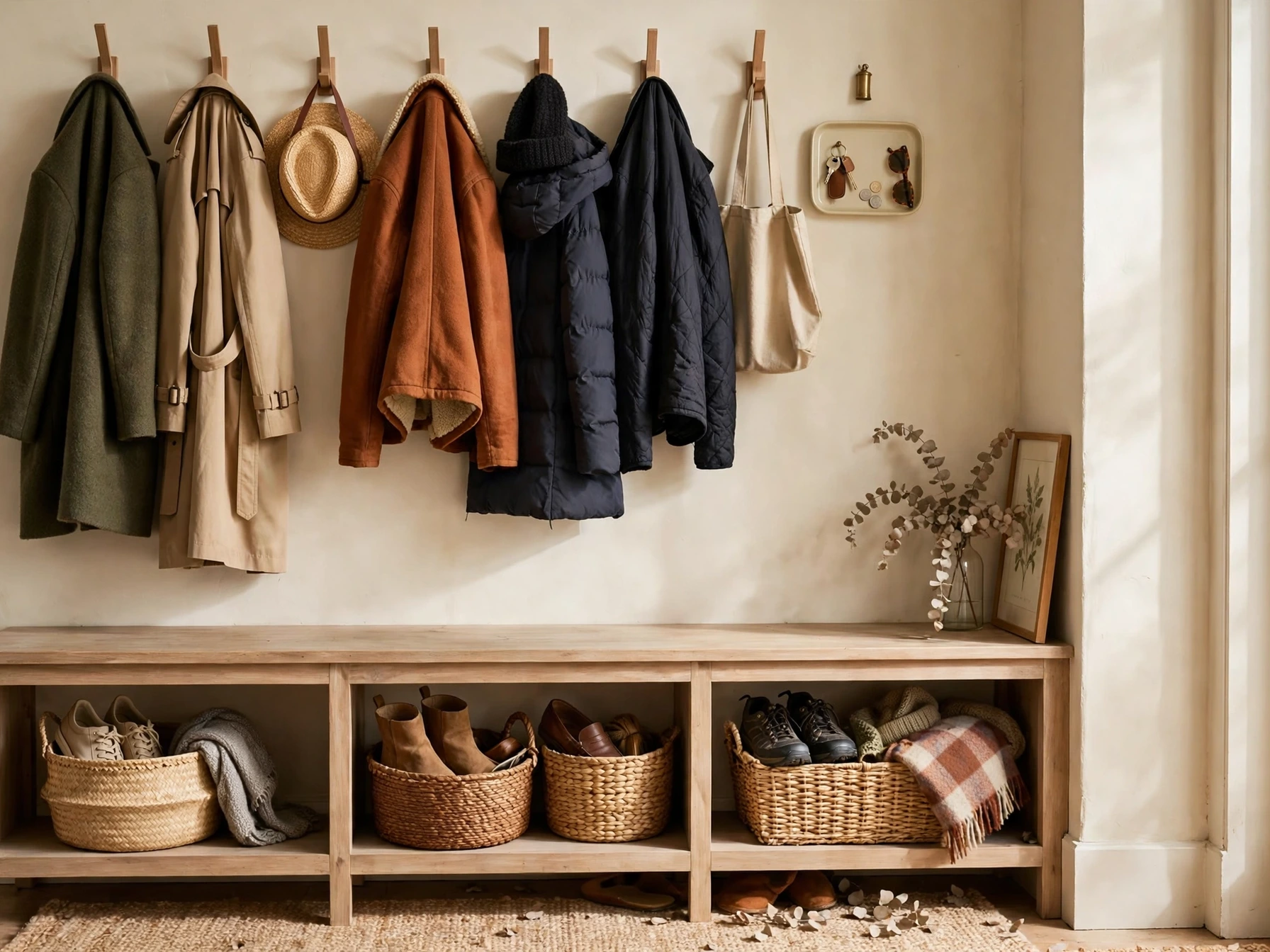
The entryway is where a small home’s clutter is born: shoes, coats, bags, and keys pile up by the door because there is nowhere else for them to go. An entryway bench with cubbies gives every one of those things a place, and a seat to sit on while you put your shoes on. It is the first thing you see when you come home, so it sets the tone for the whole house.
Look for a bench with one cubby per person in the house, plus a row of hooks above for coats and a small tray or basket for keys. A bench with a solid wood top can take wet boots and heavy bags without marking; a painted finish is easier to wipe clean than raw wood. If the entryway is narrow, choose a bench no deeper than a foot so the hallway stays walkable.
Practical note: Put a small basket on the bench for each person — one basket for keys and sunglasses, one for the dog lead, one for post. When the basket is full, it is time to sort it, not to buy a bigger one.
7. Look for a Cube Shelving Unit That Grows with You
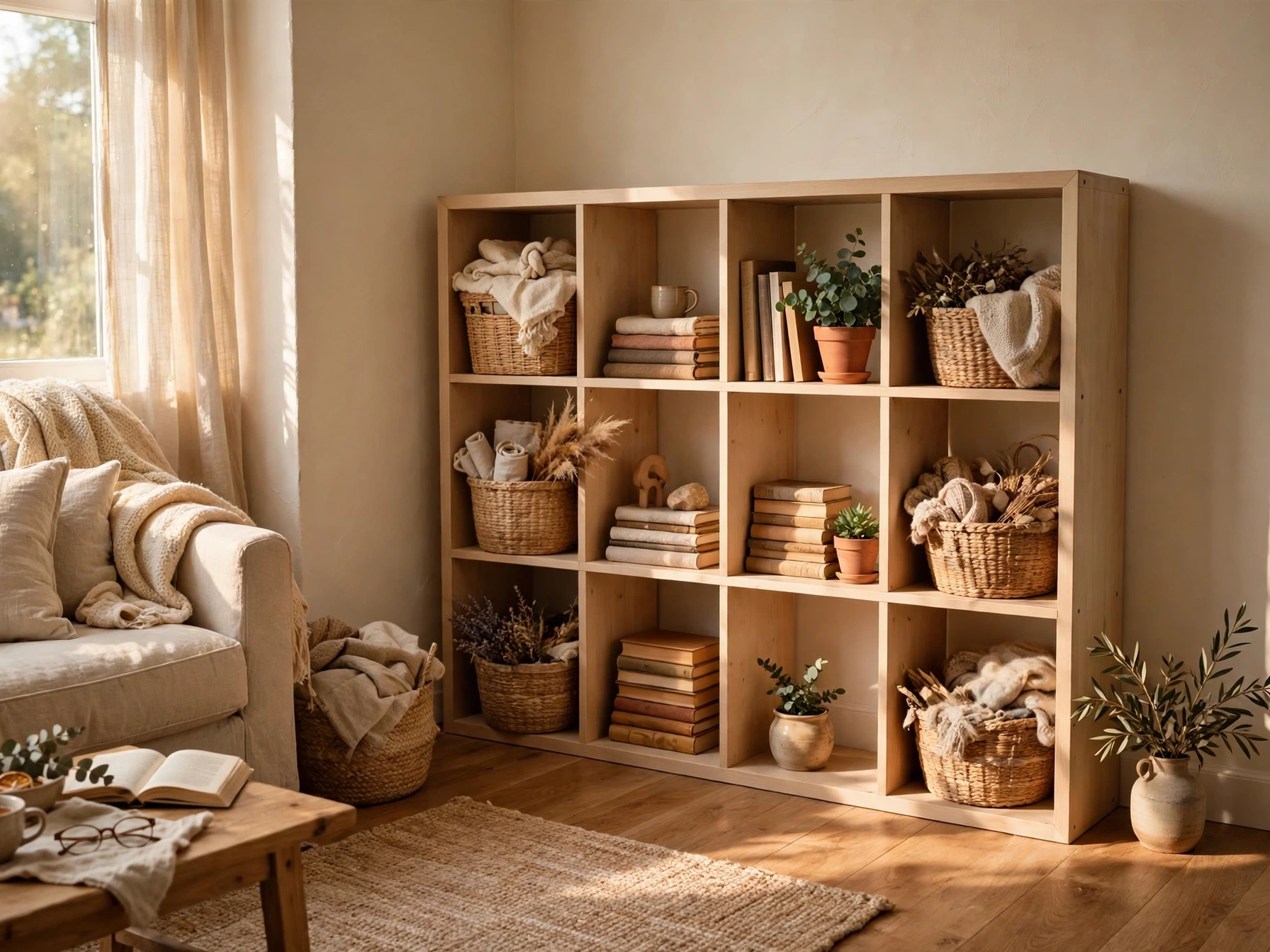
A cube shelving unit is the most flexible storage a small home can buy. Start with one unit by the sofa for books and baskets, add a second beside the desk for craft supplies, and stack them when you move to a bigger place. The same cubes work in a living room, a bedroom, a hallway, or a child’s room — which is why they are so often included in seasonal sales.
Choose a unit with solid backing if it will hold heavy books, and open cubes if you plan to slide baskets in and out often. A unit that sits on the floor is safer than a tall stack in a home with children or pets, and anchoring it to the wall is always worth the ten minutes it takes. Wood tones in warm oak or walnut suit the olive and cream palette of a cozy home far better than stark white.
Practical note: Leave one cube empty on every shelf. An empty cube is breathing room — it stops the shelf from looking crowded and gives you somewhere to put the next thing that needs a home. For matching living room pieces, see our Black Friday living room furniture deals.
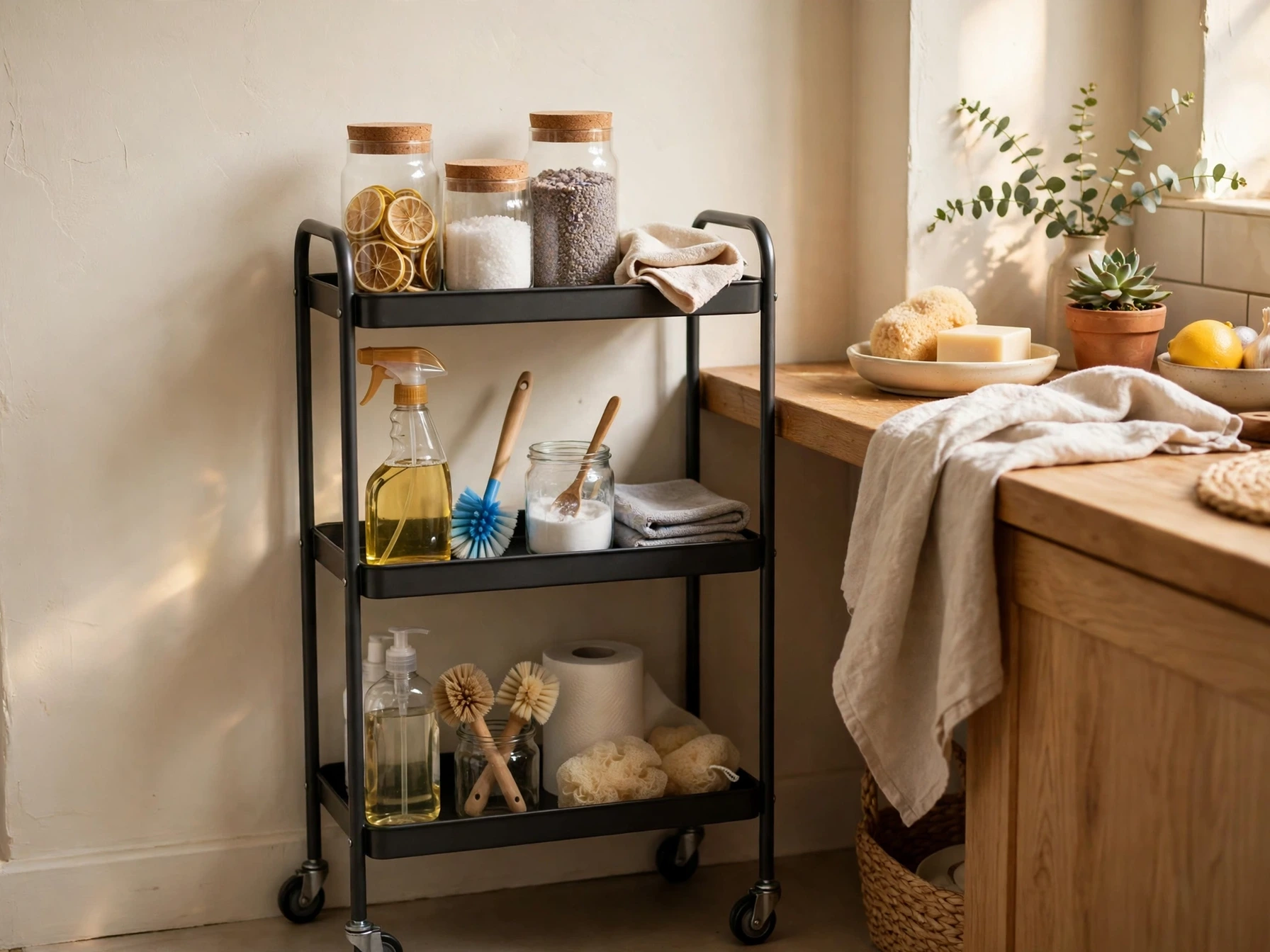
8. Try a Slim Rolling Cart for the Gaps
Every small home has a gap: the space between the fridge and the counter, the strip beside the washing machine, the corner of the bathroom that fits nothing. A slim rolling cart turns that gap into storage. Three tiers hold cleaning supplies, pantry overflow, craft materials, or bathroom essentials — and the wheels mean you can pull it out, use it, and roll it back in seconds.
Measure the gap first, including any skirting board or pipe that eats into the width. The best rolling carts are narrow enough to disappear and tall enough to hold three useful tiers. A cart with a handle on top is easier to pull out than one you have to grab by the shelf, and locking wheels keep it still when you need both hands free.
Practical note: Assign each tier one job — top for daily use, middle for weekly, bottom for spares. A cart with mixed tiers becomes a junk drawer on wheels, which is the opposite of what a small home needs.
Small-Space Tricks & Budget
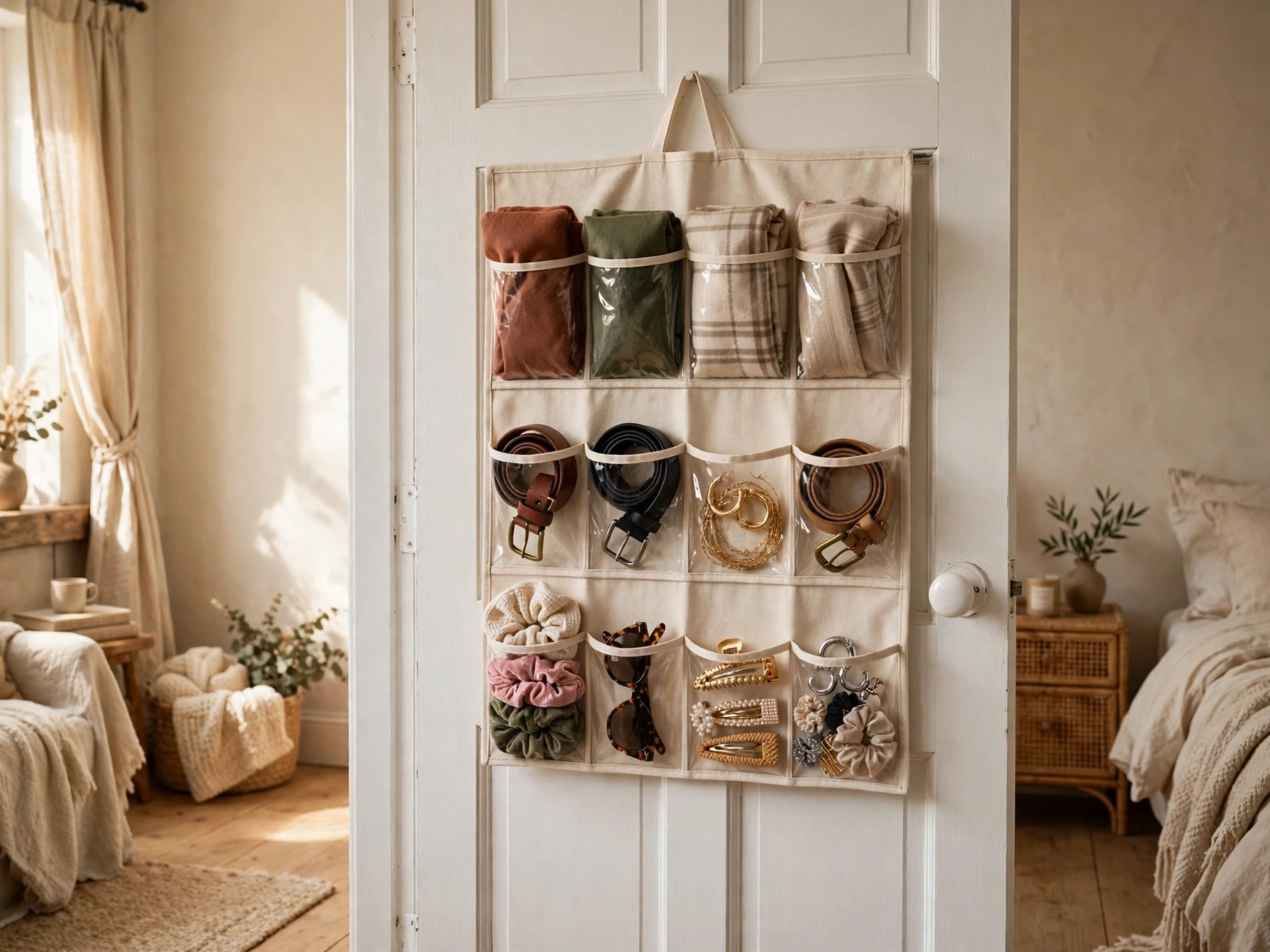
9. Hang Over-Door Organizers Where Walls Are Full
When the walls are full and the floor is full, the back of a door is the last free surface in a small home. An over-door organizer with clear pockets holds scarves, belts, cleaning supplies, pantry packets, or shoes — depending on which door it hangs on. It costs little, installs in seconds, and uses space that was doing nothing at all.
Choose an organizer with pockets deep enough for what you plan to store, and hooks that sit over the door without scratching the paint. Clear pockets work best for things you need to find fast; fabric pockets look tidier for a bedroom or hallway door. One organizer per door is plenty — two starts to look like the door is wearing a costume.
Practical note: Hang the organizer on the inside of a closet or pantry door, not the bedroom door. Storage you see every time you enter a room feels like clutter, even when it is organized.
10. Put Up Wall Shelves and Hooks Before Buying More Bins
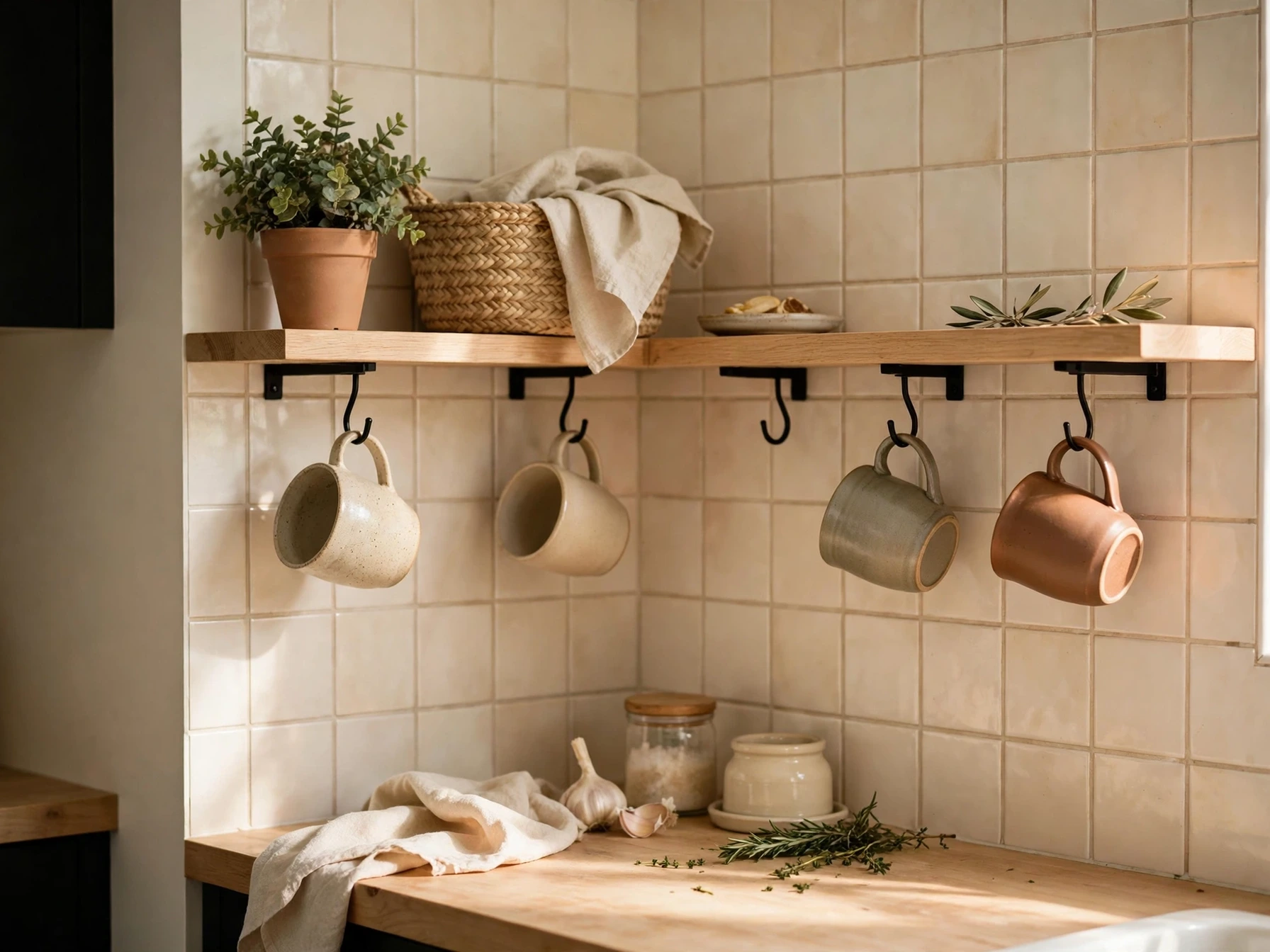
A small home often has more wall than floor, and wall storage is usually the cheapest storage of all. A pair of wooden shelves above the desk, a row of hooks by the back door, or a single shelf above the bathroom door can hold what three floor baskets would — without taking a single inch of floor space.
Look for shelves with a small lip or rail, so books and jars do not slide off when the door closes. Hooks should be fixed into a stud or a proper wall plug, not just plaster, because a hook that pulls out of the wall takes paint with it. Warm wood and black metal hardware suit a cozy home and age far better than shiny chrome.
Practical note: Hang the first shelf at eye level and live with it for a week before adding a second. One well-placed shelf is more useful than a wall full of shelves you have to stretch to reach. For more ways to stretch a small budget, our Black Friday on a budget home decor has ideas that cost little and change a lot.
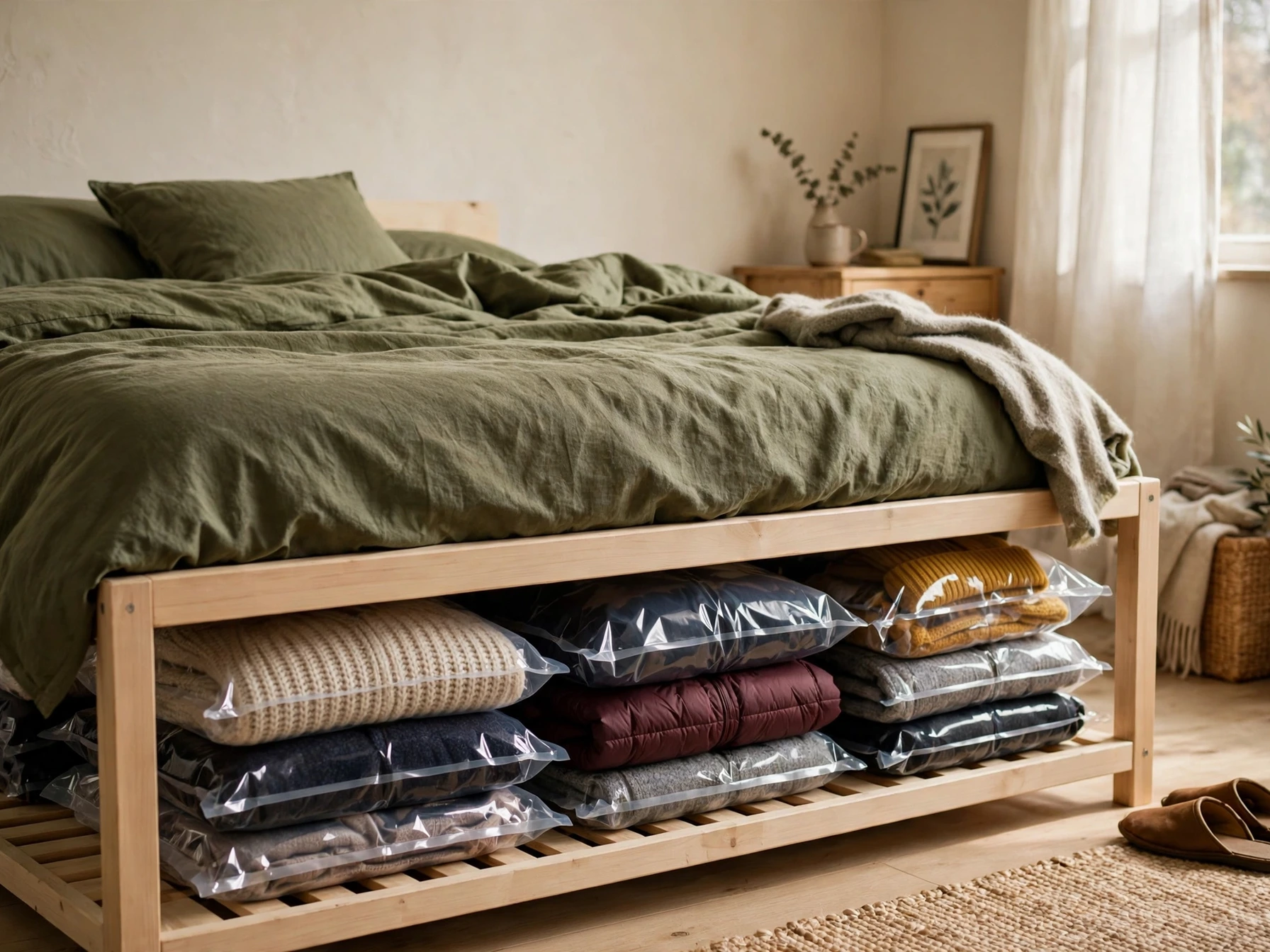
11. Pack Away the Season with Vacuum-Seal Bags
Vacuum-seal bags are the smallest storage deal with the biggest payoff. Winter coats, spare duvets, and out-of-season clothes shrink to a third of their size, which means one under-bed box holds what three used to. For a small home, that is the difference between a closet that closes and a closet that does not.
Choose bags with a double zip seal and a valve that works with a standard vacuum cleaner — no special pump needed. Roll the air out slowly so the bag compresses evenly, and label each bag before you seal it, because a flat, anonymous bag is impossible to identify later. Keep one bag unpacked for the things you reach for in a cold snap, so you are not opening sealed bags in January.
Practical note: Do not vacuum-seal anything made of natural down for more than a season, and never seal leather or suede. Those materials need air to stay in good shape, and a sealed bag can damage them.
12. Look for Storage Sets and Bundles, Not Single Pieces
Some of the best Black Friday storage deals are sets: a shelf with matching baskets, a bench with cubbies and hooks, or a stack of bins sold together. A set can save you the time and cost of hunting for matching pieces separately, and it guarantees the sizes, colours, and materials work together in one room.
Compare the set against buying the pieces one at a time, and check that you actually need every piece in it. A set is only good value if each piece fits a real gap in your home. If the third basket has nowhere to go, a smaller set is the better buy — even if the big set looks cheaper per piece. Before the sale, make a short list of the gaps you need to fill and the sizes that fit them, so a bundle never talks you into a piece you do not need.
Practical note: Check the return window before you buy a set. If one piece does not fit, you want the choice of returning just that piece — or the whole set — without a restocking headache. For a full sale plan, our Black Friday checklist helps you list needs before wants, and our Black Friday home decor deals cover the wider sale.
5 Black Friday Storage Tips That Keep It Working
- Measure the gap first, not the piece. Keep the shelf, cubby, and under-bed measurements on your phone, and check every storage piece against them before you buy — not after it arrives.
- Buy the biggest gap first. The under-bed boxes or the entryway bench change the whole house. Buy those first, live with them for a week, and only then choose the smaller baskets around them.
- One kind of thing per container. A bin that holds one category is a bin you can find things in. A mixed bin is a bin you never open.
- Leave one empty spot on purpose. An empty basket, an empty cubby, or an empty shelf is breathing room — it stops the house from looking crowded and gives the next thing a place to go.
- Label everything you cannot see into. A label on a lidded bin or a vacuum bag saves you opening five containers to find one thing.
Best Black Friday Storage Deals FAQs
What storage should I buy first for a small home on Black Friday?
Start with the biggest hidden space you already own: flat under-bed boxes and a storage ottoman. Both use space that is doing nothing, and both hold the bulky things — spare bedding, winter clothes, blankets — that crowd a small home fastest.
How do I know if a basket will fit my shelf?
Measure the shelf’s width, depth, and height, and leave a little air around the basket on all sides. Buy one basket first and test the fit at home before buying the full set — shelves are rarely as deep as they look.
Are clear bins or fabric bins better for a small home?
Clear bins are better where you need to see what is inside quickly, like a pantry. Fabric bins with lids are better where you want things to look tidy, like a closet or a living room shelf. Most small homes need both, in different rooms.
What should I check before buying storage on sale?
Check the measurements, the materials, and the return window before you pay. A good deal is storage that fits the exact gap you bought it for, holds its shape when full, and can be returned if it does not fit.
Final Thoughts
A small home does not need less storage — it needs smarter storage. Measure the gaps first, fill the hidden spaces under the bed and behind the door, choose furniture that stores as well as it sits, and check the fit before the price tag. That is how a Black Friday sale turns into a home that feels calm and open, not a pile of bins you regret.
Start with the one gap that bothers you every day, and fill it well. Save this post to your small spaces board and measure your shelves before the sale starts.


One Comment