

Open shelves can be the prettiest thing in a small kitchen — or the messiest. The difference is not how much you own, it is how you arrange it. A shelf with stacked plates, a row of matching mugs, a glass jar of oats and one trailing plant looks styled on purpose. The same shelf crammed with every mug you have ever owned looks like a cupboard that lost its doors.
The 10 kitchen shelf decor ideas below are made for real small kitchens: apartments, rentals, and older homes with little counter space. No drilling is needed for most of them, and nothing here costs much — most of the styling uses dishes, jars, and plants you already own. Pick one idea this weekend, live with it for a week, and add the next one only when the first feels like home.
Why Open Shelves Work in a Small Kitchen
Open shelves make a small kitchen feel bigger because your eye travels all the way to the wall instead of stopping at a cabinet door. They put your prettiest everyday things on display, so the dishes you actually use become the decor, and they force a gentle discipline: when everything is visible, you keep only what you love and use.
The trick is to treat a shelf like a picture frame, not like storage. Every shelf needs a little empty space, a mix of heights, and one warm thing — wood, a plant, or a brass hook — so it reads as styled rather than stuffed. Get that balance right and even two small shelves can change the whole feel of the room.
10 Kitchen Shelf Decor Ideas for Open Shelving
Plan the Shelf First
1. Start With Empty Shelves and a Plan
Before you style anything, take everything off the shelves and start empty. An empty shelf shows you how much space you really have, and it stops you from simply putting things back where they were out of habit.
Sort what came off into three piles: things you use every day, things you use weekly, and things you only keep because they were a gift. The first pile earns a place on the shelves. The weekly pile can live in a closed cabinet, and the third pile can go to a new home. For a full tidy-up first, see our small kitchen organization ideas.
Practical note: Lay your chosen pieces on the counter first and arrange them there. When the counter version looks calm, move it to the shelf in the same order — it saves a dozen rounds of taking things down again.

2. Mix Open Shelves With Closed Storage
Open shelves work best when they are not the only storage in the kitchen. Keep the pretty, everyday things on the open shelves and hide the mismatched, rarely used things behind a cabinet door. The contrast is what makes the open shelves look deliberate instead of desperate.
If your kitchen has only open shelves, add one closed element: a lidded basket, a wooden box, or a small cupboard underneath. The closed piece holds the clutter — spare lids, cleaning cloths, the chipped mugs — while the open shelves stay calm. For cabinet ideas that pair well with open shelves, see our kitchen cabinet organization ideas.
Practical note: One closed basket per shelf is enough. If you need more hidden storage than that, the shelves are holding too much — move the extras to a higher cabinet or another room.

3. Leave Breathing Room on Every Shelf
A shelf that is full edge to edge reads as storage, however pretty the objects are. A shelf that is about two-thirds full reads as decor. Leave a gap at each end of every shelf, and leave some empty space above the shortest items, so the eye has somewhere to rest.
The easiest way to check is to stand back and squint. If the shelf looks like one solid block of colour, take something off. If you can see the wall between groups of objects, the shelf has breathing room. For more on keeping surfaces calm, see our kitchen counter organization ideas.
Practical note: Group objects in threes with a gap between groups, and keep the tallest object at one end of the shelf rather than in the middle, so the arrangement feels natural instead of symmetrical.

Style With What You Already Own
4. Stack Plates and Bowls in Neat Piles
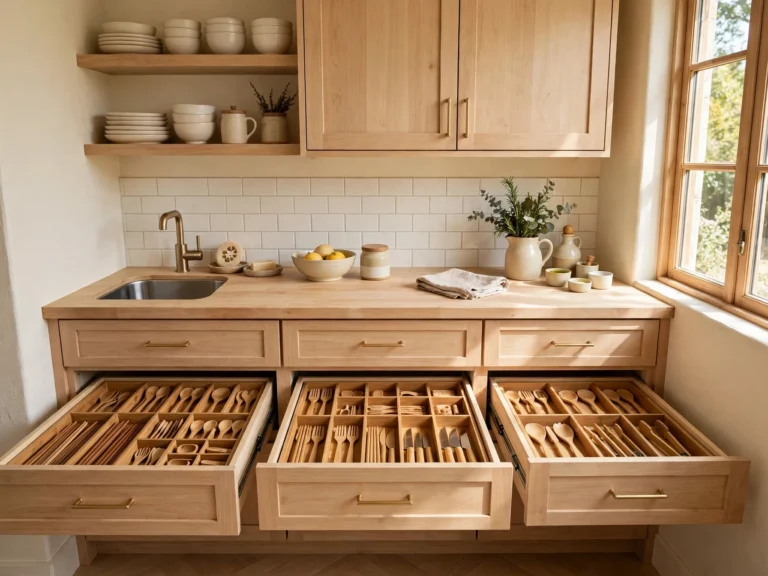
Stacked plates are the backbone of a styled open shelf. A pile of four to six matching plates, with a small stack of bowls beside it, gives the shelf structure and makes it obvious what the shelf is for. The straight edges of the stack also balance the round shapes of mugs and jars.
Use your everyday plates, not the special-occasion set — the ones you reach for daily are the ones that belong within easy reach, and using them keeps the shelf honest. Mix in one stack of smaller side plates for height variety, and keep the piles low enough that you can lift the top plate off with one hand.
Practical note: Put a thin piece of felt or a paper liner between stacked plates if they are handmade or glazed, so they do not scratch each other when you slide one out.

5. Line Up Matching Mugs in a Row
A row of matching mugs is the fastest way to make an open shelf look intentional. Four or five mugs in the same colour or the same shape, lined up with their handles facing the same way, read as a collection rather than a random pile. Mismatched mugs can work too, but only if they share one colour family.
Hang the mugs you use most from small hooks under the shelf and stand the rest in a row on top of it. The hanging mugs save shelf space and add a second layer of styling underneath. Keep the row short — if the mugs fill the whole shelf, the shelf looks like a shop display.
Practical note: Keep one or two favourite mismatched mugs and retire the rest to a closed cabinet. A shelf with five matching mugs and one beloved odd one out feels personal; a shelf with twelve odd ones feels cluttered.

6. Decant Dry Goods Into Matching Glass Jars
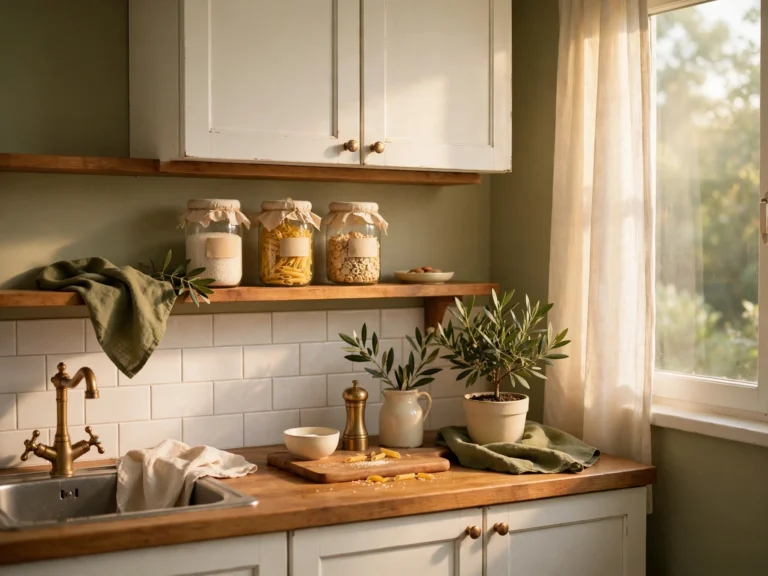
Matching glass jars turn pantry staples into shelf decor. Pour rice, pasta, oats, and flour into simple glass jars with wooden lids, line them up on a shelf, and the kitchen instantly looks calmer and more considered. The jars also keep food fresher and make it easy to see when you are running low.
Use jars of the same shape in two or three sizes, and label the front of each one so you can find things at a glance. Keep the jars you use daily at hand height and the taller, rarely used ones on the highest shelf. For a full no-pantry storage plan, see our kitchen storage ideas without a pantry.
Practical note: Decant only what you use often, and keep the original bags for the rest. A shelf of half-empty jars looks unfinished, so refill them when they drop below a third full.

Add Warmth and Life
7. Add One Plant to Every Shelf
A plant is the cheapest way to make an open shelf feel alive. One small trailing plant per shelf — a pothos, a spider plant, or a string of pearls — softens the hard lines of plates and jars, and its leaves spilling over the edge of the shelf make the whole kitchen feel warmer.
Choose plants that forgive forgetfulness and like the light your kitchen actually gets. A pothos survives low light and irregular watering, which is exactly what a shelf plant needs. Put the plant at one end of the shelf so it does not drip onto the dishes below when you water it.
Practical note: Water shelf plants with a small jug and a step stool, and wipe the shelf when you water so dust and drips do not build up. One plant per shelf is enough — a row of plants reads as a nursery, not a kitchen.

8. Layer Wood and Warm Metals
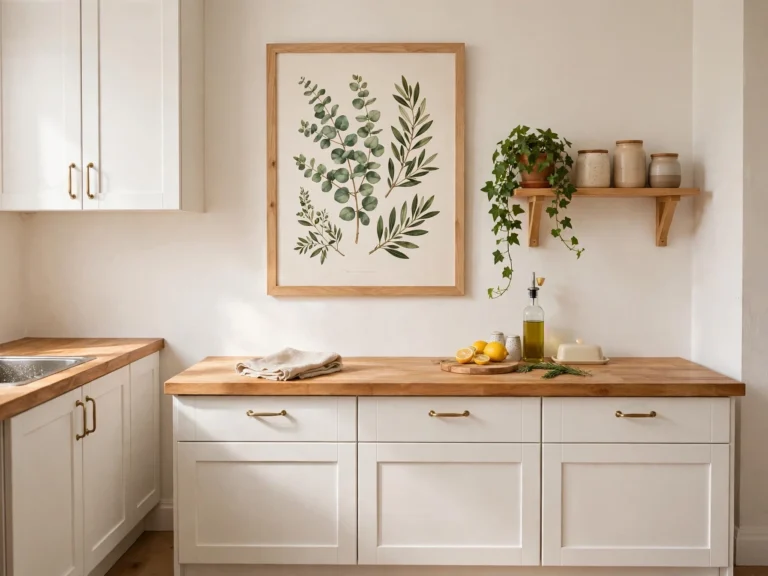
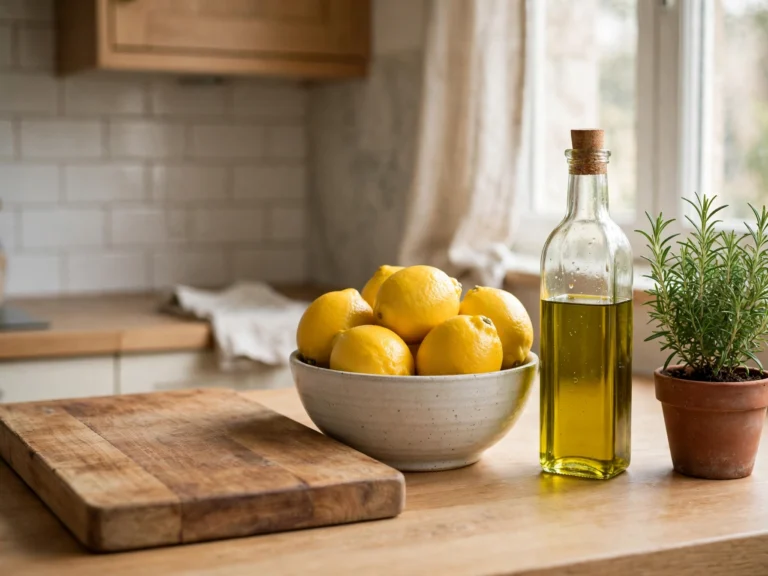
Wood and warm metals are what stop open shelves from feeling cold and clinical. A wooden chopping board leaned against the wall, a brass hook holding a measuring cup, a copper pot hanging from a rail — each one adds a note of warmth that ceramic and glass alone cannot give.
Mix light and dark woods rather than matching them exactly. A light oak board beside a dark walnut shelf feels collected and natural, while a shelf of identical wood can feel flat. Keep metals to one finish — brass or copper, not both — so the warmth stays calm.
Practical note: If your shelves are white or grey, one wooden piece is enough to warm the whole wall. Start with a single board and add more wood only if the shelf still feels cold.

Keep It Working Every Day
9. Put Everyday Dishes at Hand Height
A styled shelf is only useful if you can actually reach what is on it. Put the plates, bowls, and mugs you use every day on the lowest open shelf, at a height you can reach without a step stool. The things you use weekly go one shelf up, and the rarely used pieces go on the highest shelf.
This rule also keeps the shelf looking lived-in rather than staged. The everyday shelf will shift slightly as you cook and eat, and that is fine — a shelf that changes a little each day is a shelf that works. For renter-friendly ways to add shelves without drilling, see our kitchen organization ideas for renters.
Practical note: Stand where you cook and reach for a plate. If you have to stretch or climb, the shelf is too high for daily dishes — swap it with the shelf below.

10. Do a Five-Minute Weekly Shelf Reset
Even the best-styled shelf drifts. A mug ends up on the wrong shelf, a jar gets pushed to the back, a plant drops a leaf. Once a week, spend five minutes putting everything back: plates stacked straight, mugs in a row, jars pulled forward, and the shelf wiped clean.
Pick a fixed time — Sunday evening works well — and set a timer. When it rings, stop. A short reset you actually do every week beats a long re-style you keep putting off. For the same habit in the rest of the kitchen, see our fridge organization ideas.
Practical note: Keep a small basket under the lowest shelf for the week’s drift — the spare lid, the chipped mug, the jar that belongs in another cupboard — and empty it during the reset.

5 Kitchen Shelf Tips That Keep It Working
- Style in threes. Three objects per group — a stack of plates, a jar, and a small plant — looks styled; two looks sparse and four looks crowded.
- Repeat one colour three times. Pick a warm colour — rust, olive, or mustard — and use it in three places: a mug, a jar lid, and a folded cloth. Repetition is what makes a shelf look designed.
- Keep the heaviest things low. Plates and jars on the lowest shelf, light things like plants and small bowls up high. Heavy things overhead feel unsafe and look top-heavy.
- Leave one shelf mostly empty. A shelf with just a plant and a single stack of bowls gives the whole wall room to breathe, and it is the easiest shelf to keep tidy.
- Change one thing with the seasons. Swap a jar, a cloth, or a small pumpkin on the shelf four times a year, and the kitchen feels new without a renovation. For autumn styling, see our pumpkin home decor ideas and our fall decor ideas for small apartments.
For more budget-friendly kitchen styling, see our small kitchen decor ideas on a budget and our DIY fall home decor ideas under 50. If the whole kitchen needs warming up, our cozy kitchen decor ideas for small spaces carries the same palette further, and our spice rack organization ideas for small kitchens sorts out the smallest shelf of all.
Kitchen Shelf Decor FAQs
How do I style open kitchen shelves without making them look cluttered?
Keep each shelf about two-thirds full, group objects in threes with gaps between groups, and put the mismatched or rarely used things in a closed cabinet. Style with what you use daily — plates, mugs, jars — and leave one shelf mostly empty so the wall can breathe.
What should I put on open kitchen shelves?
Everyday plates and bowls, a row of matching mugs, glass jars of dry goods, one plant per shelf, and one warm wooden piece like a chopping board. That is enough. Anything you do not use at least weekly belongs in a closed cupboard.
Are open shelves practical in a small kitchen?
Yes, if you follow the hand-height rule: daily dishes on the lowest shelf, weekly items one shelf up, rarely used pieces on top. Open shelves also make a small kitchen feel bigger, because your eye travels to the wall instead of stopping at a cabinet door.
How do I keep open kitchen shelves clean?
Wipe the shelves during your five-minute weekly reset, and wash the dishes on them as you use them — open shelves stay clean when things move. Keep a small basket under the lowest shelf for strays, and dust the jars and plants once a week so grease does not build up.
Final Thoughts
Open shelves do not need a big budget or a renovation to look beautiful. A few stacked plates, a row of matching mugs, glass jars, one plant, and a wooden board are enough to make a small kitchen feel styled on purpose.
Start with the idea that costs nothing: take everything off, keep only what you use daily, and put it back with breathing room. Then add the next idea only when the first one feels like home. For more small-space inspiration, see our bathroom counter organization ideas and our laundry room storage ideas on a budget — the same calm, grouped styling works in every room.
Save this post to your kitchen board and style one shelf this weekend.

2 Comments