A spice collection does not get messy all at once. It happens one jar at a time: a new paprika pushed in front of the old one, a half-used bag of cumin tucked behind the cinnamon, a duplicate turmeric you bought because you could not see the one you already had. A few months later the shelf is full and you still cannot find the one spice you need.
The 12 spice rack organization ideas below fix that with a simple system, not a shopping spree. Matching jars, clear labels, one home for every spice, and a short monthly check are all it takes. Most of these ideas cost very little and work in any small kitchen, whether your spices live on a shelf, in a drawer, or on the inside of a cabinet door. Pick one idea today, try it for a week, and add the next one only when the first has become a habit.
Why a Spice Rack Needs a System, Not More Space
A spice shelf fails when every jar lives wherever it happened to land. The smoked paprika is on two different shelves, the chilli flakes are behind the baking powder, and the jar you reach for most is always at the back. You spend more time hunting than cooking, and spices quietly go stale in jars you forgot you owned.
A system fixes that. When spices are grouped by how you cook, stored where you can see every label, and kept in jars that all look the same, you can find anything in one glance. A small kitchen does not need a bigger spice rack. It needs a rack where every spice has one home and every home is visible.
12 Spice Rack Organization Ideas for Small Kitchens
Start With a Simple System
1. Empty the Spice Shelf and Start Fresh
The fastest way to organize spices is to take every single jar off the shelf and start from an empty surface. Pull everything out onto the counter, wipe the shelf clean, and look at what you actually own. Most small kitchens are hiding at least two duplicates and one jar that went stale years ago.
Sorting with everything in front of you takes twenty minutes and saves months of hunting. Keep only the spices you have used in the last six months, and put the rest in a box to review. If you have not reached for it by next month, it does not earn a place on the shelf.
Practical note: Check the smell before you keep a jar. Open it and sniff: if a ground spice smells faint or dusty instead of strong and warm, it has lost its flavour and should be replaced. For a full reset of the rest of the kitchen, see our small kitchen organization ideas.
2. Group Spices by How You Cook
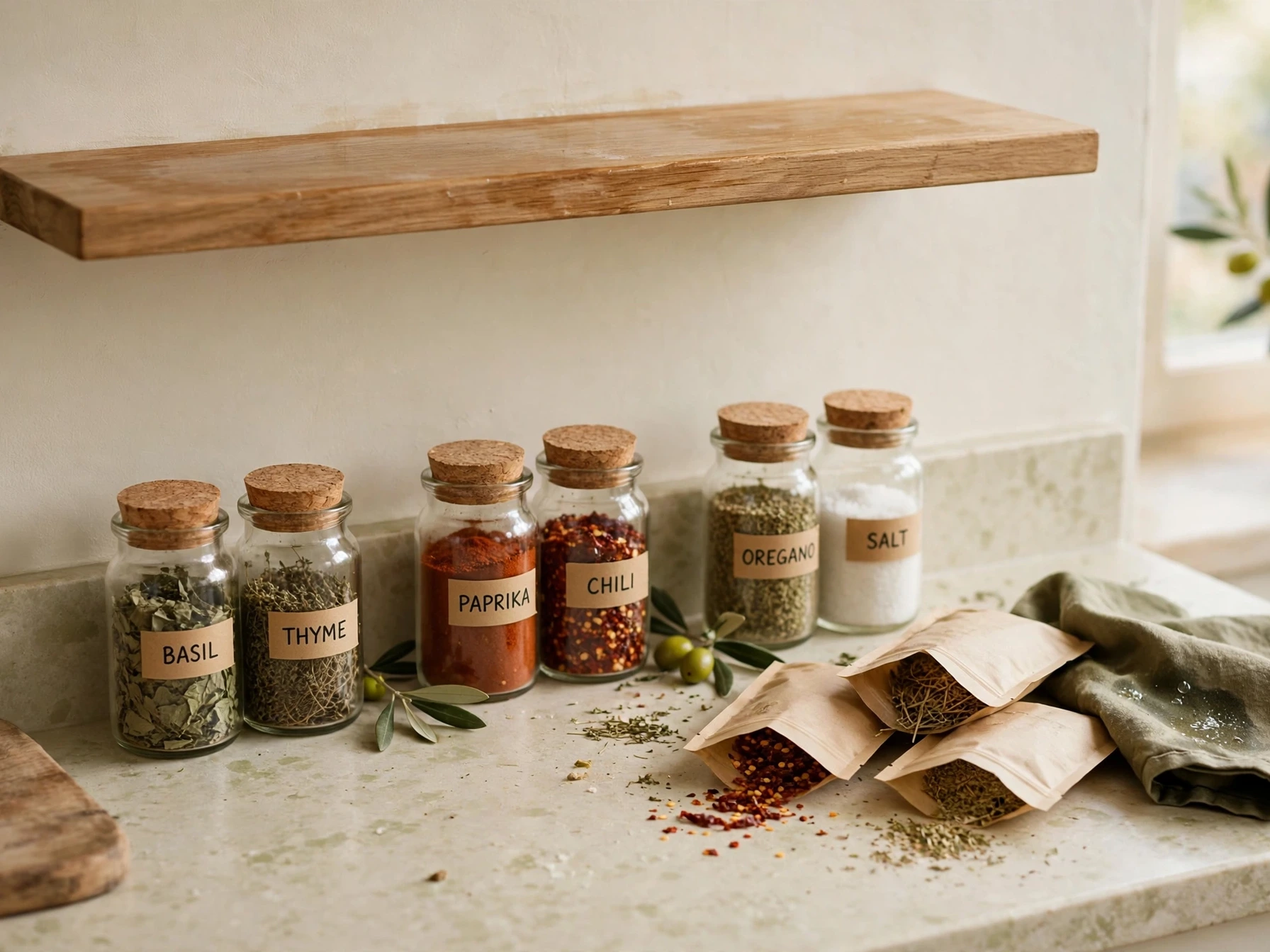
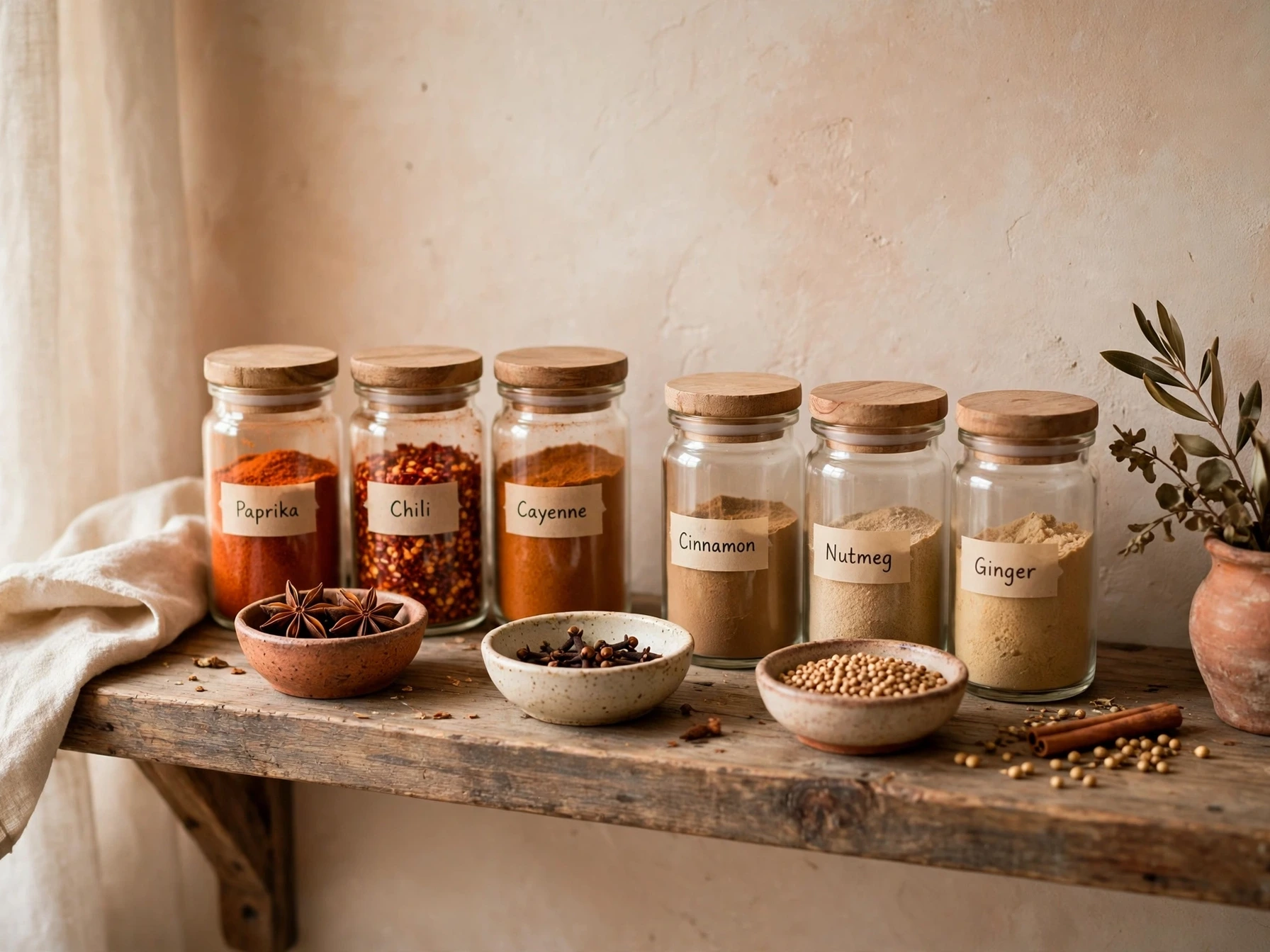
Spices work best when they are grouped by the food you cook, not by the alphabet. Keep the everyday cooking spices together — salt, pepper, paprika, cumin, garlic powder — and group the baking spices separately — cinnamon, nutmeg, ginger, cloves. When a group lives together, you grab the whole group for a recipe instead of hunting across the shelf.
Grouping by use also tells you the truth about what you own. If the curry group has five jars and the baking group has one, your shelf is telling you exactly how you cook. Let the groups match your real cooking, not a list from a magazine.
Practical note: Keep the groups small: three or four jars per group is enough. A group that grows past six jars is really two groups waiting to be split.
3. Put Everyday Spices at Eye Level
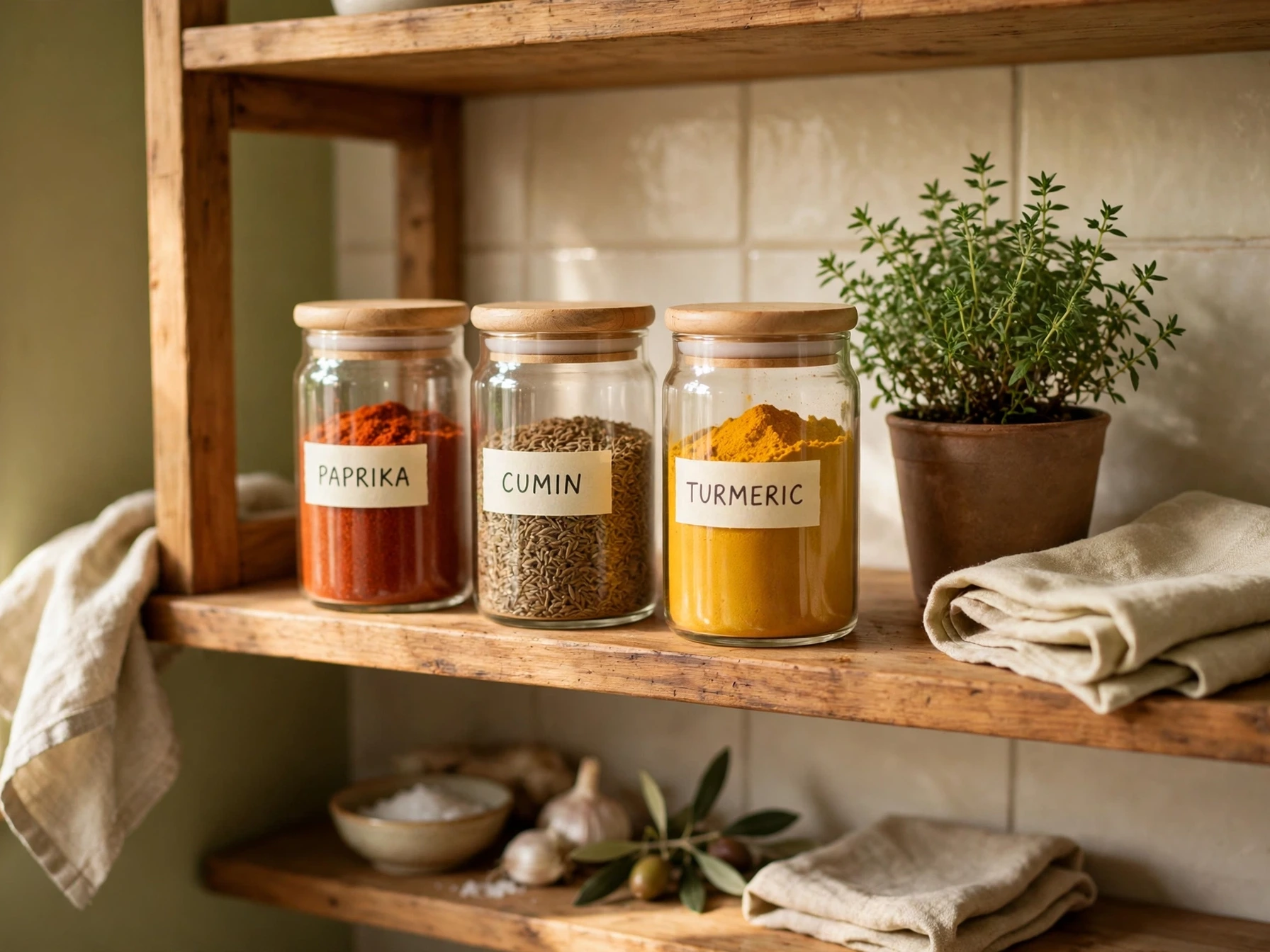
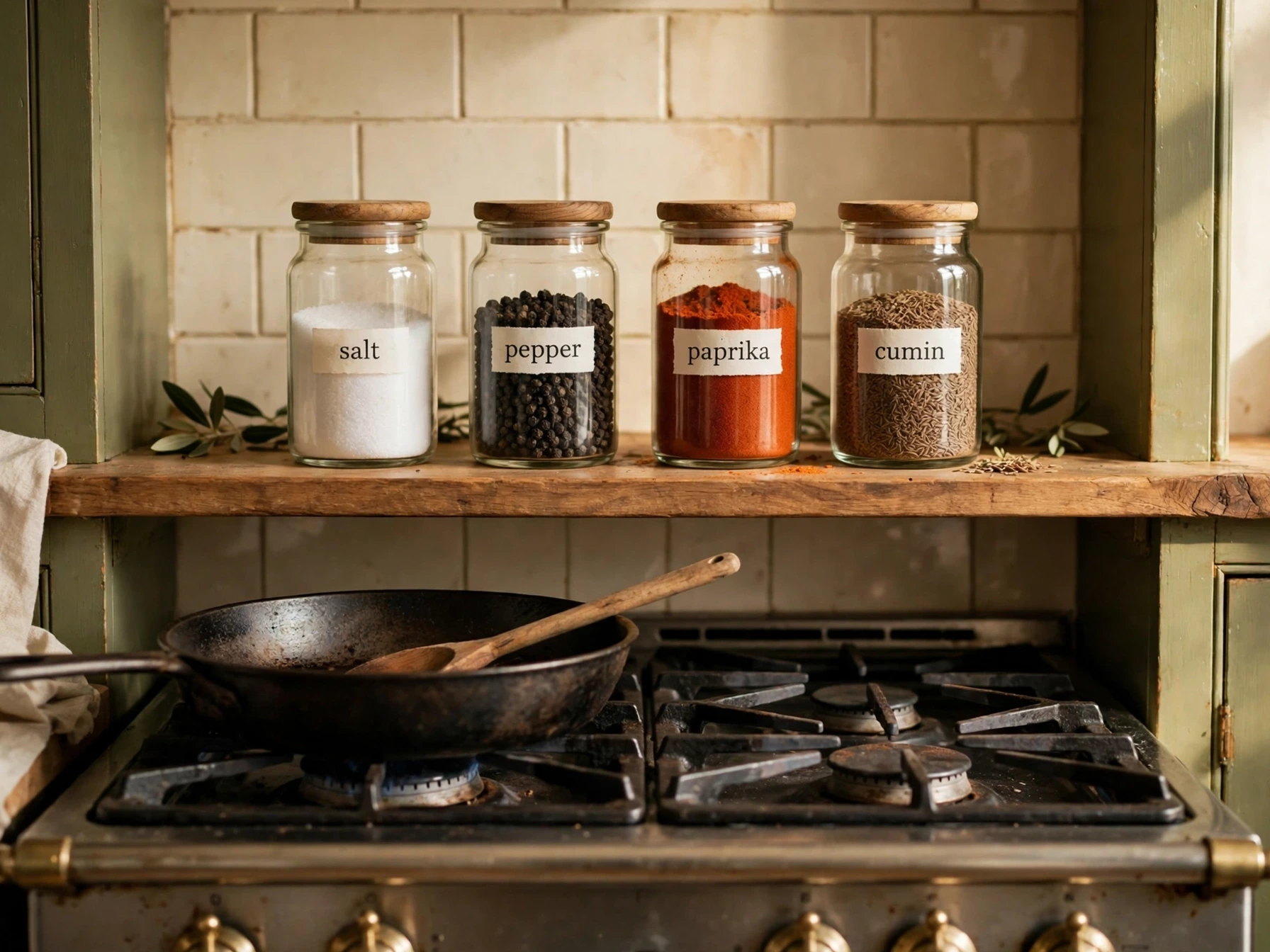
The spices you reach for every day deserve the best spot on the shelf: eye level, right at the front, where you can read every label without moving a single jar. Salt, pepper, paprika, and cumin earn that spot because they are in your hand almost every time you cook.
Spices you use once a month belong higher up or further back. When the daily spices are at eye level and the rare ones are out of the way, cooking gets faster and the shelf stays calm, because the jars that move most are the ones that are easiest to put back.
Practical note: Stand where you cook and look at the shelf. The jars you can read without stretching or crouching are the ones at eye level — those are your daily spices. For more on placing things where you use them, see our kitchen counter organization ideas.
Jars, Labels & Containers
4. Decant Spices into Matching Glass Jars
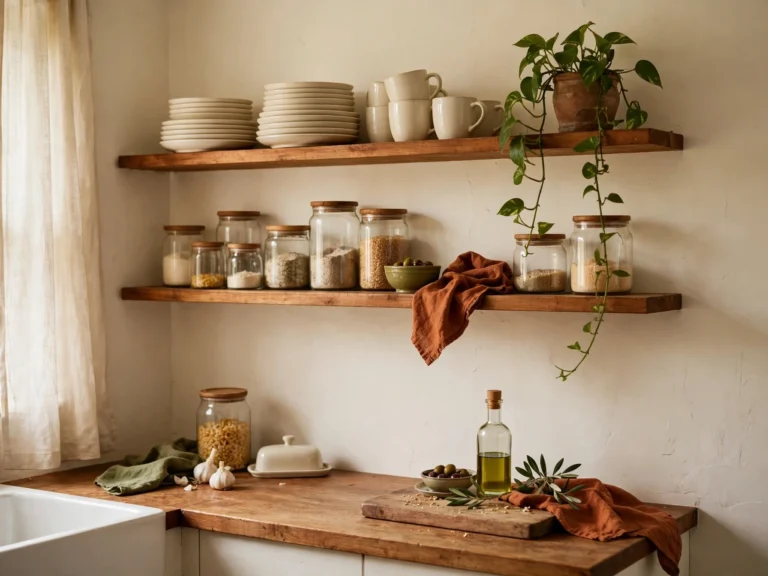
Matching glass jars turn a messy spice shelf into a calm one. Pour your spices into simple glass jars with the same shape and the same lids, line them up in a row, and suddenly you can see how full each jar is and which one needs refilling. The shelf looks considered instead of cluttered, and the spices stay fresher in airtight glass than in the bags and boxes they came in.
Use jars of the same shape in one or two sizes: small jars for strong spices you use a pinch of, larger jars for the ones you use by the spoonful. Glass beats plastic here, because it does not hold onto smells and it shows the colour of the spice, which is often the fastest way to tell two red powders apart.
Practical note: Decant only the spices you use regularly. Keep the original packet for rare spices, folded shut with a clip, until you know you will use them enough to earn a jar. For a full no-pantry storage plan, see our kitchen storage ideas without a pantry.
5. Label Every Jar the Same Way
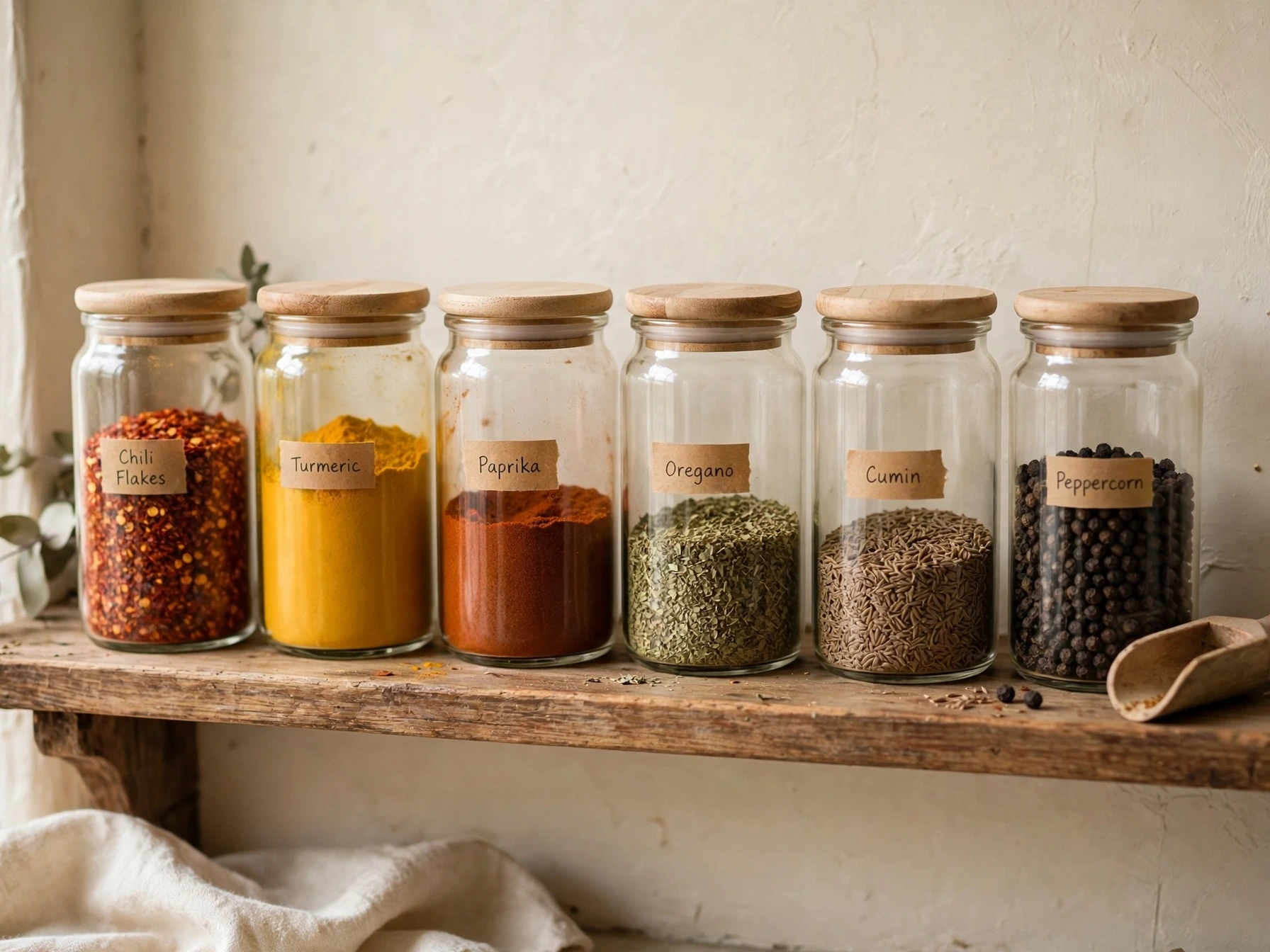
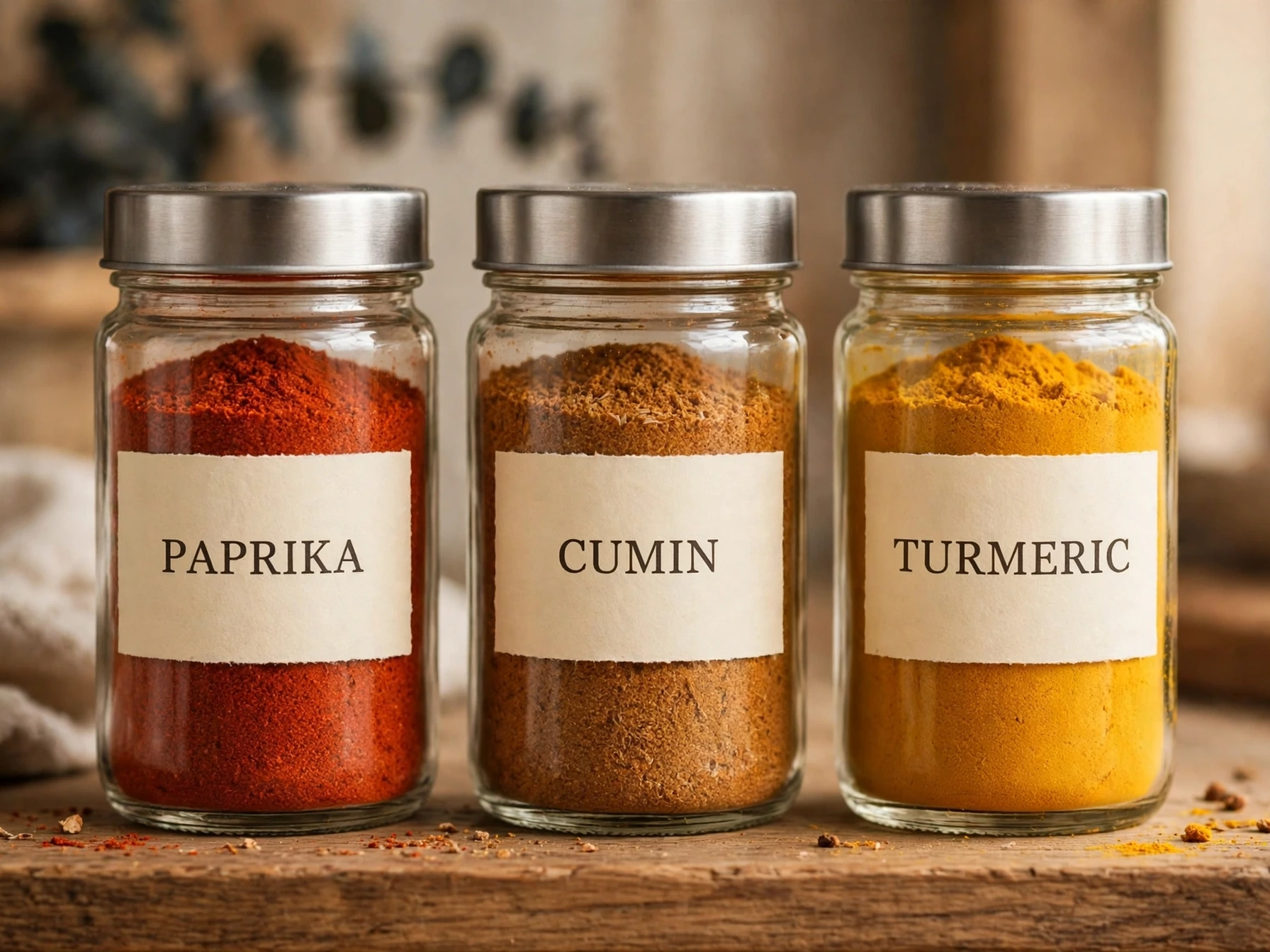
A jar without a label is a guessing game, and two red powders look identical until they are in the food. Label every jar the same way: the same label, the same pen, the same position on the jar, every time. When the labels match, the shelf reads at a glance and anyone in the house can find the cumin without asking.
Put the name where you will actually see it. If the jars stand on a shelf, label the front. If they lie flat in a drawer, label the lids. A label on the side of a jar that lies on its side is a label nobody will ever read.
Practical note: Add the date you filled the jar in small writing under the name. Ground spices keep their flavour for about six months, so the date tells you when a jar is due for a refresh.
6. Use Small Jars for Rare Spices
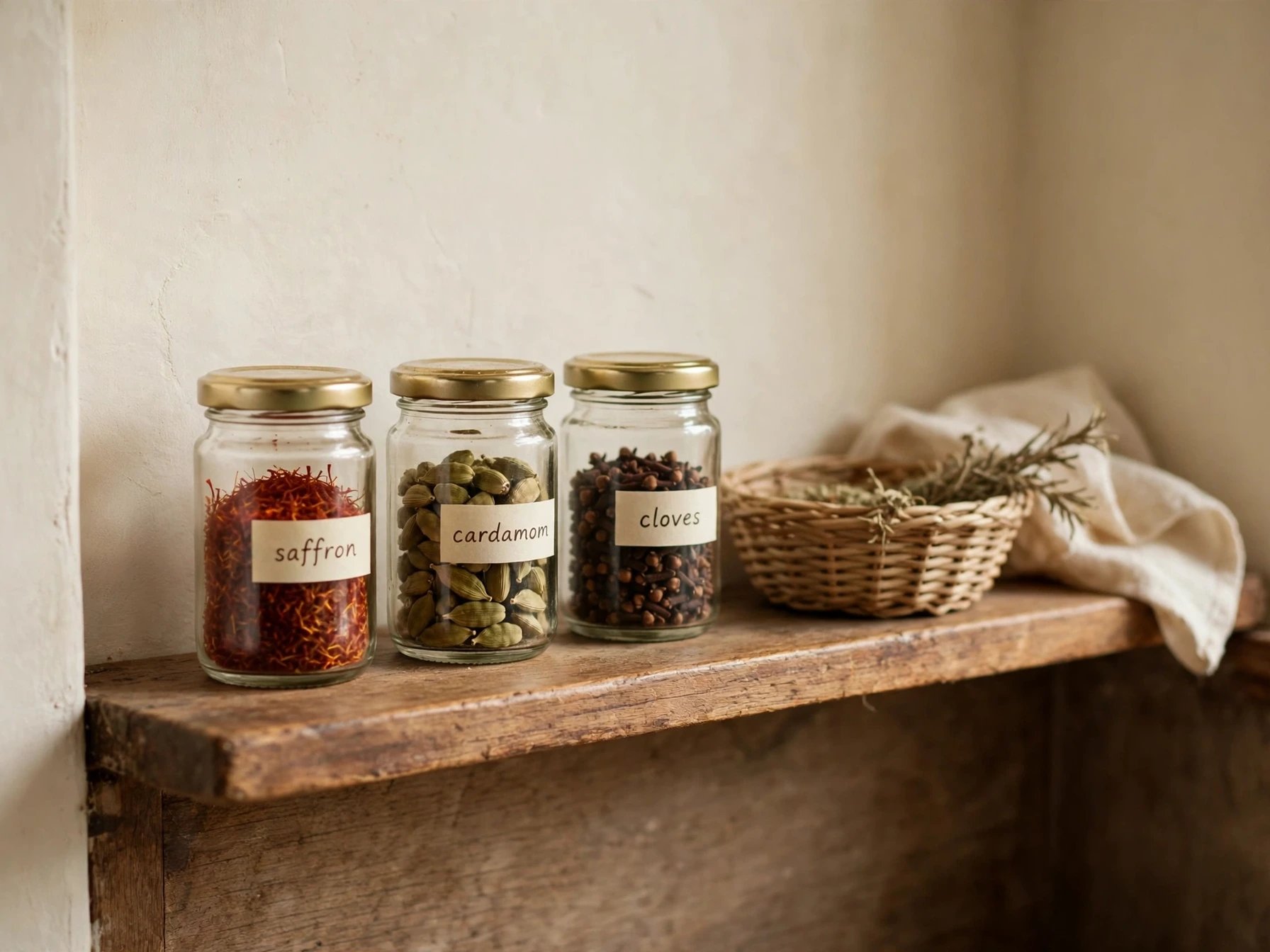
Rare spices do not need a big jar. A small jar holds enough saffron, cardamom, or whole cloves for months of cooking, and it leaves room on the shelf for the jars you actually reach for. Big jars for rarely used spices are just shelf space you will never get back.
Keep the small jars together in one short row or one small basket, so they read as a group instead of scattered singles. When a rare spice runs out, the small empty jar is easy to refill from a packet without decanting a whole bag.
Practical note: Buy rare spices in the smallest packet the shop sells. A small packet costs less, stays fresher, and fits the small jar it belongs in.
Racks, Drawers & Doors
7. Mount a Slim Rack on the Wall
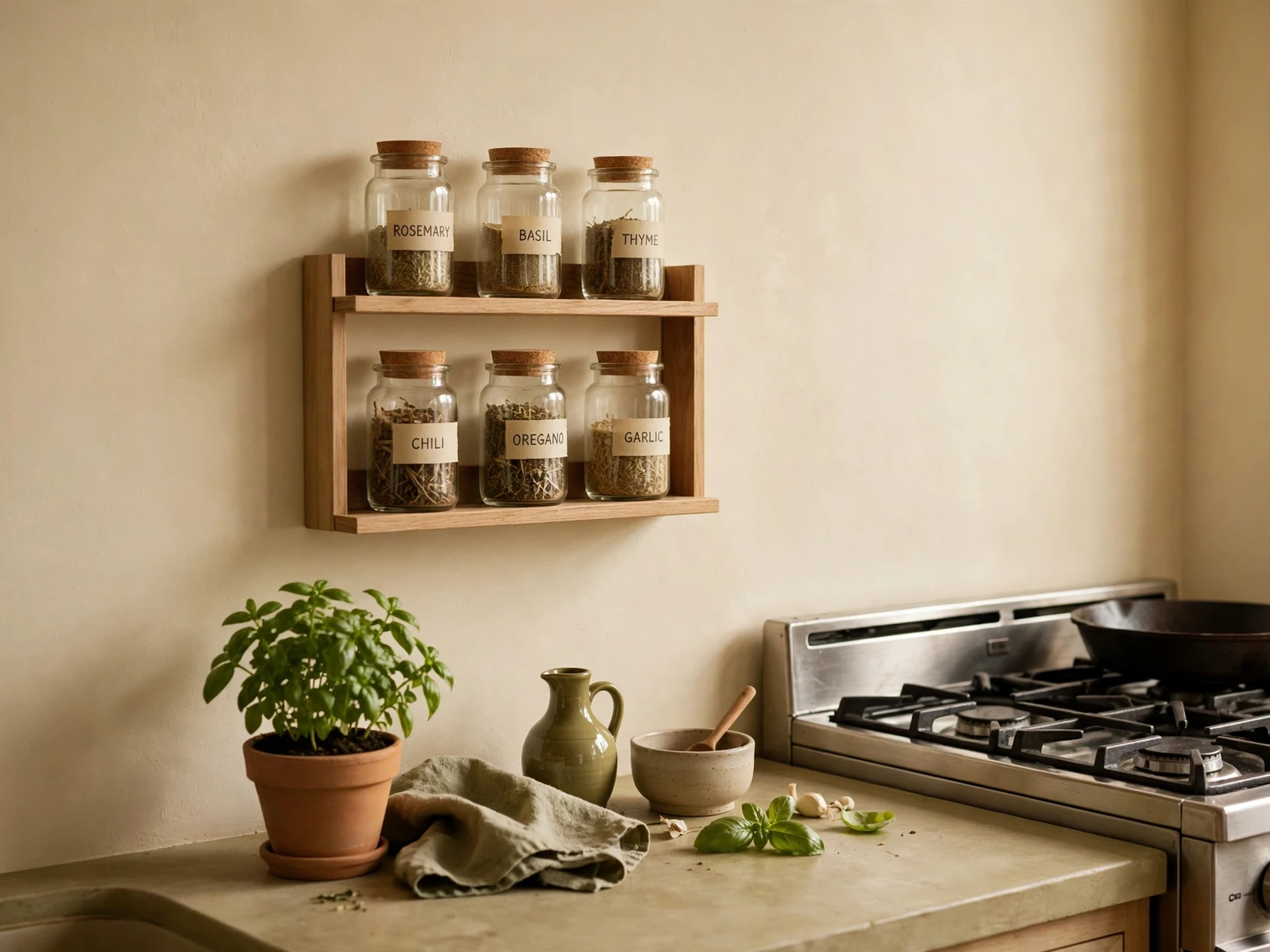
A slim wall-mounted spice rack frees a whole shelf inside your cabinets and puts the spices right where you cook. A narrow wooden rail or a two-tier rack beside the stove holds the daily jars at arm’s height, and the wall space it uses is space no cabinet could have given you.
Choose a rack no deeper than a jar is wide, so it hugs the wall instead of sticking out into the room. In a rental, a rail with strong adhesive hooks or a rack that hangs over the cabinet door gives you the same result without a single hole in the wall.
Practical note: Keep the wall rack for daily spices only. A rack holding twelve jars looks styled; a rack holding thirty looks like a shop shelf. For more no-drill fixes, see our kitchen organization ideas for renters.
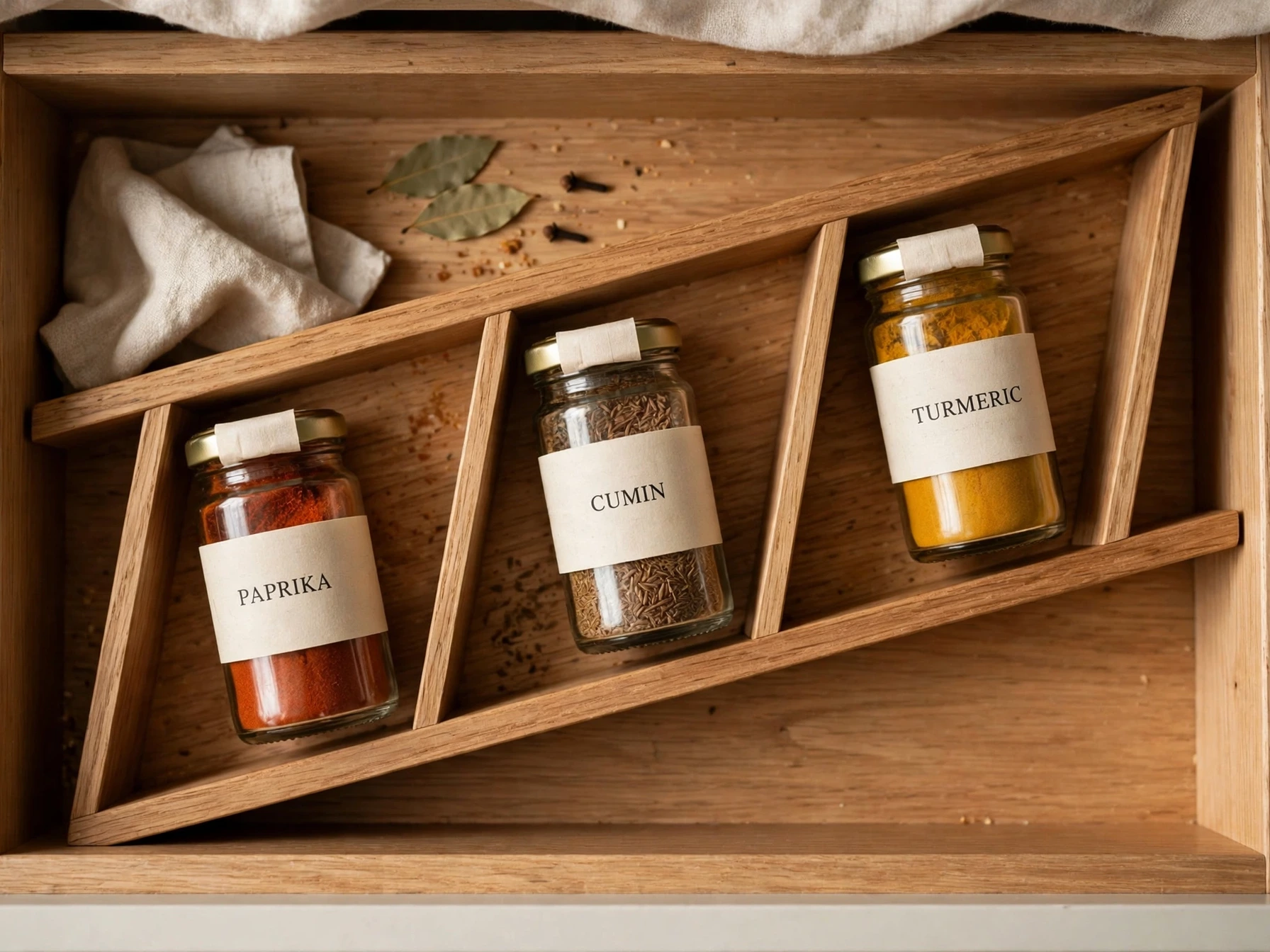
8. Lay Jars Flat in a Shallow Drawer
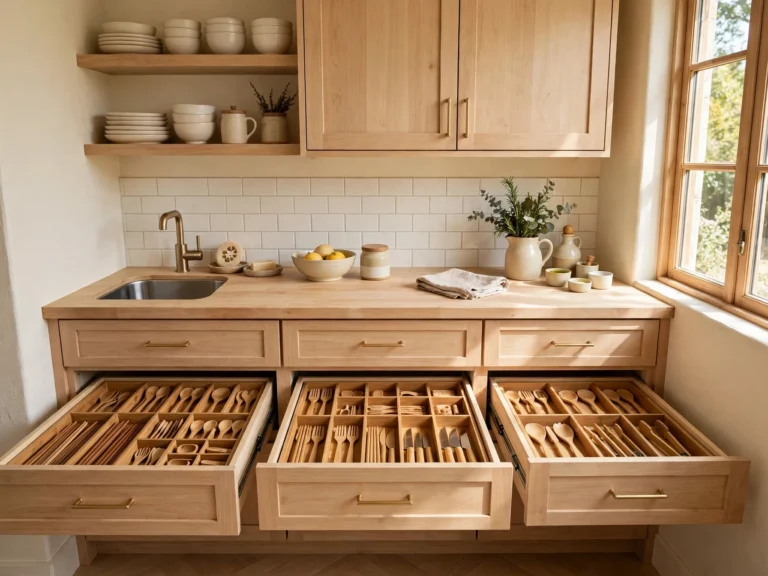
A shallow drawer is one of the best spice homes a small kitchen can offer. Lay the jars flat with their labels facing up, and every spice is visible the moment the drawer opens — no reaching past the front jars to find the ones at the back. A drawer insert with sloped tiers keeps the jars from rolling and turns the whole drawer into a spice rack you can read like a menu.
This works best in a drawer close to the stove, so the spices are within one step of the pan. Use jars with flat, tight lids so nothing spills when the drawer closes, and keep the drawer shallow enough that only one layer of jars fits.
Practical note: Label the lids, not the sides, for drawer storage. A label on the lid is the only label you can read when the jar is lying flat. For more drawer ideas, see our kitchen drawer organization ideas.
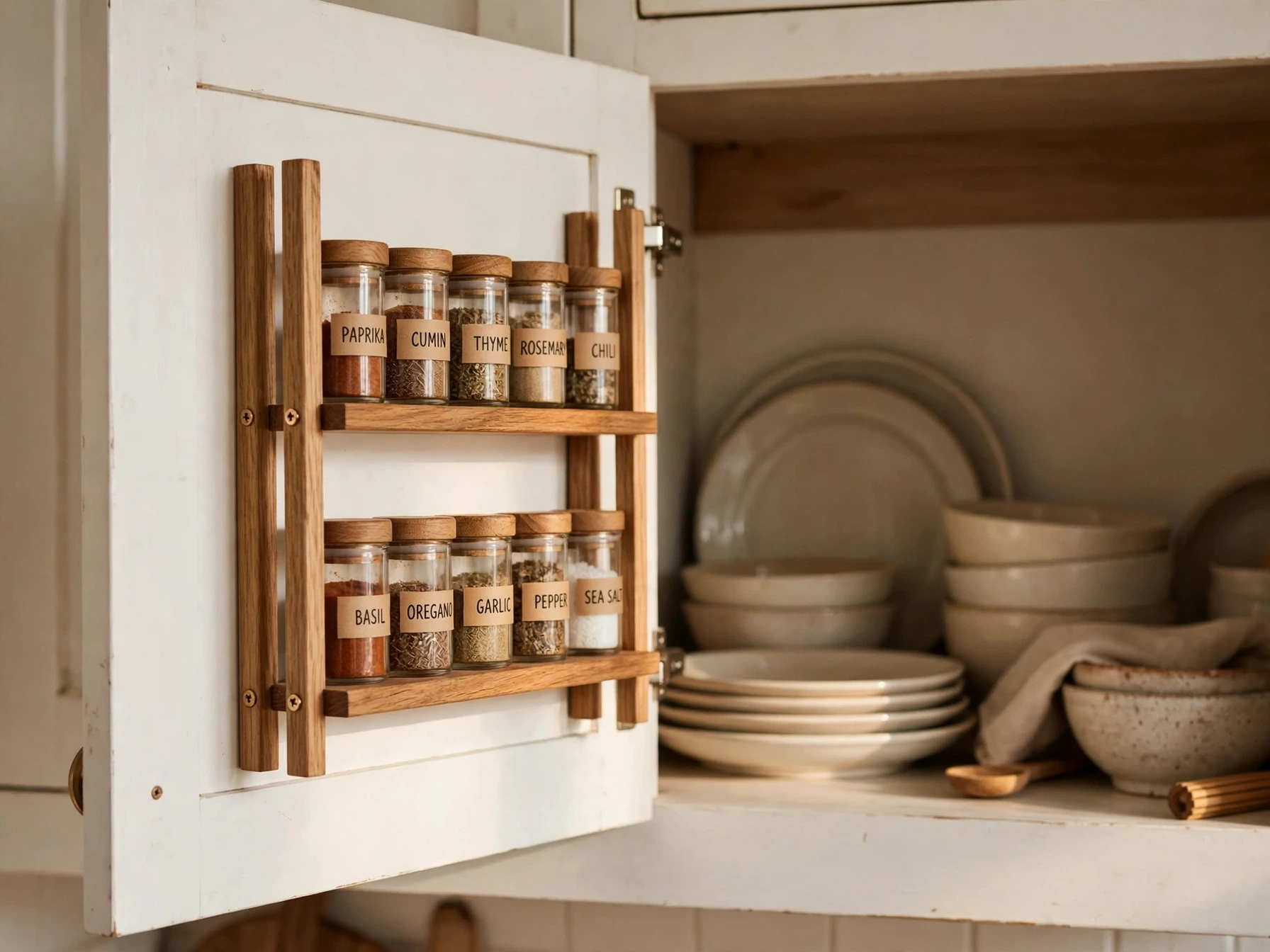
9. Hang a Rack Inside the Cabinet Door
The inside of a cabinet door is free storage hiding in plain sight. A slim rack screwed or stuck to the inside of the door holds six to eight small jars, and the door closes over them like nothing changed. It is the perfect home for the spices you use often but do not want on display.
Measure the gap between the door and the shelves before you buy a rack, because the jars need to clear the shelf edge when the door closes. Small jars with flat lids fit best, and a rack with a small lip on each tier stops the jars sliding when the door swings.
Practical note: Hang the rack on the door of the cabinet nearest the stove, and keep only daily spices there. A door rack is for the jars you grab mid-recipe, not for the ones you use twice a year. For more cabinet ideas, see our kitchen cabinet organization ideas.
Small-Space Tricks & Upkeep
10. Add a Turntable for Deep Shelves
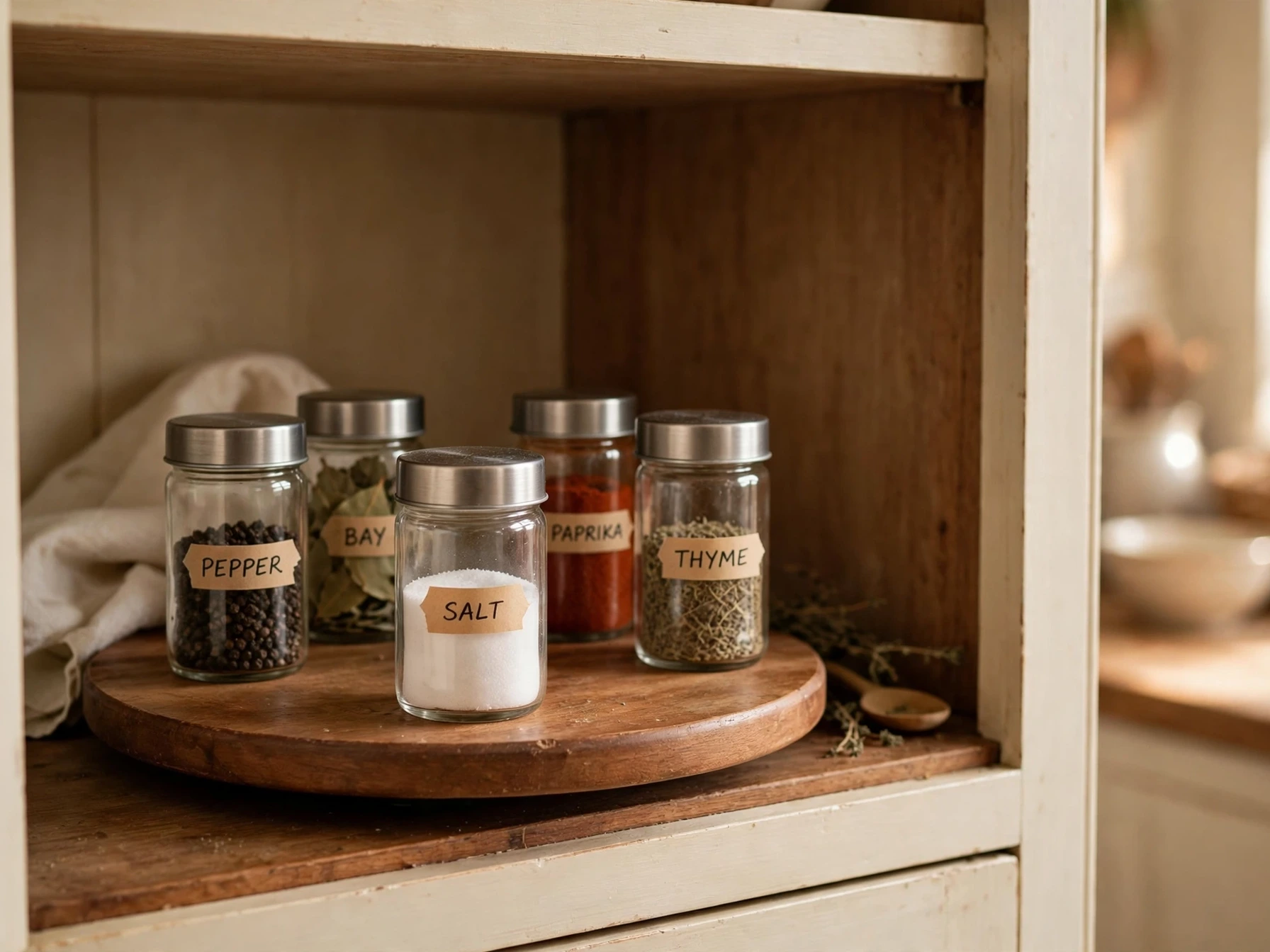
Deep shelves are where spices go to hide. A turntable — a lazy Susan — fixes that in one move: put the jars on it, give it a spin, and the jar at the back comes to the front without you moving anything else. It turns a deep shelf into a shallow one, because every jar is one spin away.
Use a turntable with a low rim so the jars stay put while it turns, and keep it to one layer of jars. A turntable stacked two jars high is just a deep shelf that spins, and the jars on top will still hide the ones underneath.
Practical note: Keep the turntable for one group only, like the baking spices or the curry spices. A turntable holding every spice in the kitchen is too crowded to spin properly.
11. Keep a “Use First” Basket for Open Packets
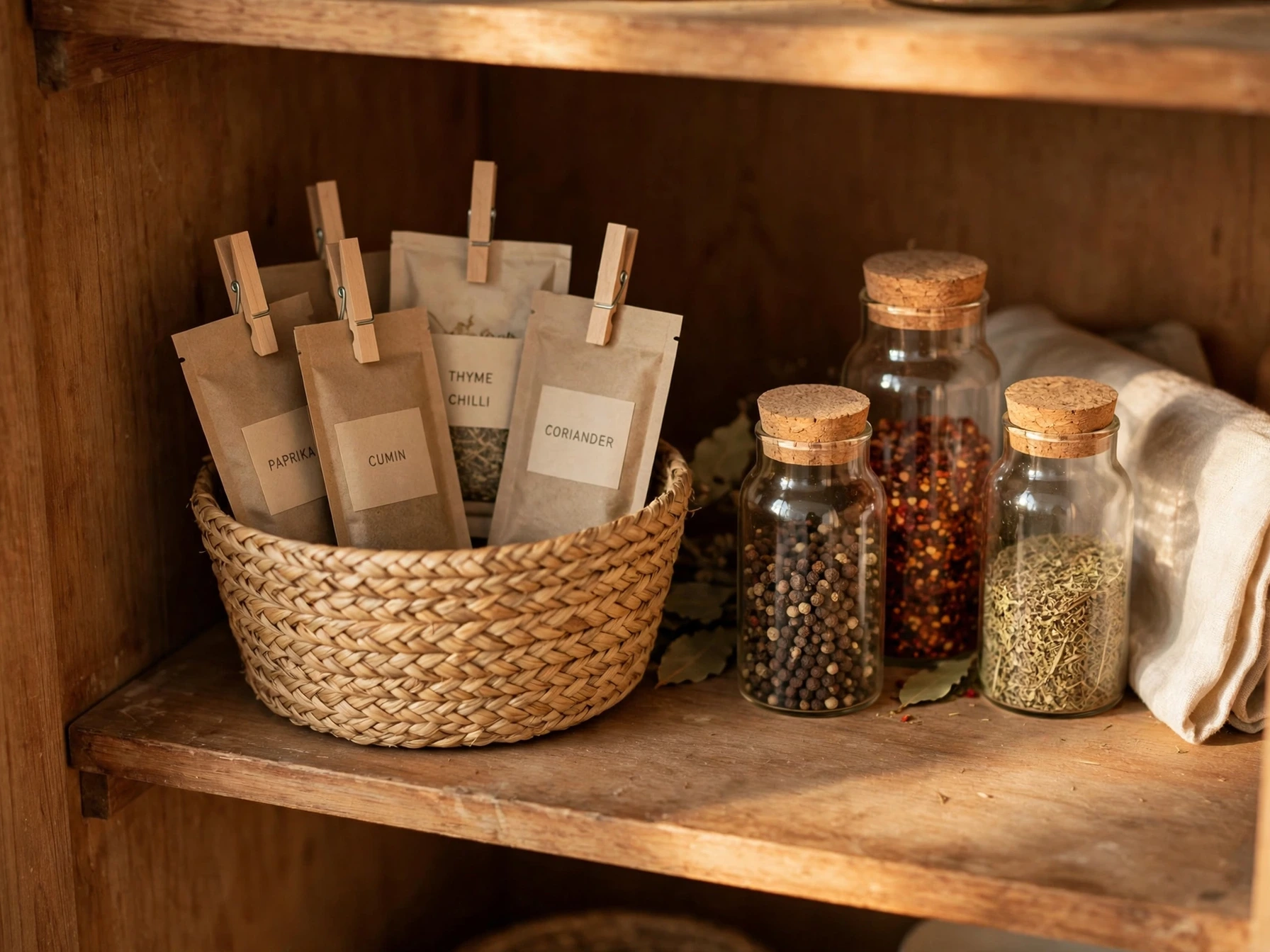
Open packets are the messiest part of any spice collection. They do not stand up, they do not stack, and they spill. Give them one home: a small basket or a lidded box where every open packet lives, clipped shut and standing upright. When you need a spice that is still in its packet, you look in one place instead of hunting through the whole shelf.
Label the basket “Use First” so everyone in the house reaches for the open packet before opening a new jar. The basket also tells you what to buy next: when it is nearly empty, the spices inside are the ones you actually use.
Practical note: Fold each packet down tight and clip it shut before it goes in the basket. An open packet left open in a basket will still spill, and the spice inside will go stale faster.
12. Do a Five-Minute Monthly Spice Check
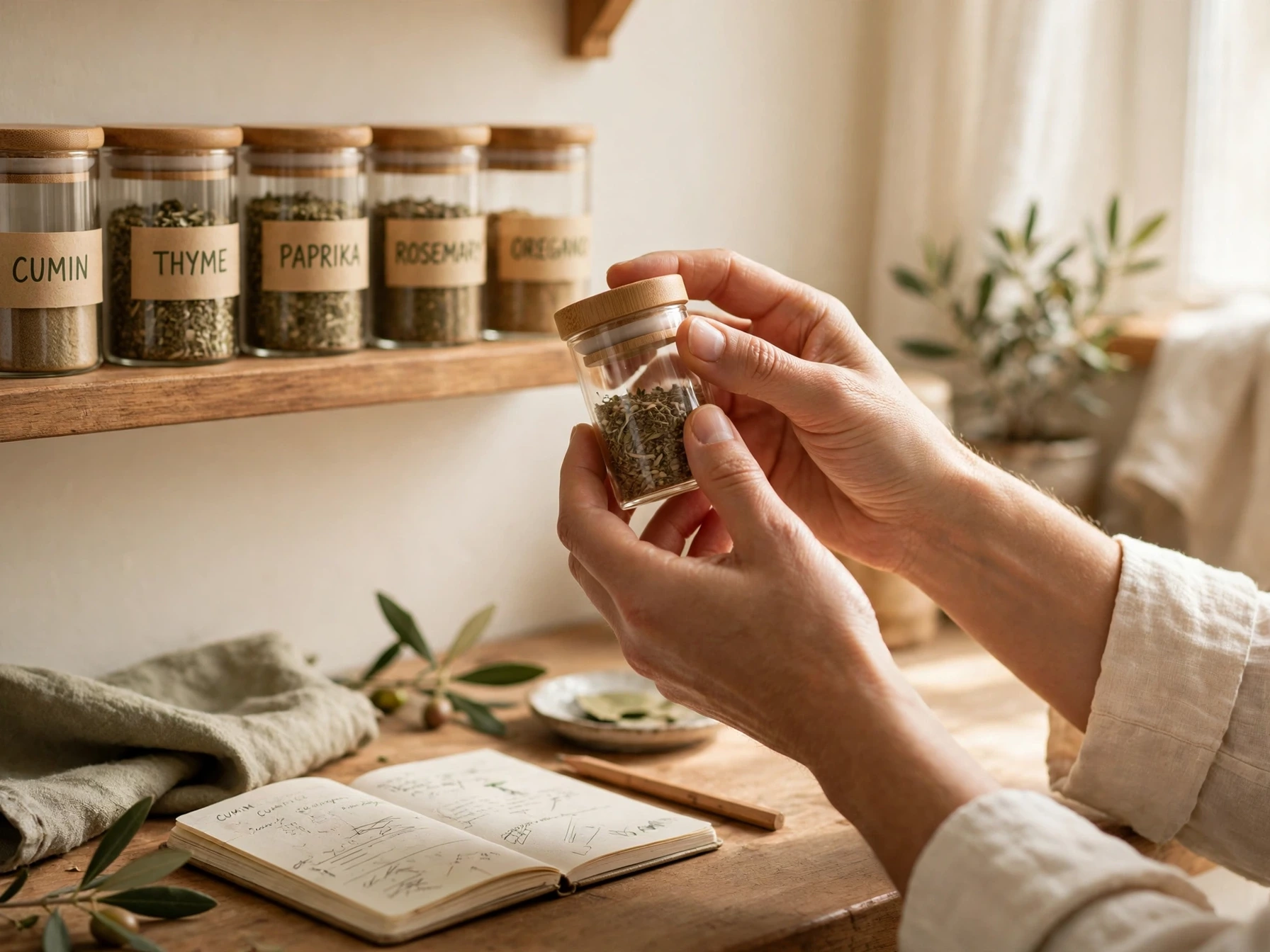
Even the best-organized spice rack drifts without a short monthly check. Once a month, spend five minutes smelling the jars you use least, tossing anything that smells faint or dusty, and wiping the shelf. It is the smallest tidy-up in the kitchen, and it keeps every spice in the rack worth cooking with.
Pick a fixed day — the first Sunday of the month works well — and set a timer for five minutes. When the timer rings, stop. A short check you actually do every month beats a long sort-out you keep putting off, and your cooking will taste better for it.
Practical note: Keep a small list on the inside of the cabinet door of the spices you need to replace. When the list has three items on it, add them to the shopping list and the rack stays full. For a full monthly reset of the rest of the fridge, see our fridge organization ideas.
5 Spice Rack Tips That Keep It Working
- One home per spice. Every jar lives in exactly one place. When a spice has two homes, one of them always becomes a hiding place.
- Labels you can read at a glance. Same label, same position, same pen. If you have to pick a jar up to read it, the label is in the wrong place.
- Daily spices at eye level, rare spices up high. The jars that move most should be the easiest to reach and the easiest to put back.
- Match the jars, not the spices. Matching jars make a shelf look calm and make it obvious when a jar is running low, because every jar shows its level the same way.
- Buy small, refill often. Small packets and small jars stay fresher than big ones, and a monthly five-minute check keeps the whole rack honest.
For more small-kitchen storage in the same spirit, see our kitchen shelf decor ideas for open shelving and our cozy kitchen decor ideas for small spaces. For seasonal warmth in the same kitchen, see our fall decor ideas for small apartments and our DIY fall home decor ideas under 50.
Spice Rack Organization FAQs
How do I organize spices in a small kitchen with no pantry?
Start with one home for every spice: a slim wall rack, a shallow drawer, or a rack inside a cabinet door. Decant the daily spices into matching labelled jars, group them by how you cook, and keep the rare spices in small jars together. A small kitchen needs a visible system, not more shelf space.
What is the best way to store spices so they stay fresh?
Keep spices in airtight glass jars away from heat, light, and steam — not directly above the stove. Whole spices last longer than ground ones, and ground spices keep their flavour for about six months. Label each jar with the date you filled it so you know when it is due for a refresh.
Should spice jars be stored upright or lying down?
Both work, as long as the labels face the way you look at them. Store jars upright on a shelf or rack with labels on the front, and lying flat in a drawer with labels on the lids. The rule is simple: store them the way you can read them without picking them up.
How do I organize spices without drilling holes in a rental?
Use adhesive hooks and rails, an over-door rack, a turntable inside a cabinet, or a shallow drawer insert — none of them need a drill. Matching jars and a small basket for open packets cost very little and move with you when you move home.
Final Thoughts
A small kitchen does not need a bigger spice rack to cook well. It needs matching jars you can read, labels in the same place every time, and one home for every spice — at eye level for the daily ones, out of the way for the rare ones.
Start with the idea that costs nothing: empty the shelf, smell every jar, and put back only what you use. Then add the next idea only when the first one feels like home. For more small-space inspiration, see our small kitchen organization ideas and our kitchen counter organization ideas.
Save this post to your kitchen board and sort one shelf this weekend.