
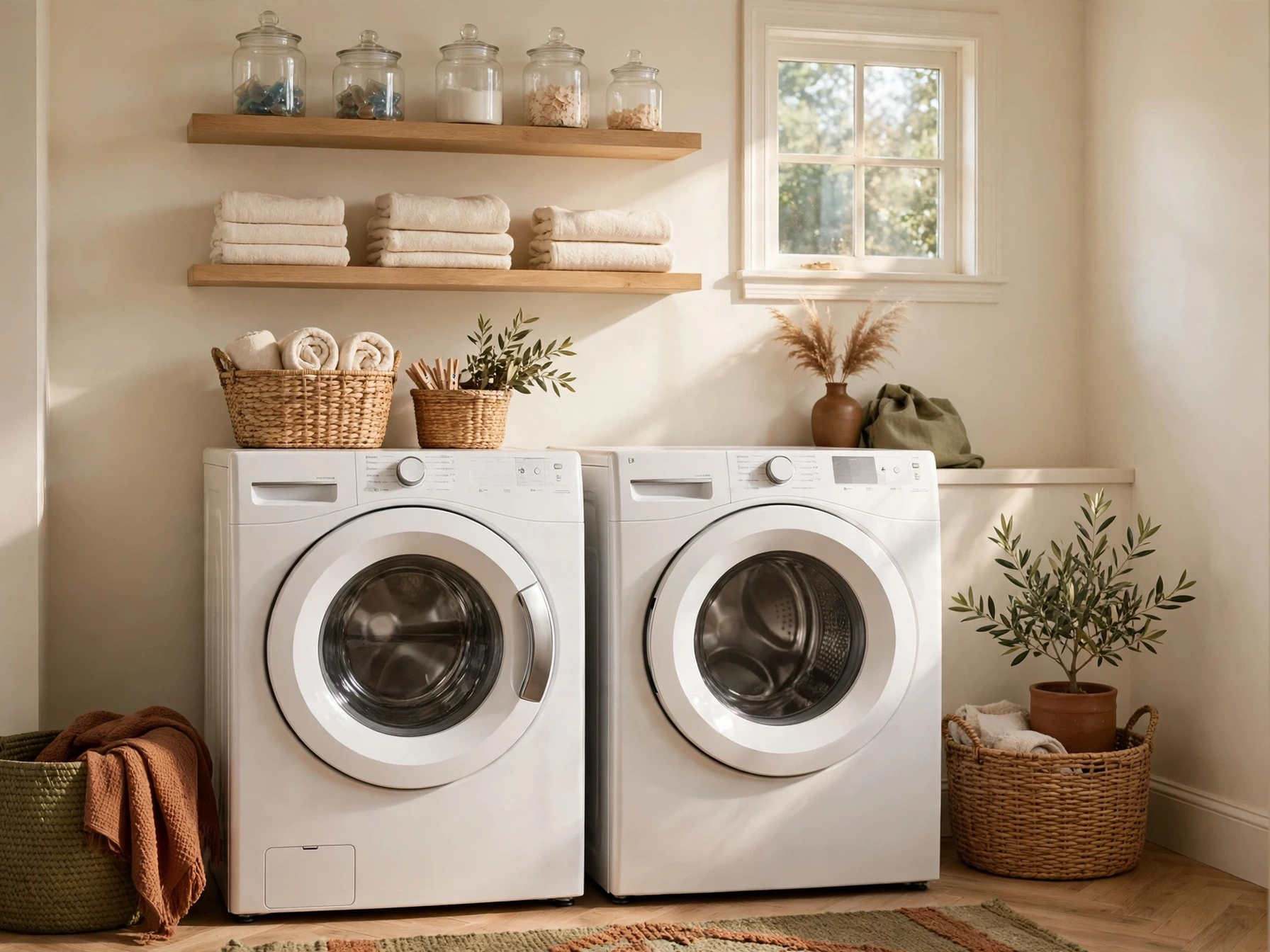
A small laundry room does not need more space. It needs a better system. When every detergent bottle, clothespin, and clean towel has a home you can reach without moving three other things, laundry day stops feeling like a chore squeezed into a cupboard and starts feeling calm.
The 15 small laundry room organization ideas below are practical, affordable, and made for real homes: rentals, apartments, and older houses with awkward corners. No renovation is required. Pick one idea today, try it for a week, and add the next one only when the first has become a habit.
Why a Small Laundry Room Needs Zones, Not More Stuff
A small laundry room fails when everything lives everywhere. The detergent is on top of the dryer, the clean towels are behind the ironing board, and the lost socks are buried under a pile of clothes waiting to be folded. You spend more time searching than washing, and the room slowly becomes a dumping ground.
Zones fix that. Give each job its own small area — washing by the machines, drying on the wall, folding on the counter, storing on the shelves — and keep only the tools for that job there. When a zone holds five things instead of twenty, you can find everything in seconds.
15 Small Laundry Room Organization Ideas
Plan First
1. Zone the Room by Job
Sort your laundry room the way laundry actually flows. Put detergent and stain spray beside the washer, the drying rack near the window or the warmest wall, and the folding counter where clean clothes land. When each step has its own spot, you stop carrying armfuls of washing across the room.
This one change removes most of the daily hunting. You stop opening every cupboard to find the fabric softener, and you stop piling clean clothes on the dryer because there is nowhere else to put them.
Practical note: Sketch the room on paper first and mark four zones — wash, dry, fold, store — before you buy a single basket or shelf.
2. Measure Before You Buy Anything
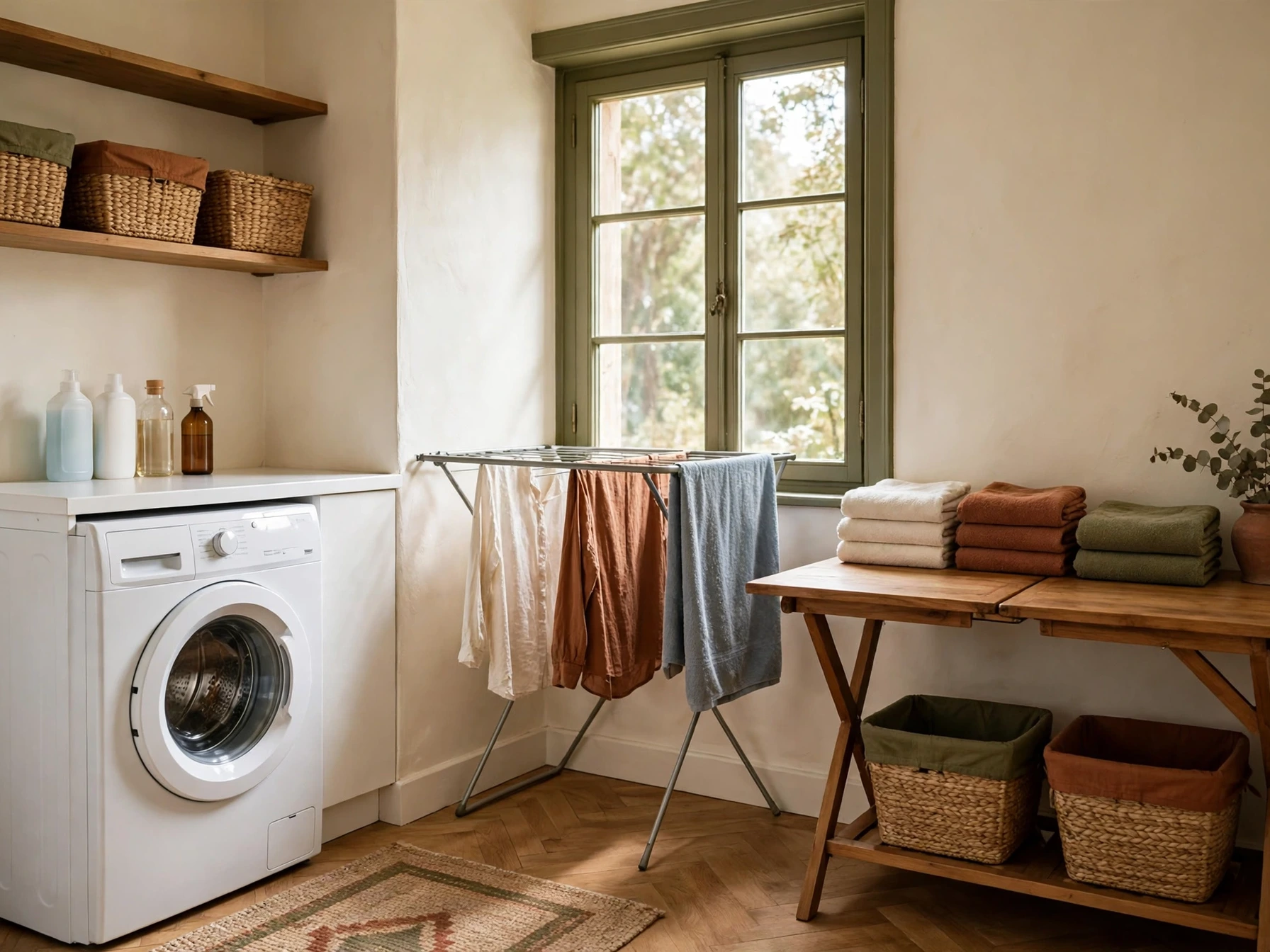
A laundry room punishes guessing. A shelf that is two inches too deep blocks the washer door, and a basket that is too wide will not fit between the machines. Measure the width, depth, and height of every gap before you shop, and write the numbers on your phone.
Measure the machines too: front loaders need door clearance, top loaders need space above, and stacked units need headroom. The same rule applies to hampers, carts, and drying racks — if it does not fit the gap, it becomes clutter instead of storage.
Practical note: Measure twice and buy once. A tape measure costs less than returning a shelf that does not fit. For the same measure-first habit in the kitchen, see our small kitchen organization ideas.
3. Declutter with a One-In, One-Out Rule
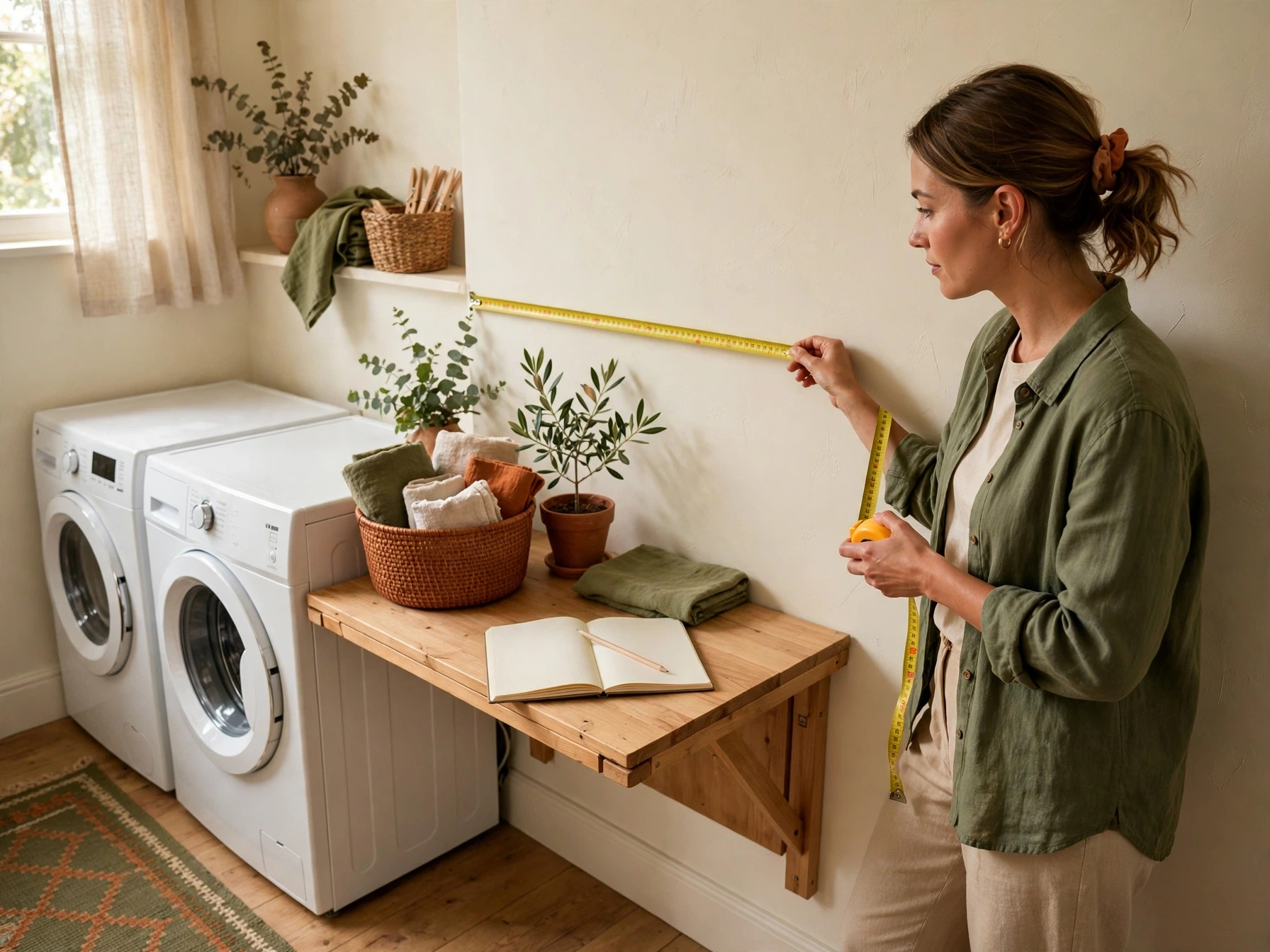
Laundry rooms collect things: half-empty detergent bottles, single socks, cleaning products you never use, and baskets from three moves ago. Before you organize, take everything out and keep only what you actually use every week.
The one-in, one-out rule keeps it that way. Every time a new detergent, basket, or gadget comes in, one old one goes out — donated, recycled, or thrown away. The room stays at the size you organized, instead of slowly filling up again.
Practical note: Start with the shelf above the machines, the most crowded spot in most laundry rooms. If you have not used a bottle in a month, it does not need to live there.
Walls & Vertical Space
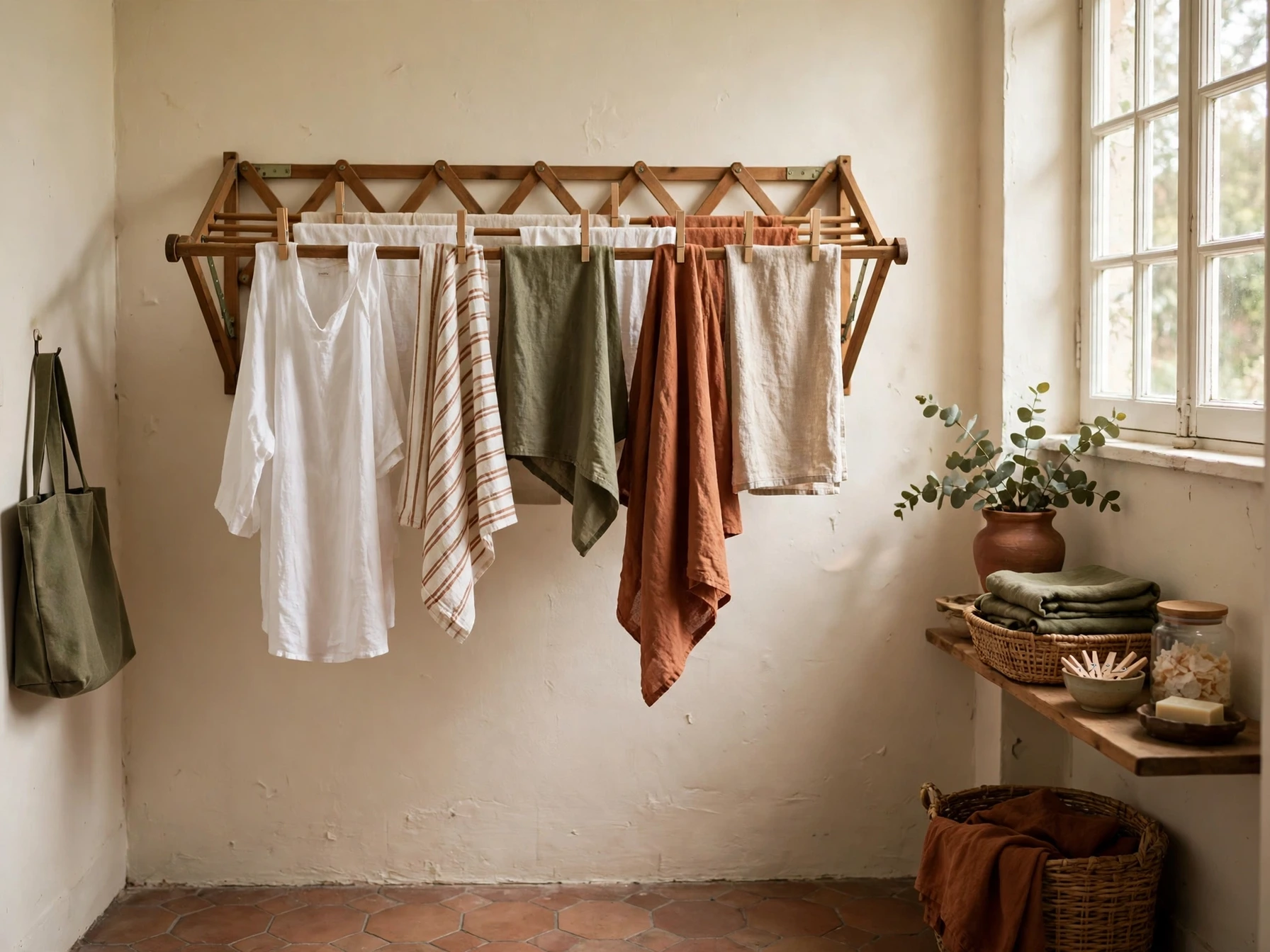
4. Hang a Wall-Mounted Drying Rack
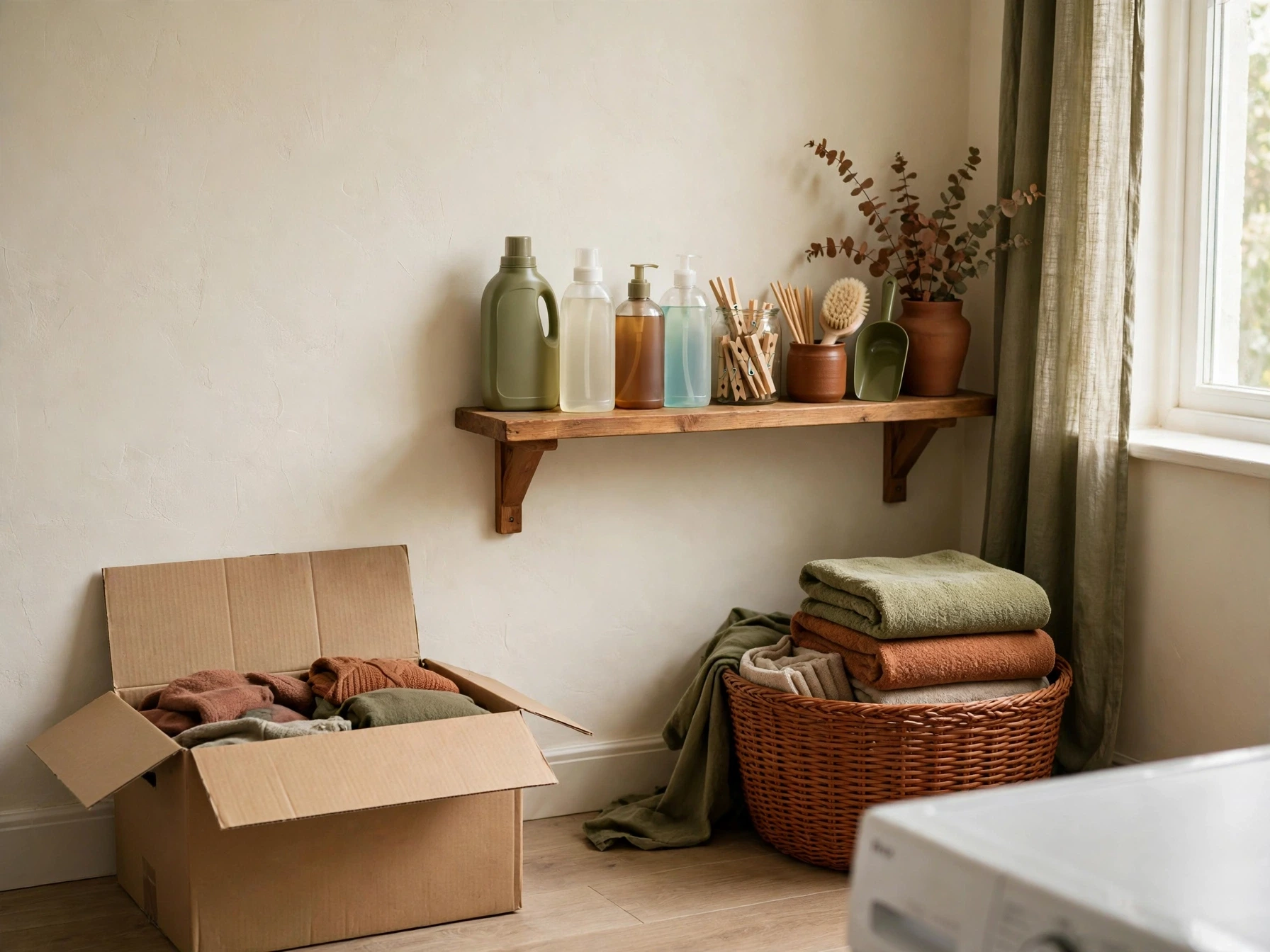
A wall-mounted drying rack turns a blank wall into drying space and folds flat when you do not need it. Hang delicates, baby clothes, and anything that should not go in the dryer, and fold the rack away when the load is done.
Choose a rack with sturdy brackets and enough bars for one full load, and mount it where air moves — near a window or a vent, not in a damp corner. A rack that folds flat against the wall takes up no floor space at all.
Practical note: Mount the rack at a height you can reach without a step stool, and leave a small basket underneath to catch clothespins and socks that slip off.
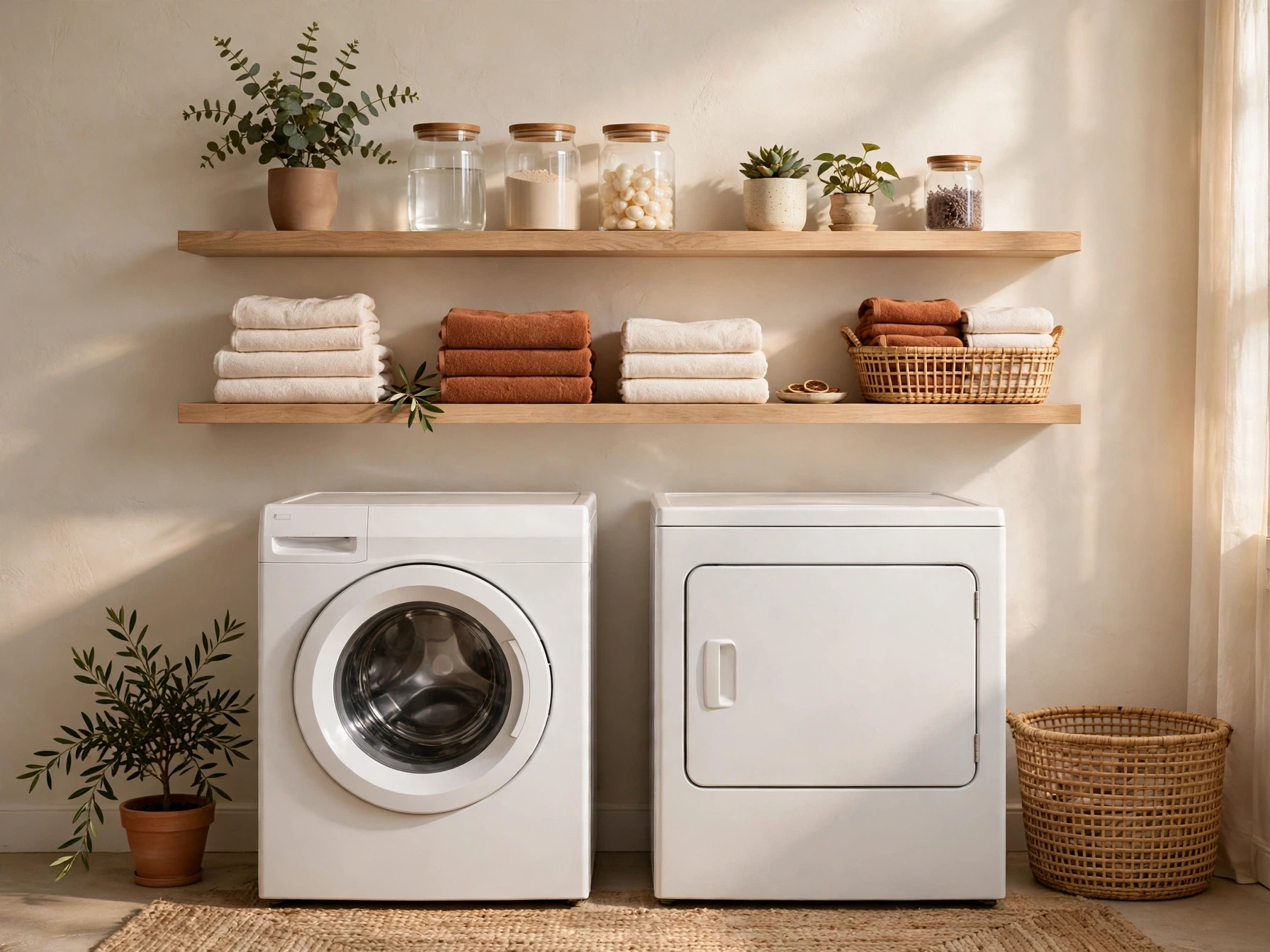
5. Add Floating Shelves Above the Machines
The wall above the washer and dryer is the most wasted space in a small laundry room. Two wooden floating shelves there hold detergent, stain spray, and folded towels, and they keep the top of the machines clear for folding.
Keep the lower shelf for the things you grab every wash — detergent and softener — and the upper shelf for the things you use weekly, like spare cloths and stain sticks. Leave a little empty space on each shelf so the room still feels calm, not crowded.
Practical note: Leave at least a hand’s width of clearance above a top loader so the lid opens fully. For more shelf ideas, see our kitchen cabinet organization ideas.
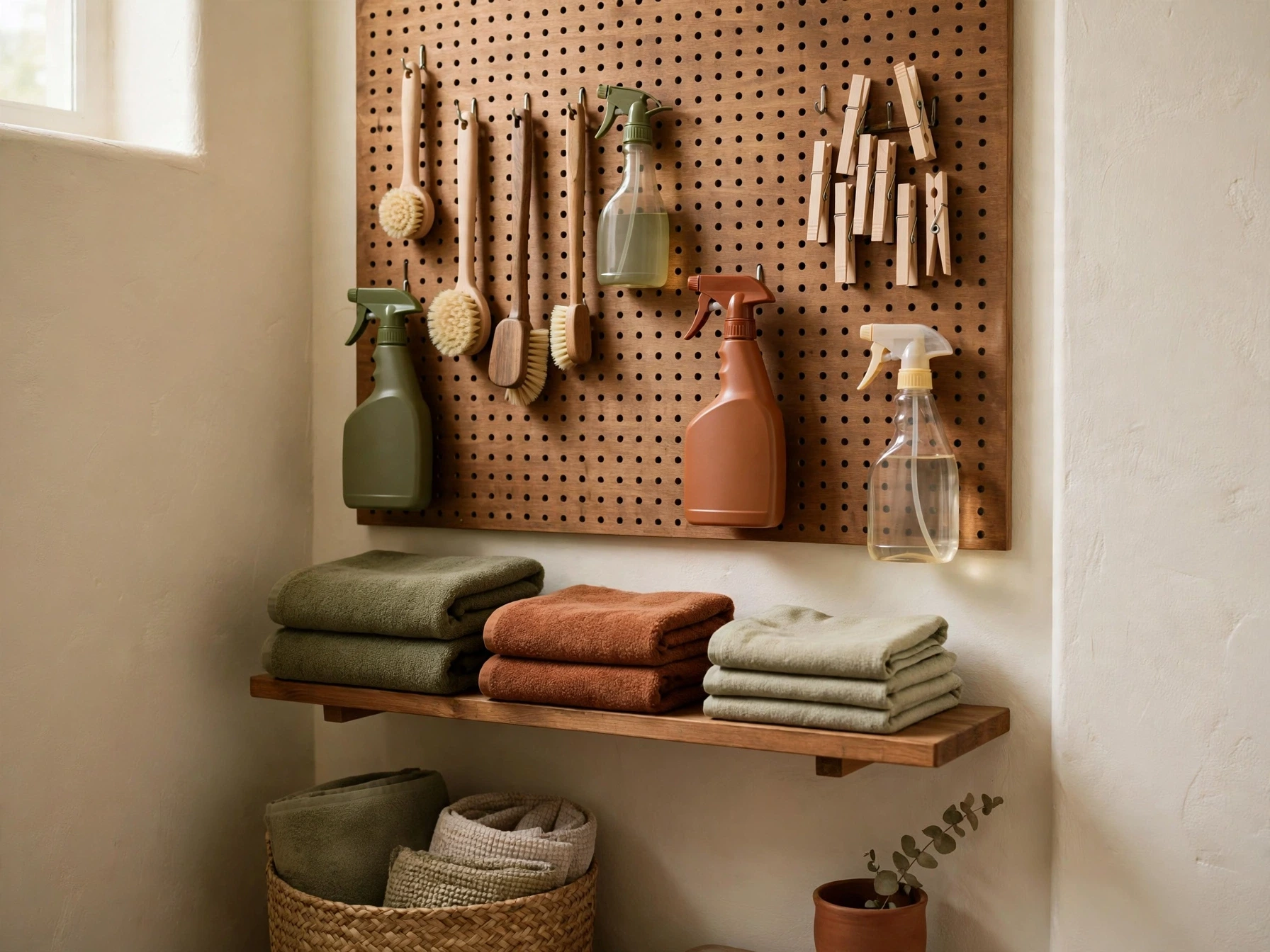
6. Put a Pegboard or Rail on the Wall
A pegboard or wall rail turns a blank stretch of wall into storage and frees a whole shelf. Hang cleaning brushes, spray bottles, clothespins, and the iron where you can grab them while working, and move the hooks around whenever the system changes.
Hang the longest tools at the ends and the smallest in the middle, so nothing bumps into the machines below. A pegboard also works on the inside of a laundry cupboard door, where it stays hidden when the door is closed.
Practical note: Choose a pegboard with strong fixings and hooks that lock in place. Renters can use adhesive mounts instead — see idea 14.
Storage & Containers
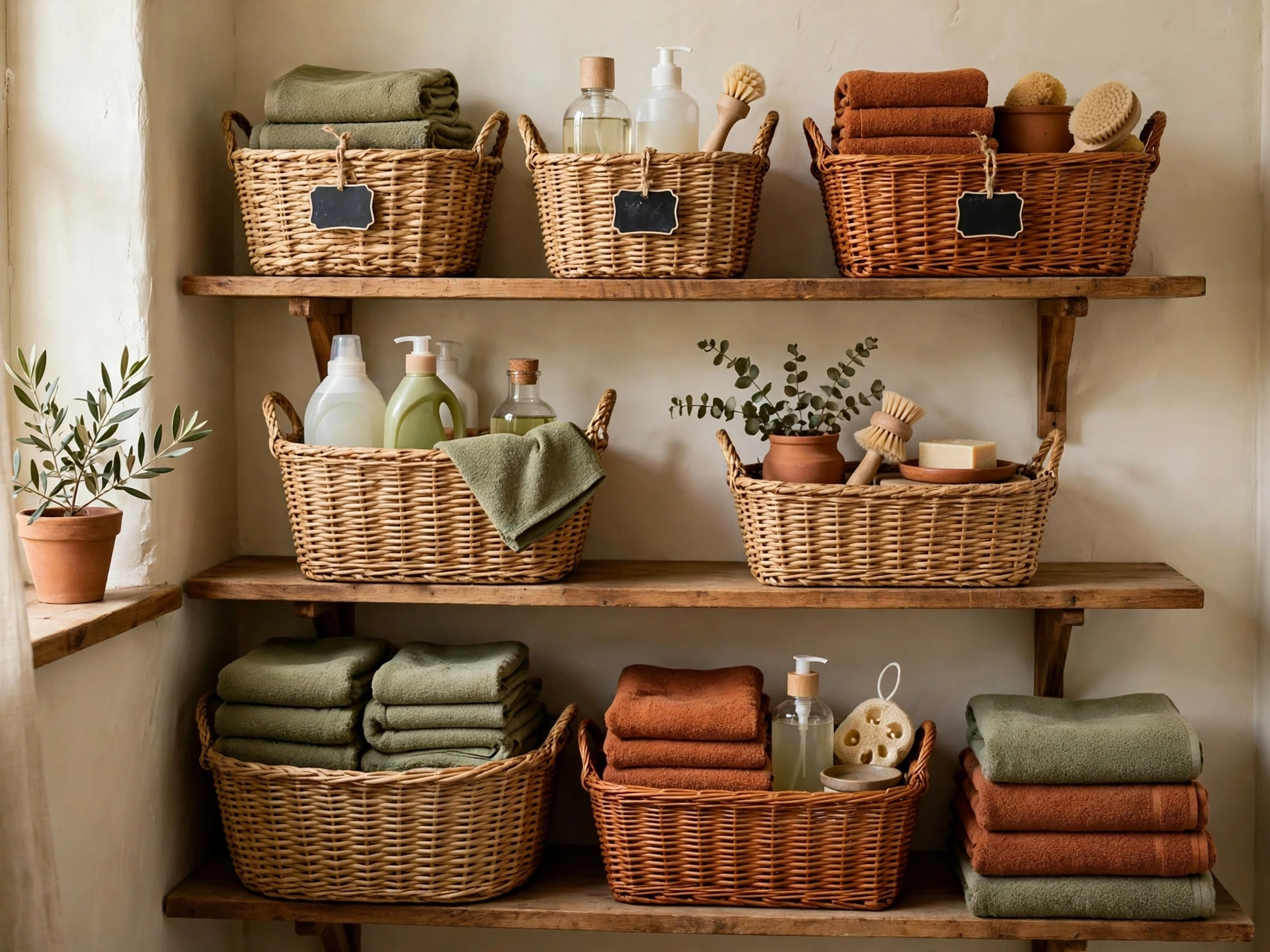
7. Store Supplies in Labelled Bins and Baskets
Labelled bins and baskets turn open shelves from a guessing game into a quick glance. When every bin has a job — detergents, stain removers, clothespins, spare cloths — you stop opening five boxes to find one bottle.
Label each bin on the front, and use woven baskets for soft things like cloths and plastic bins for liquids, so a leak cannot soak through. Keep the heaviest bins at waist height and the lightest ones up high.
Practical note: Start with three bins for wash, dry, and fold supplies, and add more only when those three work well. For more bin ideas, see our small bathroom storage ideas.
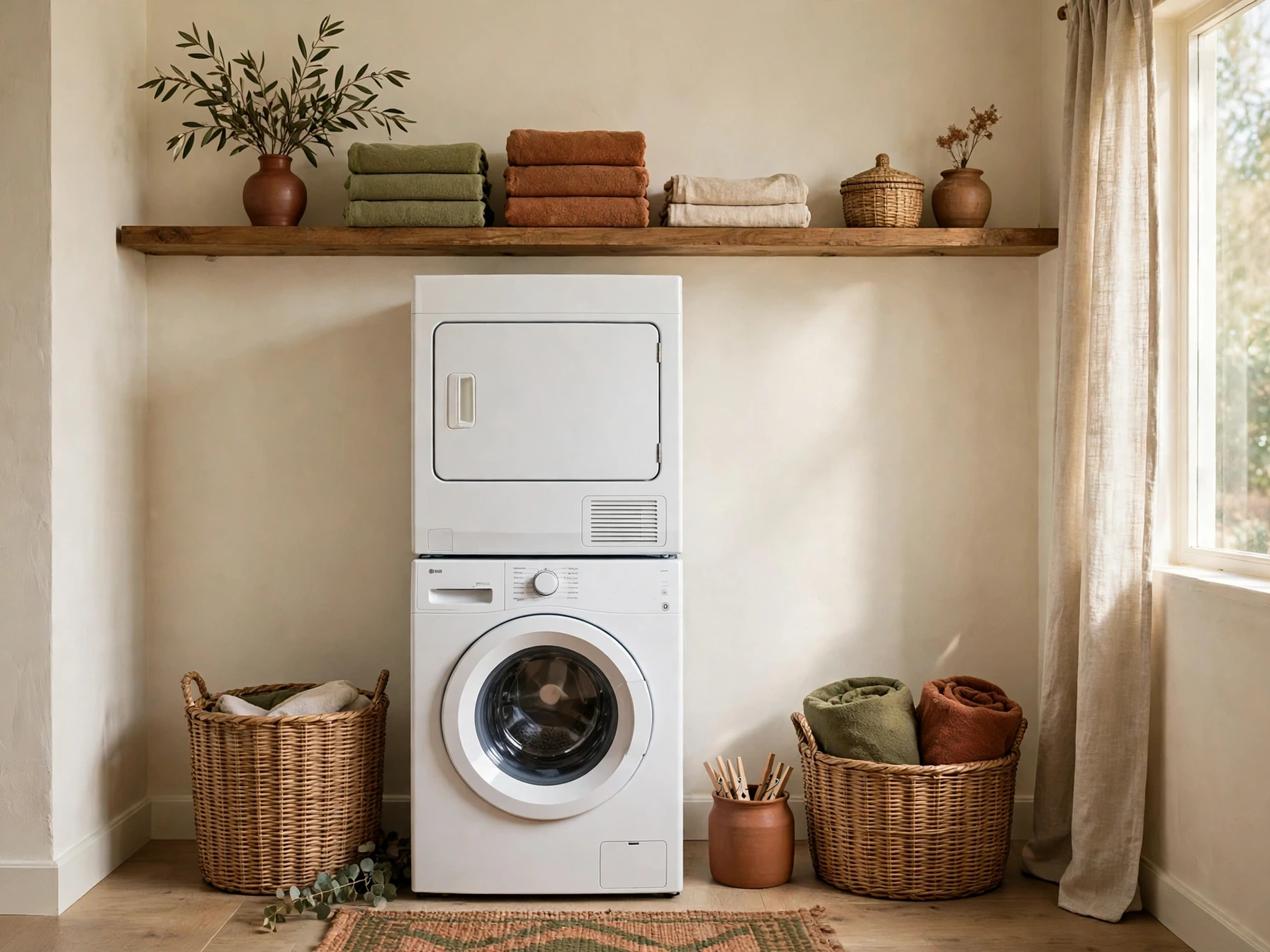
8. Stack the Washer and Dryer
Stacking the washer and dryer frees a whole machine’s worth of floor space — room for a hamper, a folding counter, or simply space to stand. A stacking kit locks the dryer safely on top of the washer, and most front loaders are built for it.
Check that your machines are stackable before you buy the kit, and that the room has enough height for the stacked pair plus a shelf above. A small step stool kept nearby makes reaching the top controls easy.
Practical note: Put a non-slip mat under the stacked pair and check the kit’s weight rating. If stacking is not possible, a slim shelf unit beside the machines gives back some of the same space.
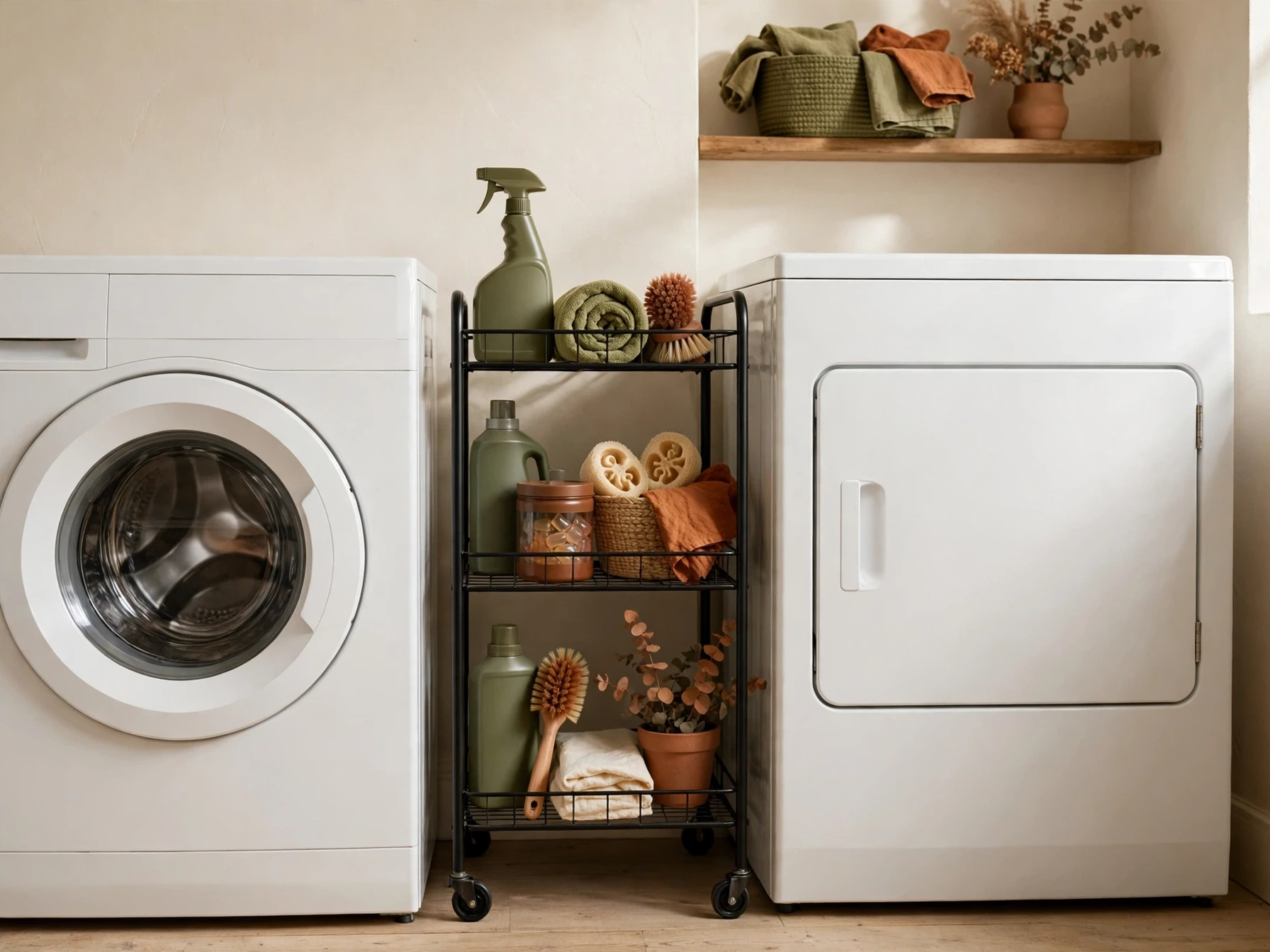
9. Slide a Slim Rolling Cart Between the Machines
The narrow gap between the washer and dryer, or between a machine and the wall, is wasted space in most laundry rooms. A slim rolling cart — ten to fifteen centimetres wide — slides into that gap and holds detergent, softener, and stain spray right where you use them.
Choose a cart with at least three tiers and small wheels that roll smoothly, so you can pull it out with one hand while holding a laundry basket with the other. Keep the tallest bottles on the bottom tier so nothing topples.
Practical note: Measure the gap before you buy; a cart that is too wide will jam, and one that is too narrow will wobble. For more narrow-gap ideas, see our kitchen drawer organization ideas.
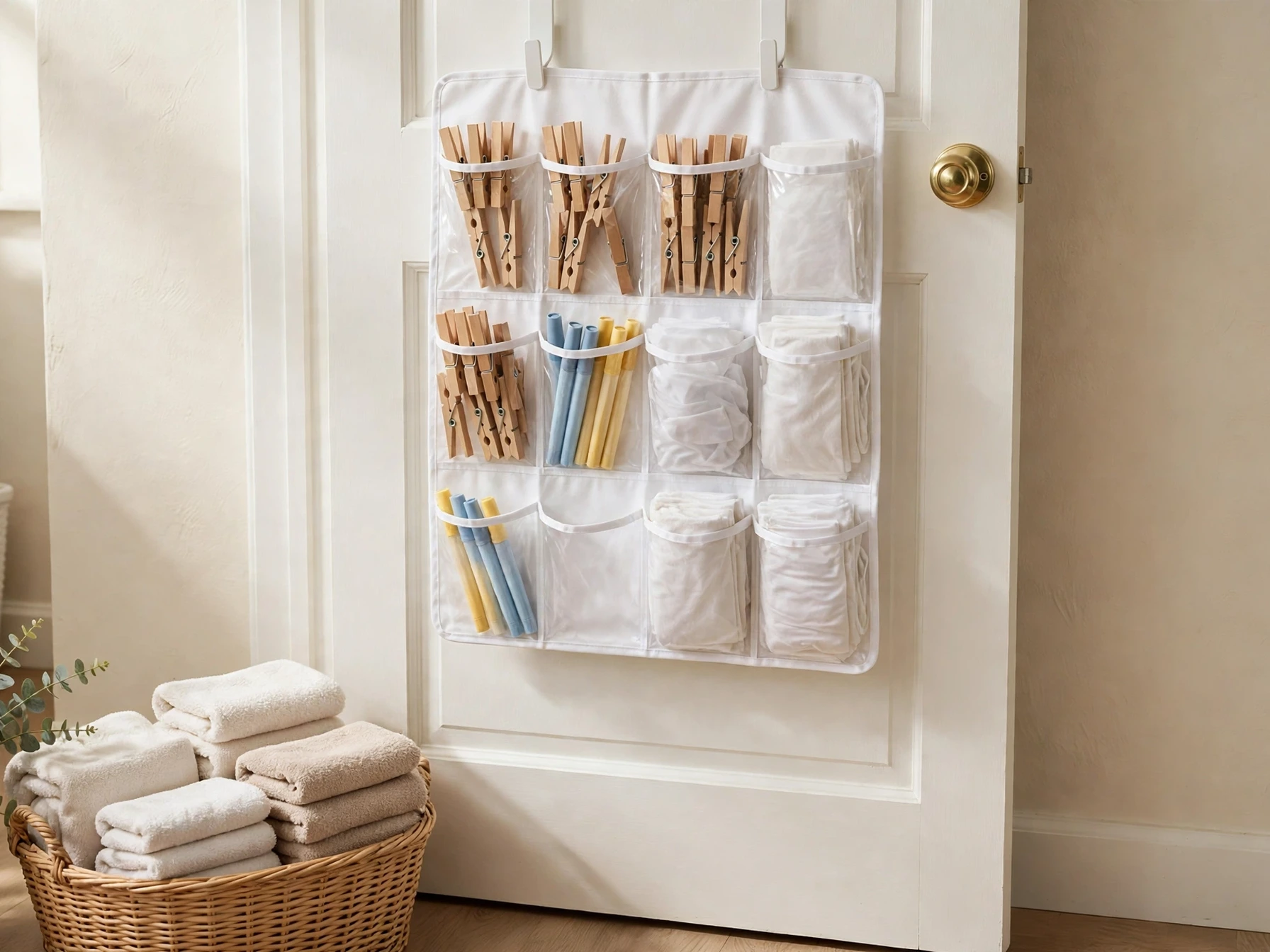
10. Use Over-Door Organizers for Small Things
The back of the laundry room door is free storage. An over-door organizer with clear pockets holds clothespins, stain sticks, dryer sheets, and spare buttons — all the small things that vanish into drawers and never come out again.
Pick a clear-pocket organizer so you can see everything at a glance, and keep the heaviest items in the lowest pockets so the door still closes easily. The same organizer works on a cupboard door if the room has no separate door.
Practical note: Do not overload it. If the door starts sticking, move the heaviest pockets to a shelf and keep only the light things on the door.
Fold & Finish
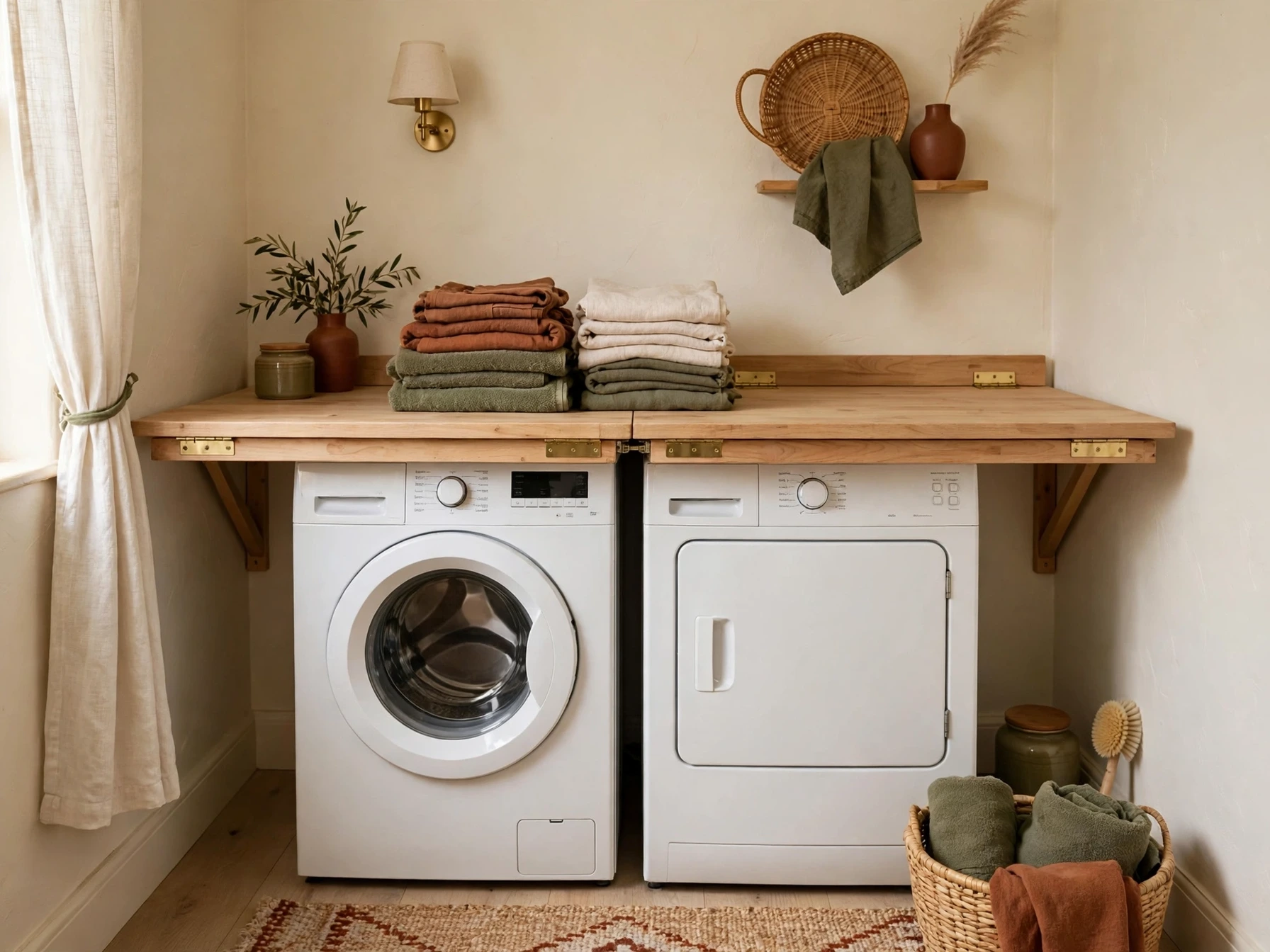
11. Add a Fold-Down Counter Over the Machines
A fold-down counter over front-load machines turns the top of the washer and dryer into a folding station, then folds away when you need the space back. A wooden board on hinges, fixed to the wall above the machines, gives you a flat surface exactly where clean clothes land.
Choose a board that spans both machines and sits level with their tops, so clothes slide across without catching. When the folding is done, fold the board up and the room is clear again.
Practical note: Make sure the counter clears the washer door and any top-loader lid before you fix it in place. For more counter ideas, see our kitchen counter organization ideas.
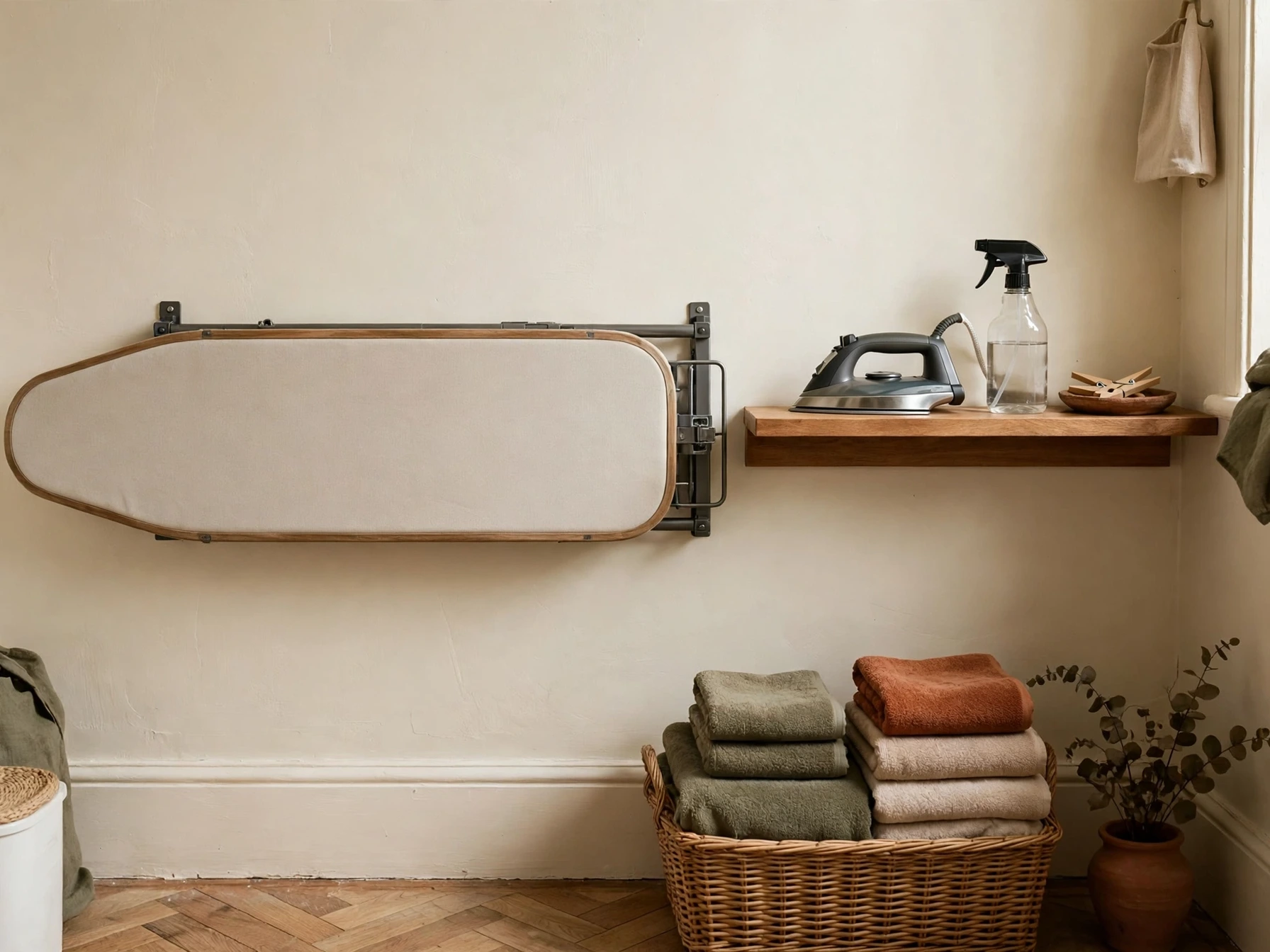
12. Hide the Ironing Board Away
A full-size ironing board leaning against the wall eats floor space and always looks untidy. A wall-mounted folding board tucks flat against the wall when you are done, and a small tabletop board stored on a shelf does the same job for quick touch-ups.
Keep the iron and a small spray bottle on the same shelf as the board, so ironing is one trip instead of three. If you iron rarely, a handheld steamer hung on a hook takes up even less room.
Practical note: Mount a folding board at a height that suits you — about waist height — and test the fold mechanism before you buy, so it opens and closes smoothly.
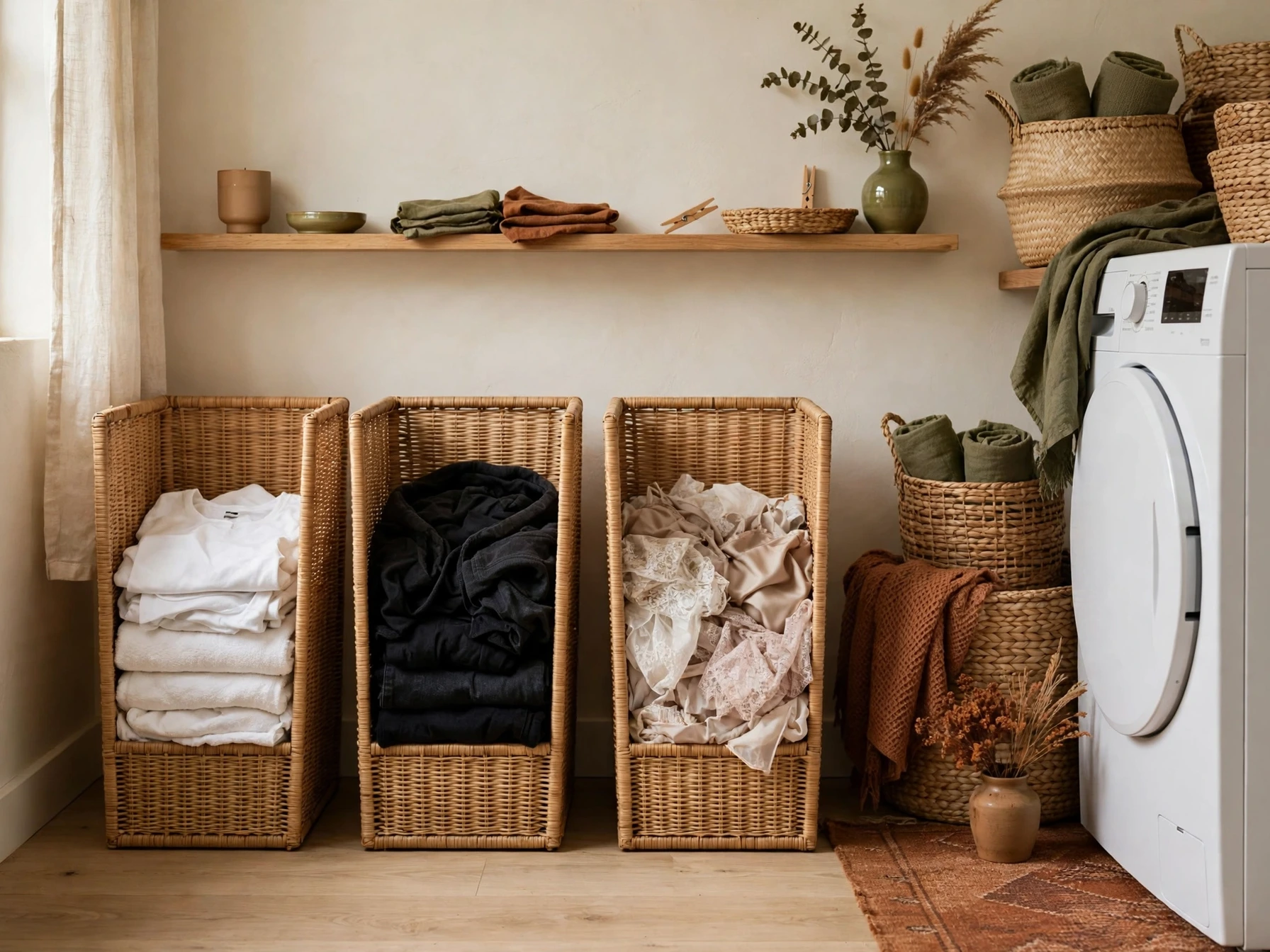
13. Sort with Three Hampers: Lights, Darks, Delicates
Three slim hampers — lights, darks, and delicates — turn sorting into a habit instead of a chore. When everyone in the house drops clothes into the right hamper, wash day starts with three ready loads instead of one big pile to sort.
Label each hamper clearly and keep them in a row where the dirty clothes actually land, not across the room. Slim hampers fit beside the machines or under a counter, so they do not steal floor space.
Practical note: Empty the delicates hamper first, while it is still small. Delicates left sitting too long are the ones that get forgotten. For more sorting ideas, see our under kitchen sink organization ideas.
Renters & Budget
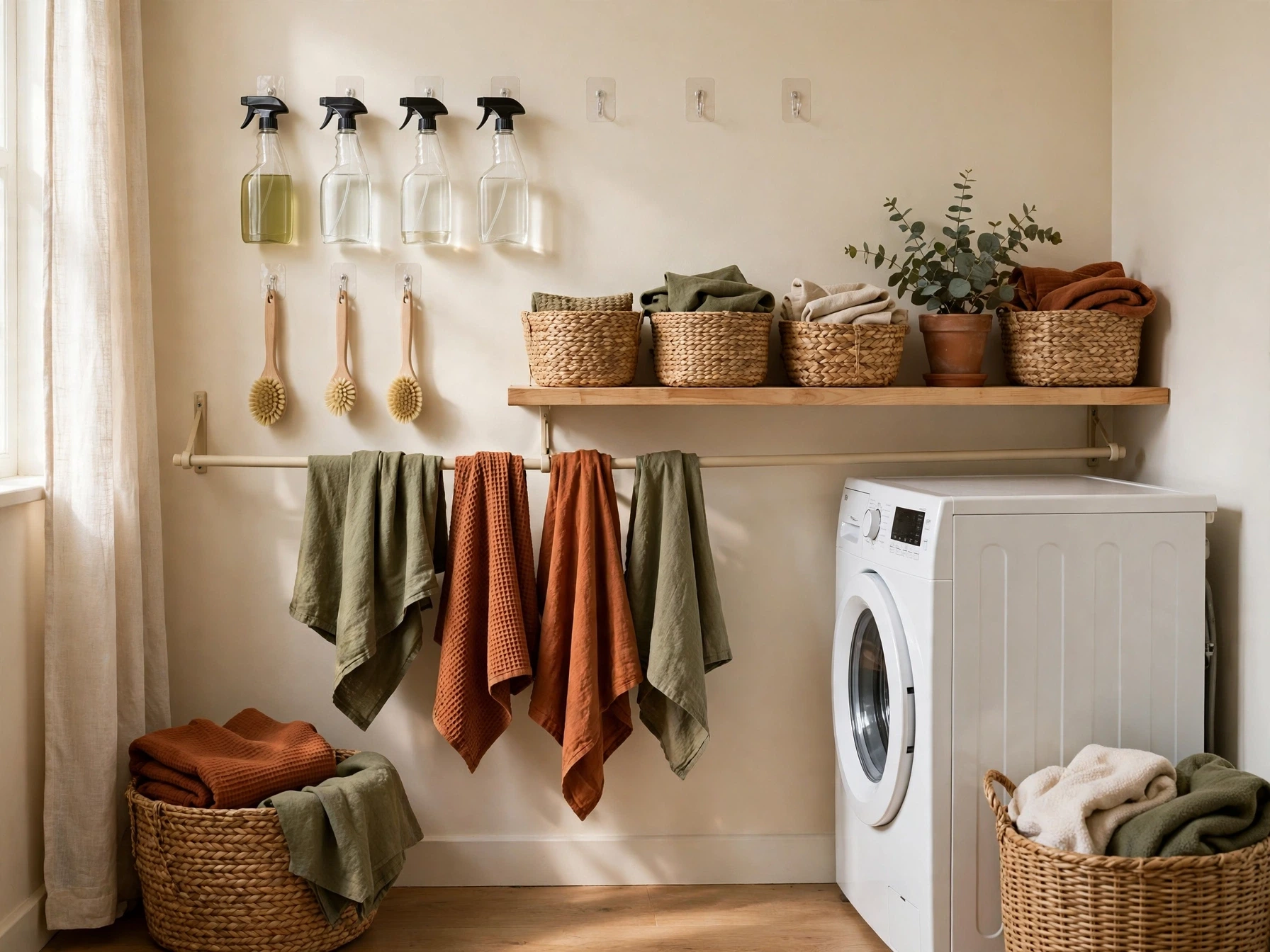
14. Try Renter-Friendly Fixes That Need No Drilling
Renters can organize a laundry room without a single hole in the wall. Adhesive hooks hold spray bottles and brushes, tension rods create hidden storage under a shelf, and over-door organizers add pockets without screws.
Start with the fixes that solve the biggest annoyance — usually the detergent bottles with nowhere to live — and add more only when the first ones hold. Good adhesive hooks hold for months and come off cleanly when you move.
Practical note: Clean the wall properly before you stick anything on it, and check the weight rating on every hook. For more renter friendly ideas, see our kitchen organization ideas for renters.
15. Keep a Weekly 10-Minute Reset
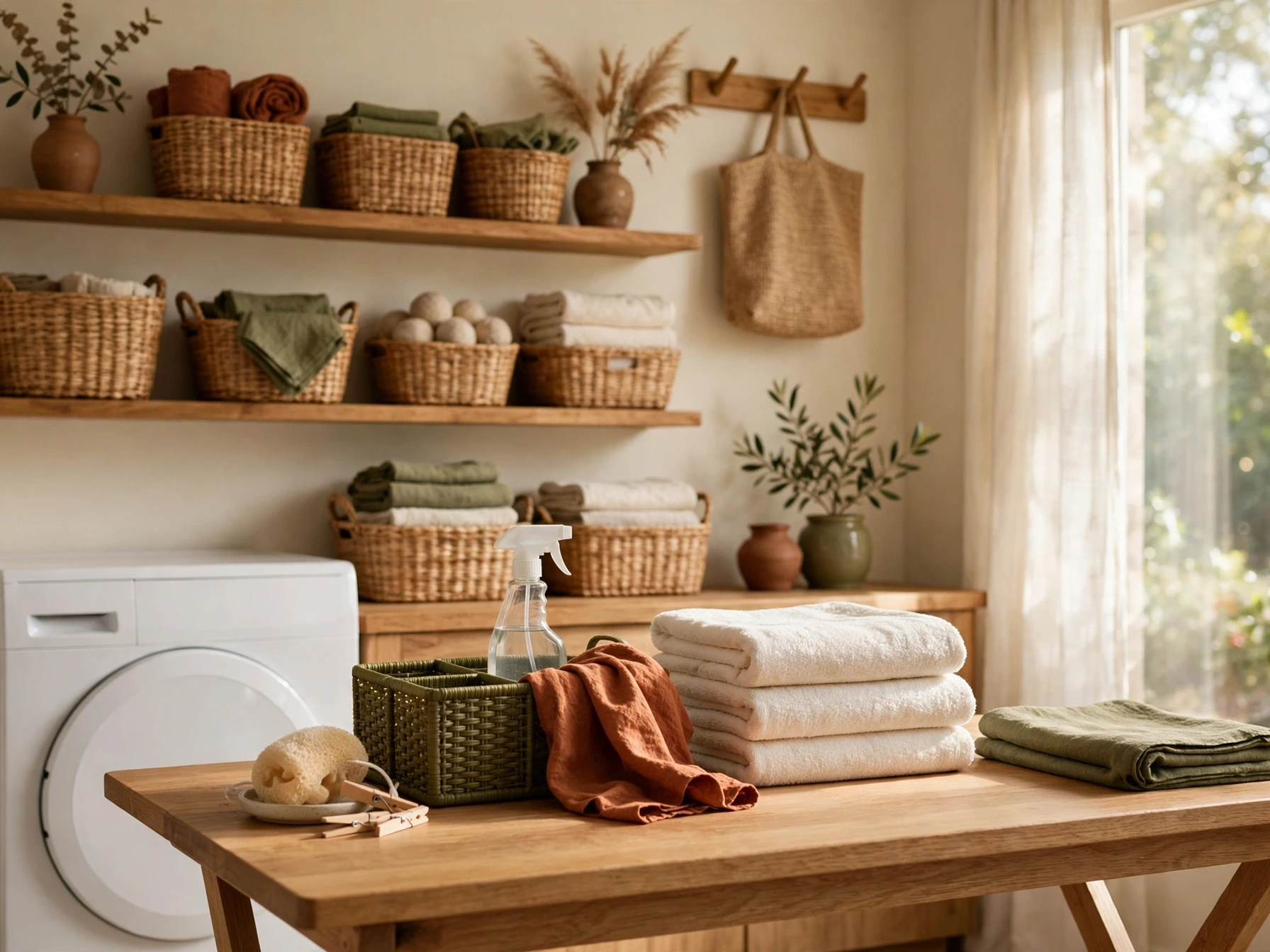
Organization is not a one-time project; it is a ten-minute habit. Once a week, set a timer and reset the room: wipe the counter, fold the clean pile, return stray items to their zones, and toss any empty bottles.
A short weekly reset keeps the system working, because small messes never grow into the big pile that makes you avoid the room. Pair it with something pleasant — a podcast or your favourite playlist — and it stops feeling like a chore.
Practical note: Keep a small cleaning caddy in the room with a cloth, a spray, and a bin bag, so the reset needs no trip to another room. For more storage ideas, see our kitchen storage ideas without a pantry.
5 Small Laundry Room Tips That Keep It Working
- Zone by job. Wash, dry, fold, and store each get their own small area, so nothing drifts across the room.
- Measure first. Every shelf, basket, and cart must fit its gap — a tape measure saves more money than any sale.
- Label everything. A labelled bin is a bin you can find in seconds, and a bin others in the house will use correctly.
- Use the walls. Shelves, racks, and pegboards add storage without taking a single inch of floor.
- Reset weekly. Ten minutes once a week keeps the system working, so the room never slides back into a pile.
Small Laundry Room Organization FAQs
How do I organize a very small laundry room?
Zone the room by job — wash, dry, fold, store — then use the walls for shelves and racks, labelled bins for supplies, and a slim rolling cart for the gap between the machines. Start with the darkest corner or the most crowded shelf, not with a full renovation.
What is the best storage for a laundry room with no shelves?
Floating shelves above the machines are usually the best first buy, because that wall is wasted space in most laundry rooms. A pegboard or wall rail adds a second layer of storage, and over-door organizers hold all the small things.
Can I organize a laundry room in a rental?
Yes. Adhesive hooks, tension rods, over-door organizers, and rolling carts need no drilling and come with you when you move. Choose fixes with a clear weight rating and clean the wall properly before you stick anything on it.
How do I keep the laundry room tidy after organizing it?
Keep a weekly ten-minute reset: wipe the counter, fold the clean pile, return stray items to their zones, and toss empty bottles. The one-in, one-out rule stops new clutter from creeping back in.
Final Thoughts
A tidy laundry room is not bought in one trip — it is built one zone at a time. Measure first, zone by job, use the walls, and label everything. That is how a small laundry room stops being the cupboard you avoid and becomes a calm corner of the house that actually works.
Start with the wall above the machines, and add one shelf this week. Save this post to your home board and walk through your laundry room tonight before you buy anything.





One Comment